Fiber Production
Certain breeds of goats are kept specifically for fiber production. Anything that adversely affects the quality and quantity of fiber harvested, including skin diseases, can have severe economic consequences.
Branding paint also damages the fleece, and thus range animals should be paint branded only on the ears or horns.Mohair
Mohair is the fleece of the Angora goat (Figure 2.1). The Angora evolved in Asia Minor many centuries ago, possibly a descendant of the wild goat of Persia. Mohair probably developed by elongation of the wooly undercoat of the primitive goat. Although the sultans of Turkey attempted to prevent exportation, populations of Angora goats reached South Africa and the United States in the mid-1880s. Currently, important production centers for mohair include South Africa, Texas, Turkey, Argentina, New Zealand, and Australia (Dubeuf et al. 2004).
Factors Affecting Mohair Quality
Mohair mainly consists of non-medullated fibers that lack crimp. They arise mostly from secondary follicles and grow continuously, albeit at a lower rate in winter. These fibers
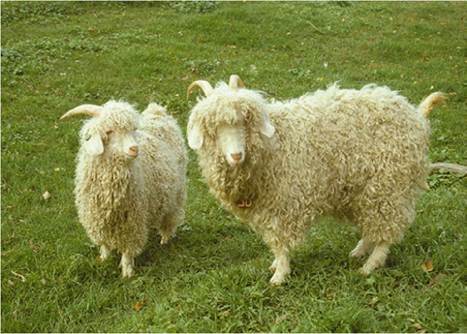
Figure 2.1 Angora goats, the source of mohair. Source: Courtesy of Dr. M.C. Smith.
are strong, elastic, and composed of keratin. Flat scales that hardly overlap give the fibers smoothness and luster (Margolena 1974). Different countries have different standards for fiber diameter, but the range is typically 24-46 μm. The fleece is typically harvested in two clips per year.
Kemp
At birth, goat fleece contains approximately 44% kemp, or medullated fibers from primary follicles, but this pro - portion drops to 7% by 3 months of age due to shedding of the kemp (Dreyer and Marincowitz 1967). Later in life, some primary follicles may produce fibers with discon - tinuous or no medullation.
Kemp and colored fibers are generally undesirable fleece contaminants due to uneven dyeing. It has been proposed that shearing shortly before the spring and autumn equinoxes decreases the proportion of medullated fibers in the clip, because natural shedding of these fibers will have recently occurred (Litherland et al. 2000).Perinatal Nutrition
In the developing fetus, a central and two (or more) lateral primary follicles are in place by 90 days of gestation (Wentzel and Vosloos 1974). The development of secondary hair follicles occurs later and is affected by nutrition during the fourth month of gestation through the first month after birth. Poor nutrition during these critical times probably will compromise the Angora goat's ability to produce mohair later in life (Eppleston and Moore 1990).
Age and Nutrition
Hair follicle density in the skin determines fiber density in the fleece and is under both genetic and nutritional control. Fiber diameter increases with age and bodyweight. Kids produce mohair with a fiber diameter of 28 μm or less at the first shearing, whereas the diameter of the fib - ers from adult goats varies from 36 to 46 μm. The mohair mass produced peaks at 3-4 years of age, but because the finer fibers are more valuable, the economic value of the fleece peaks somewhat sooner (van der Westhuysen et al. 1988).
Undernutrition results in reduced body growth and production of mohair as well as a reduction in fiber diameter (Russel 1992). Thus, finer, lighter fleece is produced during periods of drought or overstocking. A slightly coarser fleece may result from overfeeding, although published documentation of this is scarce. In one study in which Angoras were fed individually to maintain different bodyweights, fiber diameter increased by 0.4 μm for each kilogram increase in bodyweight (McGregor 1986). Nutrition of Angora goats is discussed more in Chapter 19.
Stress Medullation
A reversible change from normal to medullated fibers occurs in a stress syndrome that seems to be comparable to wool break in sheep.
Reported causes of stress-induced medullation include lactation for twins, transport, and hard work by bucks. The time period when the stress occurred can be demonstrated by immersing a full-length staple of fleece in kerosene in a black container. Kemp fibers and bands of medullation in mohair will show as white streaks due to air-filled cores. Normal mohair is almost invisible in kerosene (Ensor 1987).Other possible causes of medullation have been reviewed (Lupton et al. 1991). Dietary protein and energy levels do not seem to be important in individually housed animals, but heredity may contribute. Selection should be based on objective evaluation of whole fleeces, not just mid-side samples, of Angora goats older than 1 year of age.
Freeze Loss
Whenever Angoras are shorn, even during summer months, they are vulnerable to exposure to wind, rain, and temperature changes. Angoras have minimal body fat and a small body size, with relatively greater surface area, compared to sheep. Mortality can be very high in freshly shorn goats, especially if they have not had time to return to full feed before inclement weather arrives. Methods of limiting freeze loss include sheltering the animals for four to six weeks after shearing, shearing with a comb that leaves a longer stubble, and leaving a narrow strip of unshorn hair (“cape”) along the backbone (Shelton 1981; Bretzlaff 1990).
Feeding of alkali-ionophore-treated grains (to avoid rumen acidosis, see Chapter 19) is helpful when shorn animals are exposed to severe weather. Individual recumbent animals may respond to intravenous or intraperitoneal glucose (van der Westhuysen et al. 1988).
Cashmere
Cashmere is a fine, soft fiber used to produce fashionwear. It comes from the downy undercoat of certain goats (Figure 2.2). Originally, cashmere was combed from Pashmina goats in Central Asia (Mason 1984). Goat down (unmedullated, from secondary follicles) with a mean fiber diameter of 19 μm or less can be produced by many breeds.
By comparison, the mean diameter of the guard hair outer coat is typically 60-90 μm. Latitude, and therefore photoperiod, appears to be more important than altitude as a factor influencing down production. Evidence of this is that most Australian cashmere production occurs near sea level (Couchman 1987). In spring-born kids, maximum secondary follicle development (as determined by skin biopsy or fiber measurements) is achieved by 20 weeks of age, permitting selection at that time (Henderson and Sabine 1991).Cashmere goats have a three-phase annual cycle of fiber growth that is influenced by photoperiod, probably via melatonin (Kloren and Norton 1995), and nutrition. The period of fiber growth typically coincides with summer in wethers and maiden does, but is often delayed until autumn and early winter in lactating does (McDonald 1985). Next, fiber regression occurs and the root bulb of the fiber forms an enlarged brush end, which holds the fiber in the follicle. Finally, there is a follicle resting phase when no down is
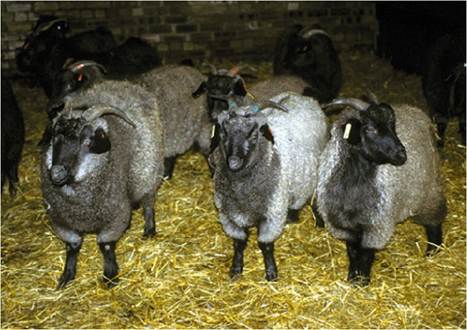
Figure 2.2 Cashmere goats from Mongolia. Source: Courtesy of Dr. M.C. Smith.
grown and improved nutrition has no direct effect on cashmere production. The fiber is shed (or the entire fleece may be cast simultaneously) when the fibers are lost from the secondary follicles. The fleece may be harvested by combing or by shearing just before it would be shed naturally, usually at the end of the winter. Freeze losses of shorn goats may occur. It may be several months before normal seasonal growth resumes (Betteridge et al. 1988). Chemical defleecing with mimosine has been investigated as a means of leaving the protective guard hairs on the goat (Luo et al. 2000).
Raw, or greasy, cashmere contains both guard hairs and down. Dehairing machinery removes the long guard hairs that remain after hand removal of most of the coarse hairs. Major suppliers of the raw fiber are China, Mongolia, Afghanistan, and Iran.
The maximum guard hair content after dehairing is 0.5% for knitting and 3% for the weaving trade. Imported cashmere is sometimes contaminated with anthrax (Bacillus anthracis) spores (Hunter et al. 1989).As with mohair, the finest cashmere fibers are produced under conditions of nutritional stress. In an Australian study, however, feeding enough energy to maintain or slightly increase body condition during summer and autumn maximized cashmere production. Fiber diameter of the total fleece averaged 1 μm larger for goats fed energy at 1.25 maintenance (M) compared with 0.8 M (McGregor 1988). Cashmere production is usually not limited by protein nutrition (Galbraith 2000).
Cashgora
Cashgora is a coarse undercoat produced by the secondary hair follicles, with more luster and mostly harvested from the progeny produced by crossing Angoras with feral goats in Australia and New Zealand. The current fiber diameter is 18-23 μm (McGregor 2007). Some breeders are attempting to stabilize the fleece type.
Pygora
Pygoras are a newly developed breed resulting from the crossing of purebred Pygmy goats and purebred white Angoras. Two such “first-generation crossbreds” are mated to produce the actual Pygora. Backcrossing to Pygmy goats or Angoras is permitted by the breeders association. Currently, registration requirements include fleece evaluation. The soft undercoat resembles cashmere, comes in a variety of colors, and is often plucked or combed for sale to handspinners in the United States (Hicks 1988). Some Pygora goats have a mohair-like fleece or a combination of cashmere and mohair.