LESS COMMON ORAL TUMORS IN THE DOG
Other reported oral malignancies in the dog include osteosarcomas (Figure 11-5), intraosseous carcinomas, neurofibrosarcomas, anaplastic sarcomas, chondrosarcomas, myxosarcomas, invasive nasal tumors, mast cell tumors, hemangiosarcomas, lymphomas, and transmissible venereal tumors.
In one report the overall 1-year survival rate for dogs with mandibular osteosarcomas treated with combination modalities was 53%. Dogs treated
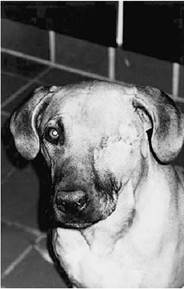
Figure 11-5 This 5-year-old male Rhodesian Ridgeback had a maxillectomy to include the orbit and eye for an oral osteosarcoma, followed by radiation therapy to the surgery area beginning 1 week after surgery. Chemotherapy with cisplatin and doxorubicin was continued after radiation was completed. At the time of this picture, several months after the completion of radiation therapy, he was free of disease and absolutely asymptomatic for any adverse effects of therapy. This case is a good example of how many modes of cancer therapy can be used in concert to benefit the patient and control or cure the disease.
with surgery alone had a 1-year survival rate of 71%. Histologic grade was demonstrated to be important for survival.