Management
Hyperthyroid cats can be managed using anti-thyroid medication (oral or topical), iodine restricted diet, thyroidectomy, or radioactive iodine (I131). All four options have advantages and disadvantages (summarized in Table 9.1).
Surgery and I131 are considered definitive treatment options. Anti-thyroid medication and diet are reversible options. An initial reversible treatment allows counteracting cardiac and metabolic consequences of hyperthyroidism before a definitive treatment is considered. This is especially important before surgery. It is important to underline that pharmacologic and dietary options, do not address the cause of the disease (thyroid hyperplasia/neoplasia) but ‘only' block thyroid hormone synthesis. Some authors have suggested that after several years of medical therapy, thyroid tissue can become malignant (Peterson and Broome, 2012). Reported survival times are longer for cats treated with I131 (Milner et al., 2006). When selecting a treatment option for cats with hyperthyroidism all treatment options need to be discussed and the pros and cons for each evaluated for the cat and its owner.Pharmacological Treatment
Oral or topical methimazole and carbimazole inhibit thyroid hormones synthesis. Anti-thyroid drugs can be used short-term to stabilize the patient prior to a definitive treatment or as a long-term medical management. The recommended initial dose of methimazole is 2.5 mg PO BID. In cases where compliance is an issue, 5 mg PO once a day can be used. A starting dosage of slow release carbimazole tablets of 15 mg SID and 10 mg SID if TT4 values are only mildly increased is recommended.
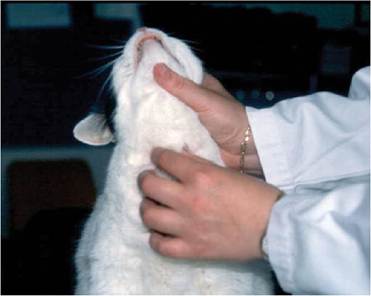
Figure 9.1 Technique for palpation of thyroid glands.
Adverse reactions are less likely to occur when the dosage of anti-thyroid drugs is started low and gradually increased to effect.
If the owner does not observe adverse reactions, physical examination reveals no new problems, results of a complete blood count are within reference limits, and serum T4 concentration is “normal/high” after 2 weeks of therapy, the dose is increased. Reevaluation is performed again 2 weeks later. The dosage should continue to be increased every 2 weeks by 2.5 mg/day adjustments until TT4 concentration is “normal/low” or until adverse reactions develop.Adverse reactions to methimazole typically occur within the first 4 to 8 weeks of therapy. Side effects most commonly observed (principle definitive Few complications
No anesthesia
Addresses the underlying disease
Hospitalization
Use of radioactive products
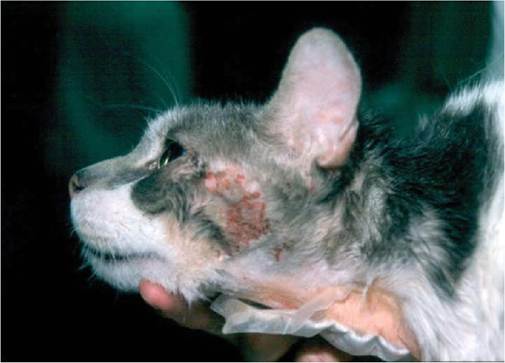
Figure 9.2 Facial excoriations in a cat treated with methimazole.
safe option for the long term therapy of hyperthyroid cats, however the dose of methimazole may need to be increased over time (Boretti et al. 2014). Owners should wear gloves to administer this topical cream and should use each ear alternatively. Gastrointestinal side effects are observed less commonly than with the oral tablets. Some cats will have crusting and erythema of the pinnae. This preparation can definitively be of benefit in cats that are difficult to “pill.” A lipophilic transdermal formulation for once- daily dosing (Hill et al. 2011) has recently become commercially available in some parts of the world (e.g., New Zealand).
The beta-blocking agents propanolol and atenolol have no direct effect on the thyroid gland but can be useful in certain cases to control polypnea, hypertension, hyperexcitability, tachycardia and eventual arrhythmias related to the hyperthyroidism. Propanolol (β1β2: 2.5-5 mg 2 to 3 times daily) and atenolol (β1: 6.25 mg 1 to 2 times daily).
Adequate monitoring during pharmacological and nutritional therapy is essential. An expert panel recently recommended that practitioners should aim at obtaining a TT4 in the lower half of the reference range (Daminet et al. 2014). Overzealous therapy also needs to be avoided (see iatrogenic hypothyroidism).
Nutritional Therapy
The major advantage of this dietary option is the ease of administration. After feeding the diet for approximately 8 weeks, between 40-75% of cats will have a TT4 concentration within reference range (van der Kooij et al. 2014; Hui et al. 2015). Nutritional management is not a good option for outdoor cats with access to other iodine sources, for cats that find the food unpalatable or for cats that have other concurrent diseases that require specific diets. One study has reported poor owner compliance or palatability issues in 25% of cats (van der Kooij et al. 2014). The combination of the low iodine diet and antithyroid drugs is not recommended.
As with pharmacologic therapy, adequate monitoring is important. The clinician should not be satisfied with a cat that improves somewhat clinically and has TT4 values just above or just within normal range.
Radioactive iodine therapy
Radioactive iodine therapy is a simple, effective, safe and in principle definitive treatment for hyperthyroidism. Iodine131 is taken up by the thyroid gland, the radiation emitted by iodine131 destroys primarily the abnormal thyroid tissue. Atrophied thyroid tissue is spared, precluding the development of hypothyroidism in most cats. Often, a single dose of I131 is sufficient to restore a euthyroid state. After treatment with I131, more than 80% of cats become euthyroid within 3 months, most within 2 weeks. More than 95% of treated cats are euthyroid at 6 months. Less than 5% of cats require a second treatment with I131. A recurrence of hyperthyroidism after some years is also possible. Hypothyroidism can develop, especially in cats with large and bilaterally affected thyroid glands.
The major disadvantages of 131I is that there are special licensing requirements required to administer and house the cats after treatment to ensure radiation exposure to humans is minimized. These requirements limit the availability of this treatment.Surgery
Surgical removal of the thyroid glands is an effective and relatively quick treatment for hyperthyroidism. However it must be remembered that 70% of cats with hyperthyroidism have bilateral disease (Peterson and Broome, 2015), so surgical cure may not be permanent if a unilateral thyroidectomy is performed. Unilateral thyroidectomy is safe and effective, although recurrence of clinical signs occurs in around 5% of cases. Serum thyroid concentrations should be measured after surgery, to ensure the cat does not develop iatrogenic hypothyroidism, as asymptomatic hypothyroidism can progress chronic kidney disease in cats (Williams et al. 2010).