BLOOD-BRAIN BARRIER (BBB)
The blood-brain barrier is a highly selective semiperme- able membrane barrier that separates the circulating blood from the brain’s extracellular fluid in the central nervous system.
It is primarily composed of specialized endothelial cells that line the capillaries in the brain. These endothelial cells have unique morphological features that contribute to the barrier’s selective permeability. The most distinctive feature of BBB endothelial cells is the presence of tight junctions between adjacent cells. These tight junctions seal the intercellular space, forming a continuous barrier that restricts the passage of molecules between cells, effectively preventing most substances from crossing from the bloodstream into the brain. Lack of fenestrations reduces the permeability of the endothelium and helps maintain the barrier’s integrity. The BBB regulates molecular transport by restricting the entry of potentially harmful substances, toxins, and pathogens from the bloodstream into the brain.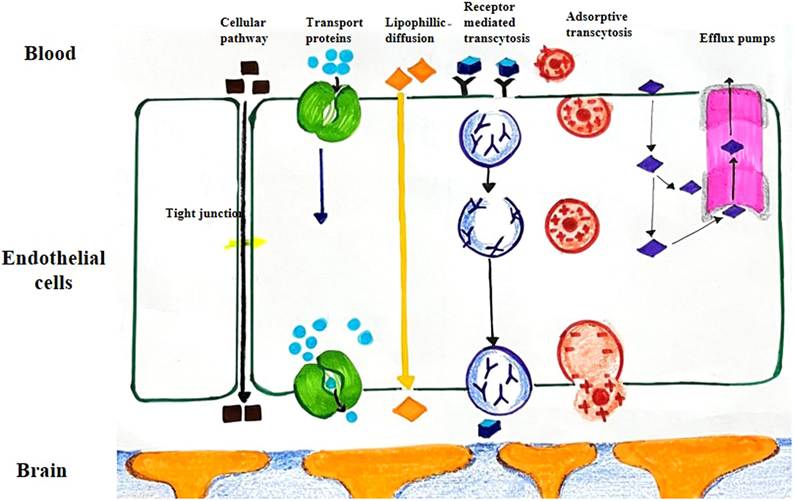
FIGURE 8.6 Transport across the blood-brain barrier
Transport across the blood-brain barrier occurs through several mechanisms, each serving specific functions (Figure 8.6):
1. Passive Diffusion: Small, lipophilic (fat-soluble) molecules, such as oxygen and carbon dioxide, can diffuse passively through the lipid bilayer of endothelial cells due to their small size and lipophilic nature. However, this route is limited for larger or polar molecules.
2. Transport Proteins: Specialized transport proteins embedded within the endothelial cell membrane facilitate the selective transport of essential molecules, such as glucose, amino acids, and neurotransmitters, across the BBB. These proteins include glucose transporters (e.g., GLUT1), amino acid transporters, and nucleoside transporters.
3. Receptor-Mediated Transcytosis: Certain molecules, such as insulin and transferrin, can cross the BBB via receptor-mediated transcytosis. In this process, molecules bind to specific receptors on the luminal (blood-facing) side of endothelial cells, triggering their internalization into vesicles. These vesicles then transport the molecules across the endothelial cell and release them on the ablu- minal (brain-facing) side.
4. Efflux Transporters: Efflux transporters, such as P-glycoprotein (P-gp), are located on the luminal side of endothelial cells and actively pump out various substances from the brain back into the bloodstream. This mechanism helps protect the brain by removing potentially harmful compounds and regulating the brain’s exposure to drugs and toxins.
5. Paracellular Transport: Although minimal, some small molecules can pass through the tight junctions between endothelial cells via paracellular transport. However, this route is tightly regulated and allows only limited diffusion of substances.
8.11