Factors Affecting Growth
Several factors control the growth of an animal during prenatal and postnatal life periods that may influence their productive performances. A few of these factors are listed below.
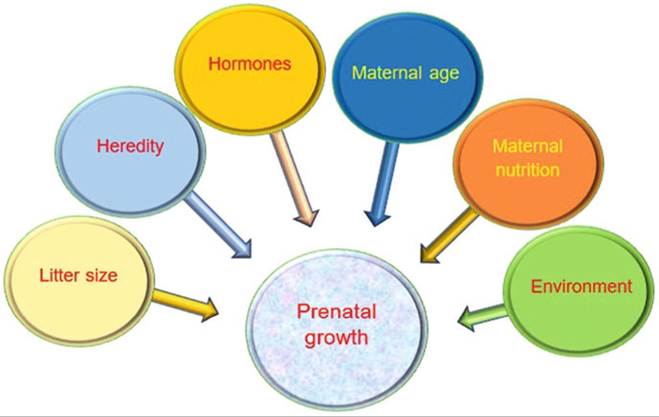
Figure 26.3 describes the various factors that influence prenatal growth in farm animals.26.3.1 During Prenatal Period
26.3.1.1 Heredity
Fetal growth is mostly determined by its own genotype during the early and mid-pregnancy periods whereas maternal genotype influences fetal growth during late pregnancy. There are variations among the species, breeds, and individuals. The contribution of the maternal genotype is greater than the paternal genotype to the genetic variability.
26.3.1.2 Hormones
Fetus secretes several hormones and its functional display is based on the receptors present in the target system.
26.3.1.2.1 PituitaryHormones
In some species growth hormone is biologically active where the young ones born with their eyes open and stand up immediately after birth are known as precocial young ones, e.g., cow, mare, sheep, and goats.
The growth hormone is physiologically inactive in some species and the immature young ones are born with closed eyes, e.g., dog, cat, and lab animals.
Fig. 26.3 Factors affecting prenatal growth in farm animals. Various factors such as genetic background, maternal age, nutrition, endocrine, and environmental factors affect the growth of the fetus during prenatal period
26.3.1.2.2 Thyroid Hormones
The fetal thyroid hormones such as T3 and T4 are necessary for morphogenesis, differentiation, and growth of the fetus.
26.3.1.2.3 Gonadal Hormones
The fetal gonadal hormones (estrogen and progesterone) are necessary for the development of the sexes. In males, androgen (testosterone) synthesized by the fetal testes is required for testicular descent into the scrotum.
26.3.1.3 Maternal Age
Fetal growth is directly associated with mother size. The growth of the fetus is faster in a large dam than a smaller dam. Maternal age also impacts the size of the fetus. As the age of the mother increases, the size of the fetus also increases. But in the older animals with obesity, the young ones born are smaller because of restricted space in the gravid uterus. Fetal size differs with the length of the gestation period. During the long gestation period, chances are more for fetal growth than in the short gestation period.
26.3.1.4 Maternal Nutrition
Fetal growth depends on the nutritional status of the dam. Fetal growth rate is reduced when the dam nutrition is poor. Although the fetus will grow slowly and have a less birth weight, nutritional deficiency of vitamins and minerals will cause developmental abnormalities in the fetus.
Nutrient restriction affects organ development differently in the fetus. The nervous system, skeletal, and heart growth are least affected, whereas the development of lungs, kidneys, and muscles are moderately affected. Poor nutrition severely affects the development of the skin, spleen, thymus, and liver.
26.3.1.5 Litter Size
Fetal birth weight is inversely associated with litter size, e.g., in polytocous species, increased litter size reduces the fetal growth rate due to variations in the nutrient supply, mass, and action of the fetal membrane and the duration of the gestation period.
26.3.1.6 Sex of the Fetus
Male fetus generally grows at a rapid rate than their counterpart with higher birth weight than the female one. If twins are born the male is always larger than the female.
26.3.1.7 Environment
26.3.1.7.1 Placenta
The placenta decides fetal development since it is transporting all the nutrients required for fetal growth. Fetal growth is positively correlated to the placenta size. Fetus size is smaller in the small size placenta because of retarded fetal growth. Nutrient supply by the placenta to multiple litters is lesser compared to single litter which affects the growth of the fetus.
26.3.1.7.2 Temperature
Temperature directly affects the fetus growth since it is influencing the metabolic activity of the dam as well as the fetus. Either heat or cold temperature will decrease the fetus growth depending on the intensity of heat stress. Especially chronic heat exposure restricts fetal growth due to impaired placental development during the early to mid-gestation period.
26.3.2 During Postnatal Period
Figure 26.4 describes the various factors that influence postnatal growth in farm animals.
26.3.2.1 Sex
Differential rate of growth and development as well as tissue composition are associated with the sex of animals. Generally, male grow faster and attain better weight gain than female of equivalent ages even if both the sexes are provided with same nutrition. Male animals are more muscular and have less fat than female.
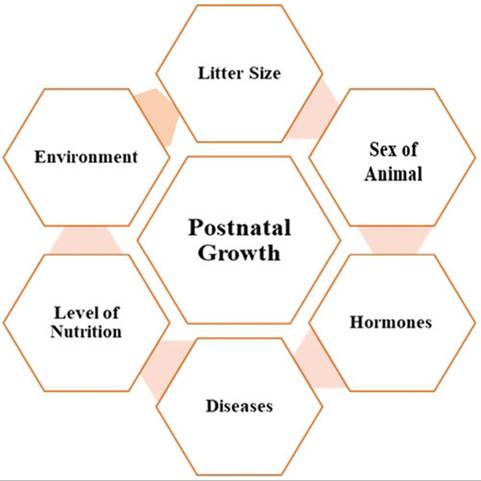
Fig. 26.4 Factors influencing postnatal growth in farm animals. Various factors such as plane of nutrition, sex of animal, litter size, disease, endocrine, and environmental factors affect the growth of animal during postnatal period
26.3.2.2 Litter Size
Larger litter size leads to low birth weight with less growth performance of the newborns. Single litter has better birth weight than twins and multiple litters. There is a chance of shortage of milk supply by the dam in larger litter size.
26.3.2.3 Level of Nutrition
The influence of plane of nutrition is very important because of its relation to the economics of milk and meat production. All animals require a level of nutrition for the normal growth and development of muscle and fat tissues. The carcass composition of meat animals are significantly affected by the quality and quantity of nutrient supplied to them. Poor nutrition during the initial phase of growth leads to a stunted growth. Adequate quantities of protein, vitamins especially vitamin B complex, A, and C are required for the optimal growth of an animal.
26.3.2.4 Hormones
The endocrine system regulates the growth of various tissues and organs, and partition the energy required for various physiological process related to growth and development. Both endogenous and exogenous hormones influence the growth rate or body composition by promoting the translation, transcription, and amino acid uptake for protein synthesis.
26.3.2.4.1 Growth Hormone (GH)
It stimulates the uptake of amino acids, synthesis of protein, and decreases the degradation of protein in all tissues. It produces lean tissue growth in animals and plays a role in hormone-stimulated protein deposit, nutrient partitions, and the utilization of lean tissue growth and also from fat deposition. Exogenous administration of GH stimulates growth and feed conversion ratio, and decreases the fat content in carcasses of pigs, cattle, and lambs.
26.3.2.4.2 Insulin-Like Growth Factor 1 (IGF-I)
It is necessary for bone growth since it stimulates chondrocyte growth. It is also playing an important role in protein, glucose, and fat metabolism.
26.3.2.4.3 Thyroid Hormones
It is required by all animals for their normal growth. Its deficiency causes retarded growth.
26.3.2.4.4 Insulin
It is a very important hormone involved in the growth and development of muscle tissues. It stimulates the uptake of glucose and transport of amino acids required for normal growth. It also reduces protein degradation.
The gonadal hormones play an important role in the growth and development of the animal. Androgens stimulate muscle growth and development by increasing protein synthesis and reducing fat deposition. Some tissues are more sensitive than others to androgen, depending on their action in reproduction.
26.3.2.5 Environmental Factors
26.3.2.5.1 Environment
Rearing environmental conditions have a marked influence on growth rate and even on body composition. The subject of heat regulation in farm animals has a wide economic significance. Climate influences growth indirectly through the availability of fodder and water resource and directly have adverse effects on the animal itself. In tropical countries, mostly poor quality and quantity of fodder are available during summer that causes a reduced growth rate. However, in the temperate zone, fodder scarcity due to winter leads to decreased growth rate.
26.3.2.5.2 Photoperiod
Impact of photoperiod on animal growth varies among the species. Long photoperiods stimulate the lean body growth in calves, lambs, and kids and also hasten the onset of puberty.
26.3.2.6 Diseases
Disease condition hinders the growth rate of animals since it affects the dry matter intake, digestion, and absorption of nutrients.
26.4