Fetal Presentations and Delivery
The calf is normally presented front feet first with the head extended and the nose between the front feet (Fig. 28-6). The dorsum of the calf is in contact with the sacrum of the dam.
This position, called cranial (anterior) presentation, takes advantage of the natural curvature of the birth canal of the dam and the curvature of the fetus. A caudal (posterior) presentation with the hind feet first, hocks up, occurs frequently enough in cattle to be considered normal.uterine contractions force the fetal placenta (water bags) against the cervix of the uterus, and ultimately these water bags rupture. At about the same time, abdominal muscles begin to contract forcefully to expel the fetus through the birth canal.
The contraction of abdominal muscles, called straining, is a reflex response to stimuli from the presence of parts of the fetus within the vagina and vulva of the dam. Straining can also be readily evoked by the insertion of a hand and arm into the vulva and vagina, for example when attempting to deliver a calf.
The legs of a foal are longer than those of a calf, and a foal is carried to a larger extent in the body of the uterus, while a calf is carried almost
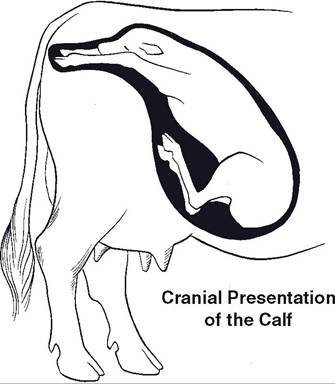
Figure 28-6. Cranial or anterior presentation of calf.
entirely in one horn of the uterus. Presentation of a foal is essentially the same as that of a calf. With pigs and dogs, the young are carried in both horns of the uterus and may be presented either cranially or caudally with equal facility.
in species that typically have a single offspring, the placenta, or afterbirth, is delivered soon after birth, but it may accompany the fetus or, rarely, precede it. in the litter-bearing sow, the placenta for each fetus is typically delivered still attached to the fetus and may completely surround the fetus. in these cases, immediate removal of the placenta from the nostrils of the newborn is essential for life; usually the sow does it. A placenta is considered to be retained pathologically if an abnormally long time elapses between birth of the young and delivery of the placenta. The placenta of the cow and ewe should be delivered within 24 hours, and the placenta of the mare should be delivered within 2 to 3 hours.
Retention of the placenta is a significant problem in dairy cattle. The incidence seems to be higher in cattle than other species and higher in dairy than in beef breeds. Manual removal of a retained placenta has been a common method of treatment, but more conservative treatment (e.g., no manual removal, with antibiotics to prevent infection) are also advocated, and their use is supported by research studies.