GNAWING
The name rodent derives from the Latin rodere, which means to gnaw. Rabbits, and especially rodents, have large
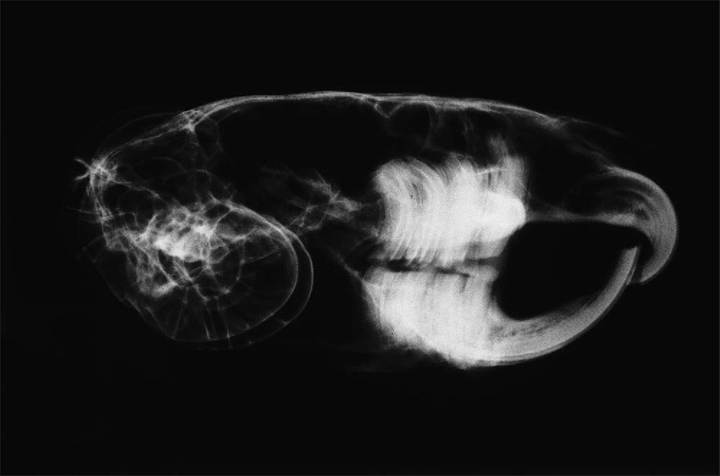
Figure 7.8 • Radiograph of chinchilla skull showing incisors, diastema and molars with large tympanic bullae.
Caviomorphs have constantly growing molars as well as incisors so are very prone to dental problems.masseter muscles that allow them great masticatory and gnawing power. The jaw articulation is loose, creating a rotary movement and enabling it to move forward and backward. This means that when the incisors are in apposition the cheek teeth are not, and vice versa. This facilitates a clear division of labor between the teeth used for gnawing and those used for grinding food (King & Custance 1982; Nowak 1999b, 1999c; Vaughan 1986b, 1986c).
More on the topic GNAWING:
-
Veterinarian -