INTEGUMENT
The fur is soft and smooth, and the ears are bald and gray. Around the neck region the skin is very loosely attached and capable of extensive stretching.
The young are born altricial and hair growth starts at 9 days.
There is soft underfur and this is covered by longer and thicker guard hairs. The hair is sparse on the feet and tail and there are fine hairs on the pinnae. The flank glands have short sparse hairs, which are often darkly covered, more so in the male. Cranial sensitive vibrissae are essential for orientation, particularly in nocturnal mammals (Bivin et al. 1987).Flank glands
These costovertebral glands consist of sebaceous glands, terminal hair, and pigment cells. They reach maximum size by 21 days in the female and 70 days in the male (Harkness & Wagner 1995). They are small and unpigmented in the young, becoming more developed and darkly pigmented in mature males (Fig. 11.12). Secretion of these glands is androgen dependent and the glands may play a role in lipo- genesis, hair, and flank gland growth. They are much more prominent in the male and become damp when the male is sexually excited (Bivin et al. 1987; Lipman & Foltz 1996; Magalhaes 1968).
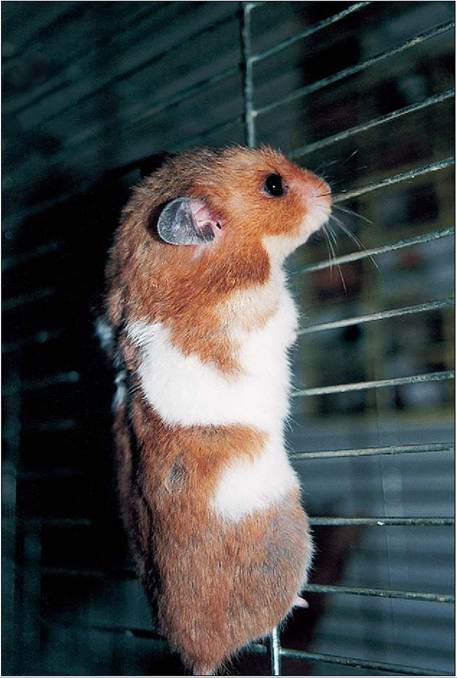
Figure 11.12 • Male Syrian hamster showing hip gland on lateral flank. They are more prominent and darkly pigmented in adult males.
KEY POINTS
• Open rooted incisors, closed molars
• Prominent hip glands
• Stomach divided into glandular and non-glandular portions
• Uterus is duplex, vaginal glands present
• Cheek pouches can extend as far caudal as shoulder blades
• Copious white discharge at end of estrous is normal in female
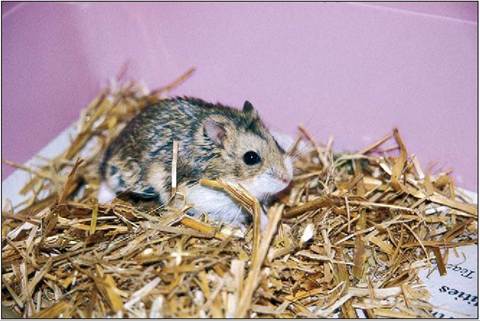
Figure 11.13 • Russian hamster (Phodopus sungorus).