Results
From the search in the 3 databases, 29,450 scientific items were found. Of these, 24,517 belong to the period between 2000 and 2020. After analysing the titles and abstracts, 24,298 articles were excluded because they did not comply with the objectives or inclusion criteria, did not include helminths, did not correspond to the countries under study, or were not cross-sectional studies.
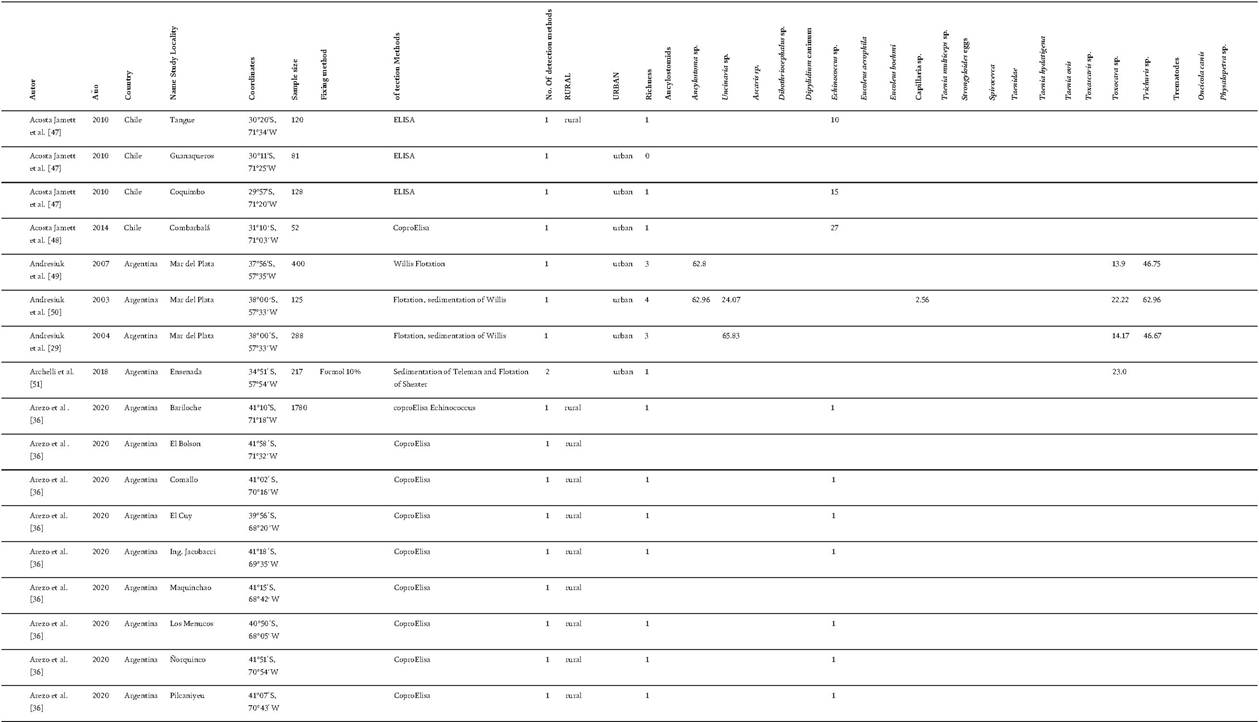
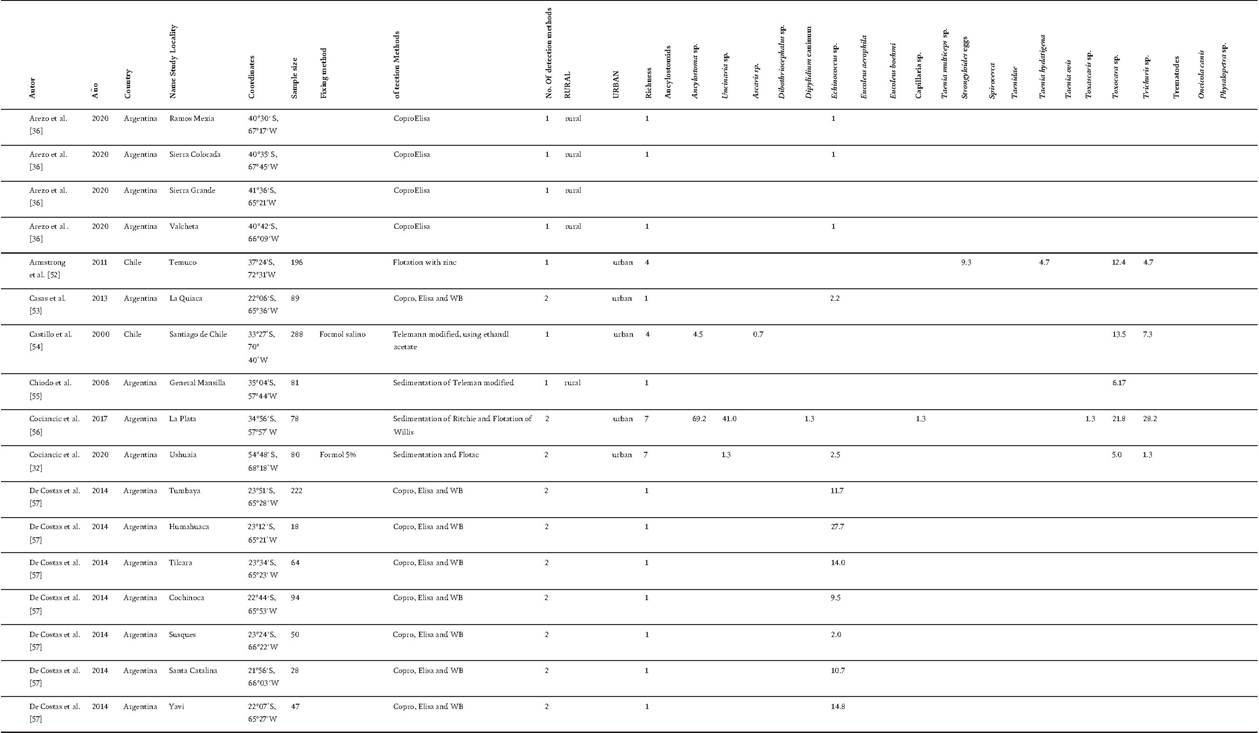
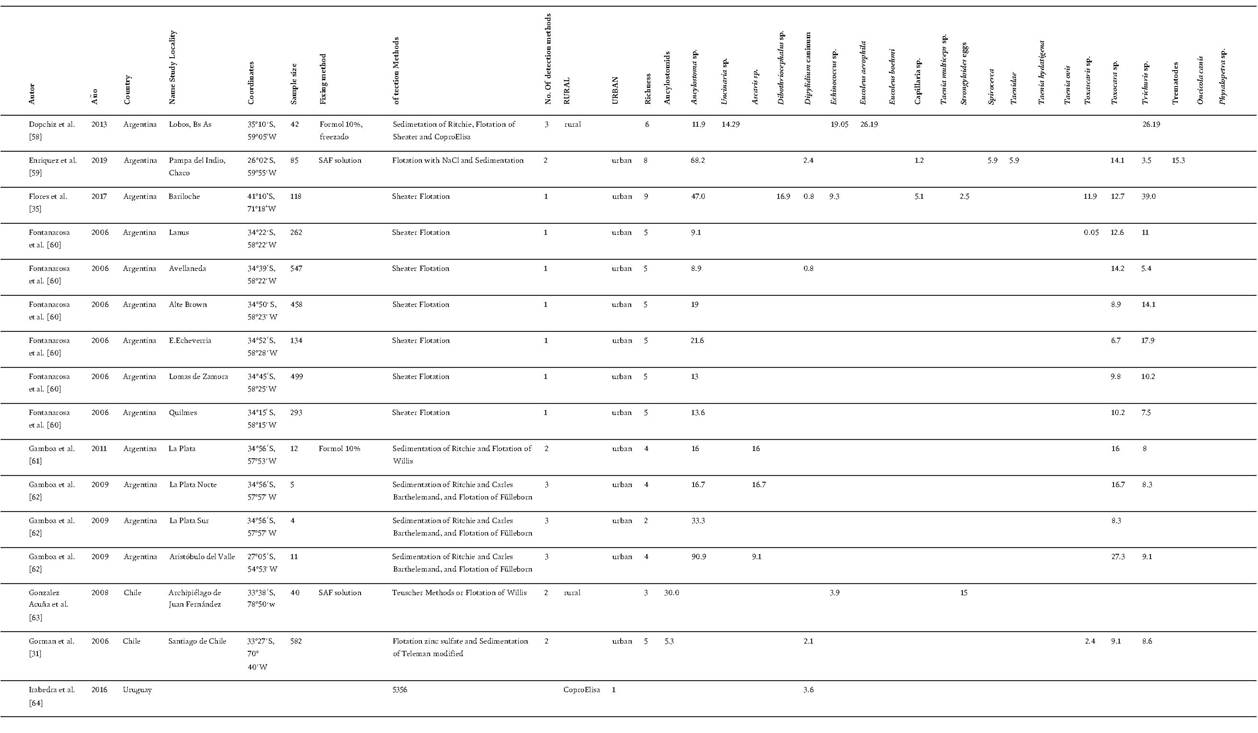
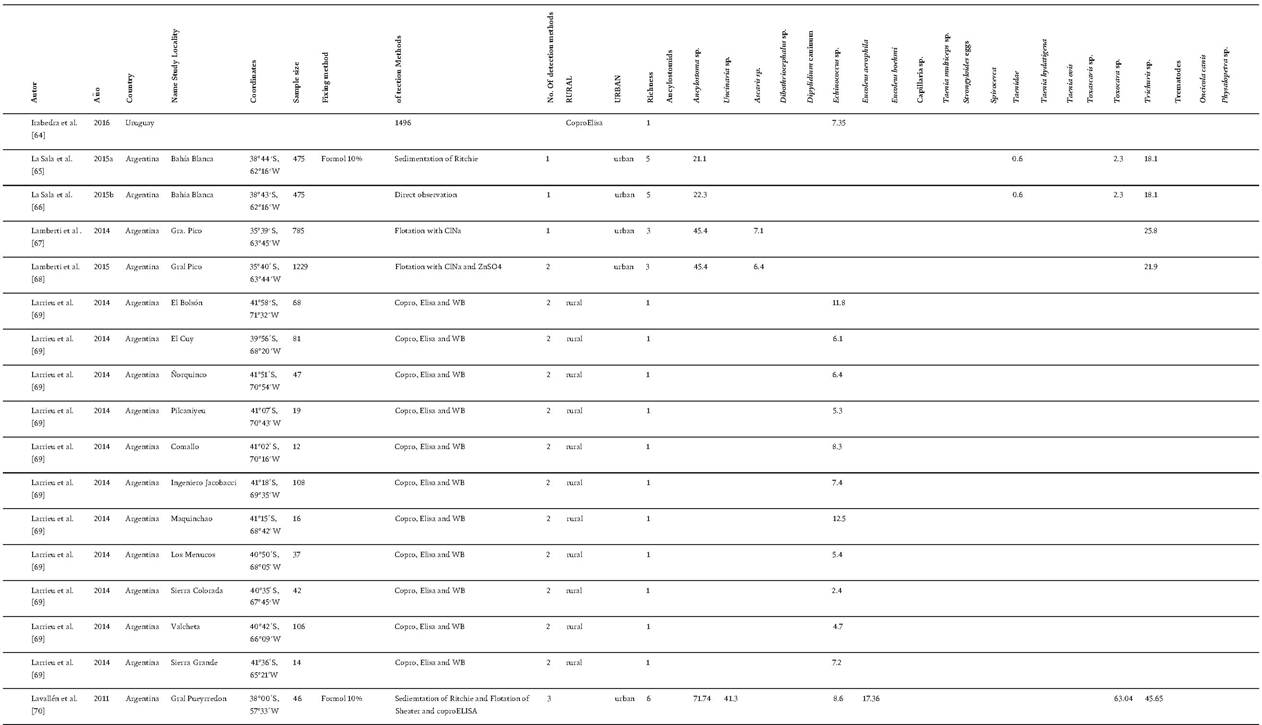
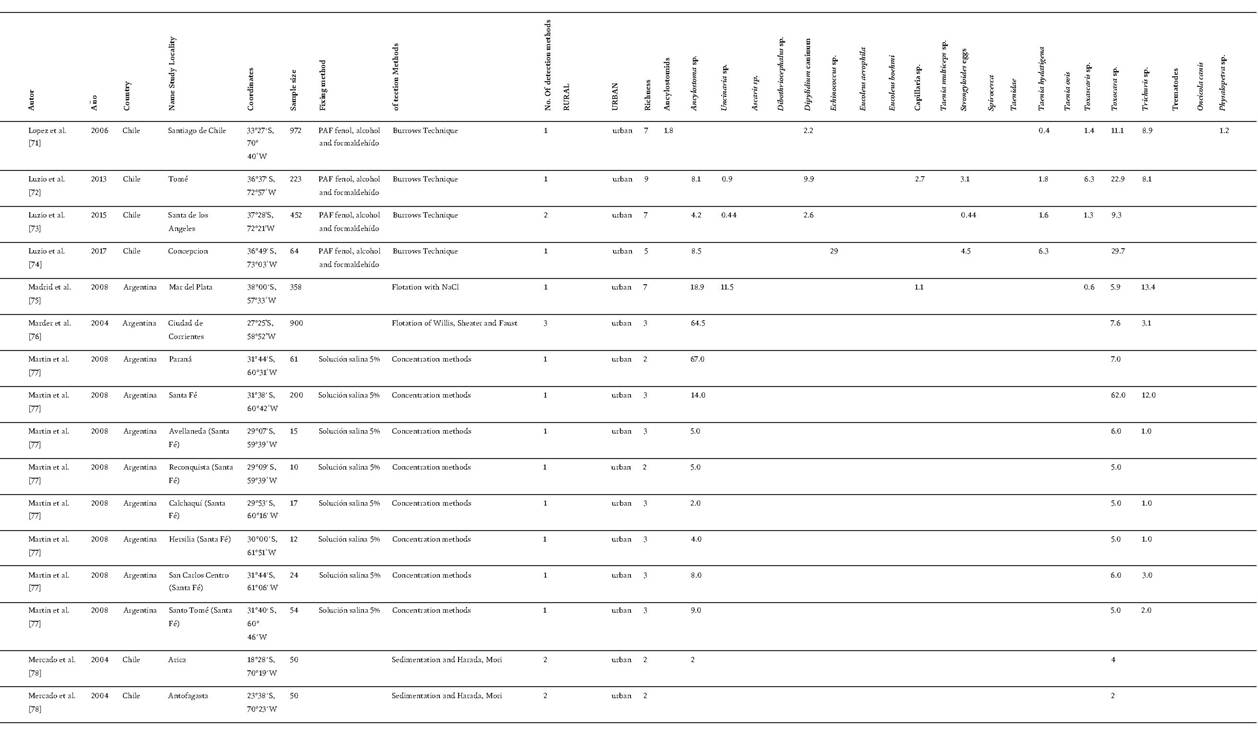
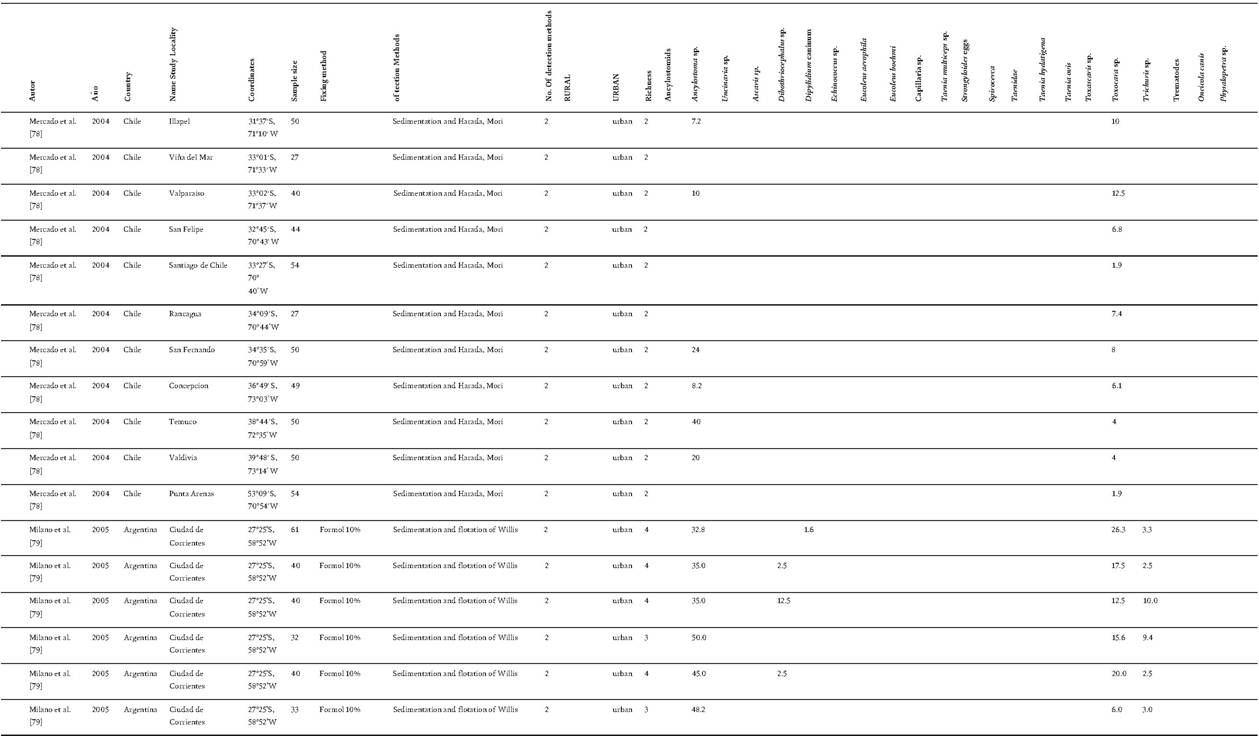
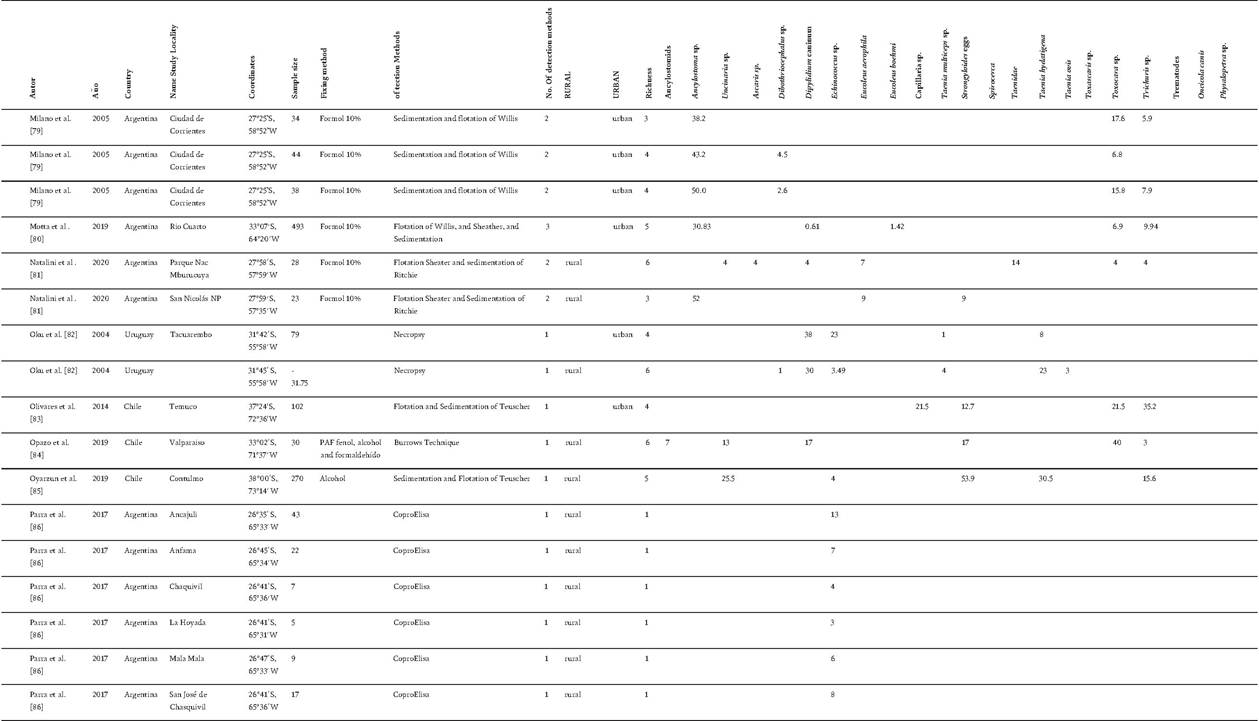
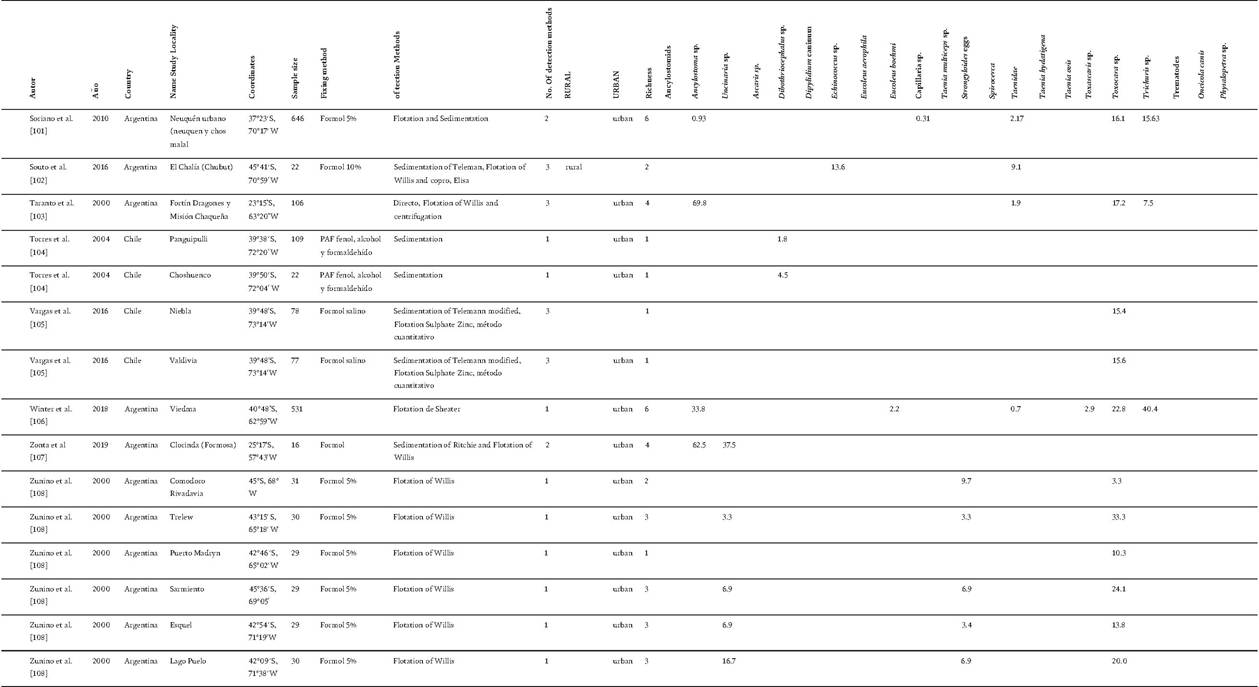
A total of 219 articles were evaluated for eligibility. After removing the duplicates, 67 were included in the final analysis (Table 1), and the full texts of these relevant articles were reviewed in depth. Forty-eight corresponded to Argentina, 17 to Chile, and 2 to Uruguay (Figure 1). The data come from analysis of 32,300 dog faeces collected in urban or rural sites of the 3 countries. Sample sizes in the different studies ranged from 4 to 2,417, except for Uruguay where 5,356 faeces were analysed for the National Echinococcosis Control Programs, without considering the presence of other parasites (Table 1).The number of copro-parasitological techniques used in each study varied between 1 and 3, with a total of 15 different methods (Table 1). The most
The State of Knowledge on Intestinal Helminths in Free-Roaming Dogs in Southern...
DOI: http://dx.doi.org/io.5772∕ITexLi.9612ζ
Canine Genetics, Health and Medicine
The State of Knowledge on Intestinal Helminths in Free-Roaming Dogs in Southern...
DOI: http://dx.doi.org/io.5772∕ITexLi.9612ζ
Canine Genetics, Health and Medicine
The State of Knowledge on Intestinal Helminths in Free-Roaming Dogs in Southern...
DOI: http://dx.doi.org/io.5772∕ITexLi.9612ζ
Canine Genetics, Health and Medicine
The State of Knowledge on Intestinal Helminths in Free-Roaming Dogs in Southern...
DOI: http://dx.doi.org/io.5772∕ITexLi.9612ζ
id="Picutre 17" class="lazyload" data-src="/files/uch_group31/uch_pgroup304/uch_uch7237/image/image017.jpg">
Canine Genetics, Health and Medicine
The State of Knowledge on Intestinal Helminths in Free-Roaming Dogs in Southern...
DOI: http://dx.doi.org/io.5772∕ITexLi.9612ζ
Table i.
Data extracted from the 6/ articles Selectedfor analysis.
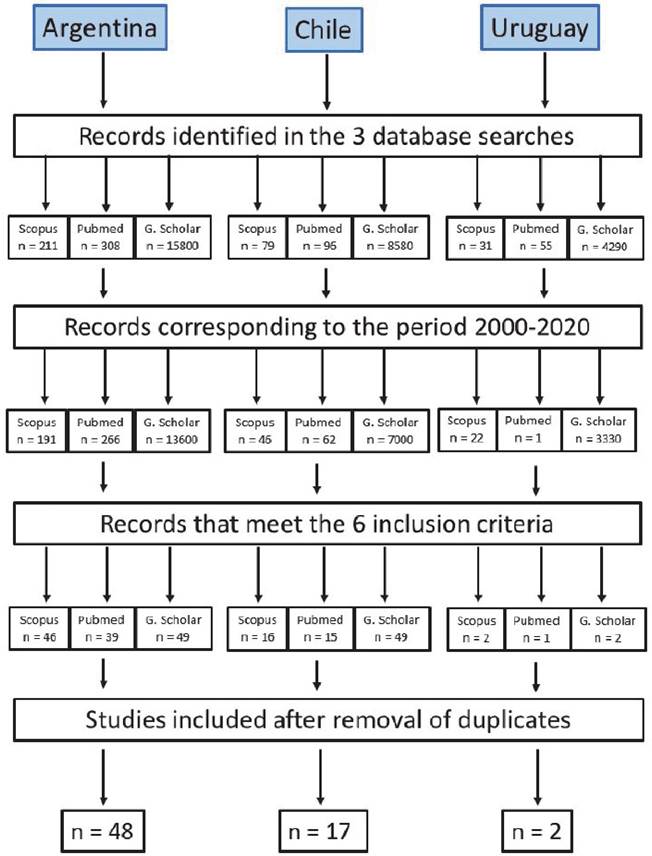
Figure ι.
Flow diagram of epidemiologic studies on dog parasites for the systematic review.
commonly used techniques were Willis flotation (20 reports), Sheater flotation (15 reports) and Telemann sedimentation (14 reports). In Uruguay only two methods were used: necropsy of stray dogs and coproELISA for Echinococcus sp., whereas in Argentina and Chile the techniques in common were Faust, Sheater, Telemann, Willis, and coproELISA for Echinococcus sp. Chilean researchers also used a modification of Faust (Teuscher), Burrows, and Harada-Mori for larvae. Other methods used only in Argentina were Fullerborn, Mini Flotac; Ritchie, Carles Barthelemy, direct observation with lugol; and Western Blot and PCR molecular techniques for E. granulosus.
More than 140 sites were analysed in Chile and Argentina (Figure 2, Table 1); however, the number of sites analysed in Uruguay could not be determined as this information is not given in the 2 selected studies. In Argentina and Chile, a total of 104 urban sites and 43 rural areas were considered (Table 2).
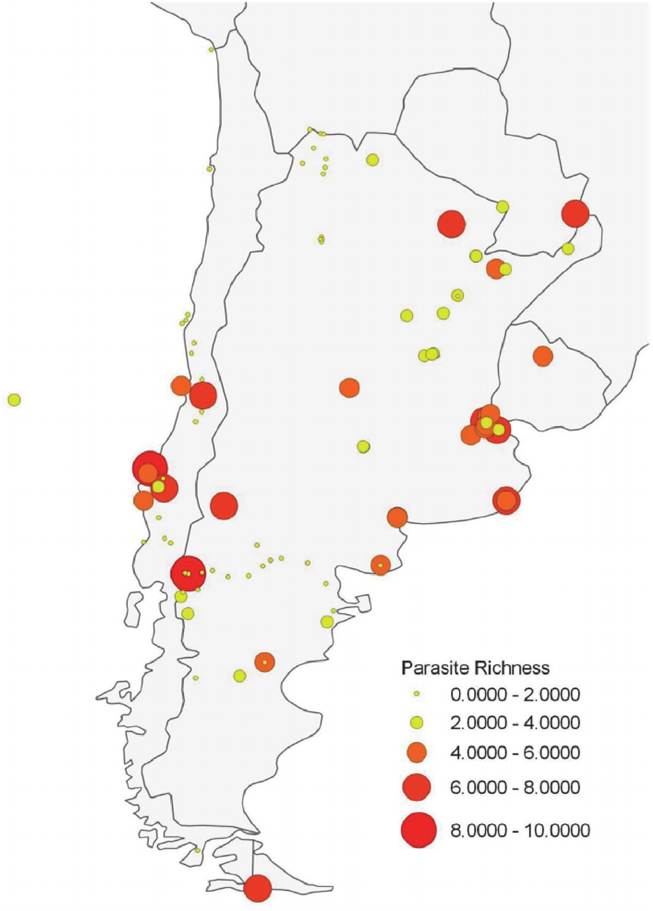
Figure 2.
Distribution of collection sites and species richness in each site.
A total of 22 parasite taxa was recorded (Table 3): 1 trematode (Trematoda sp.), 7 cestodes (Dibothriocephalus sp., Dipylidium caninum, Echinococcus sp., Taenidae, Taenia multiceps, Taenia hydatigena,Taenia ovis), 13 nematodes (Trichuris vulpis, Eucoleus aerophila, Eucoleus boehmi, Capillaria sp., Strongyloides sp., Ancylostomatidae sp., Ancylostoma sp., Uncinaria sp., Ascaris sp.,Toxascaris leonina, Toxocara canis, Spirocerca sp., and Physaloptera sp.), and 1 acanthocephalan species (Oncicola canis). In Argentina the presence of Ancylostoma was recorded up to genus level, whereas in Chile they were recorded only as Ancylostomatidae sp., so while it is likely that there are some shared species, this cannot be established from the records analysed. The distribution of the species is presented in Figures 3-5, which show that most of the parasitic records are located in the central zone of Chile, while
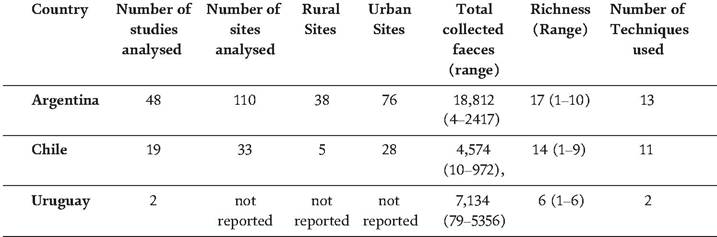
Table 2.
Summary of studies: Total number of reports analysed for the three countries, number of rural and urban sites, collected samples, techniques used, and species richness.
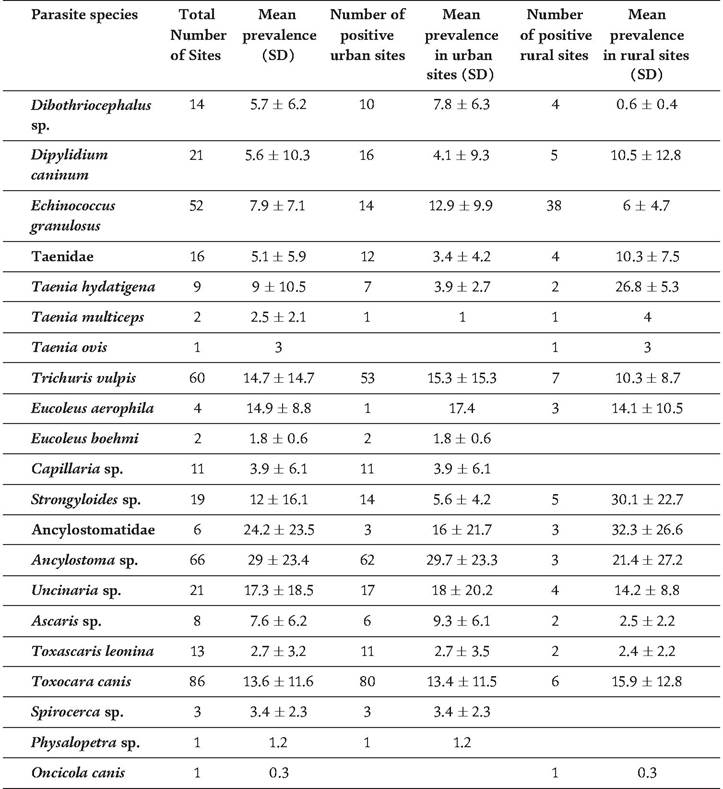
Table 3.
Species recorded in the studies analysed, their distribution (urban versus rural) and mean intensity.
The State of Knowledge on Intestinal Helminths in Free-Roaming Dogs in Southern...
D01: http://dx. doi. org∕ιo.5772∕ITexLi.96125
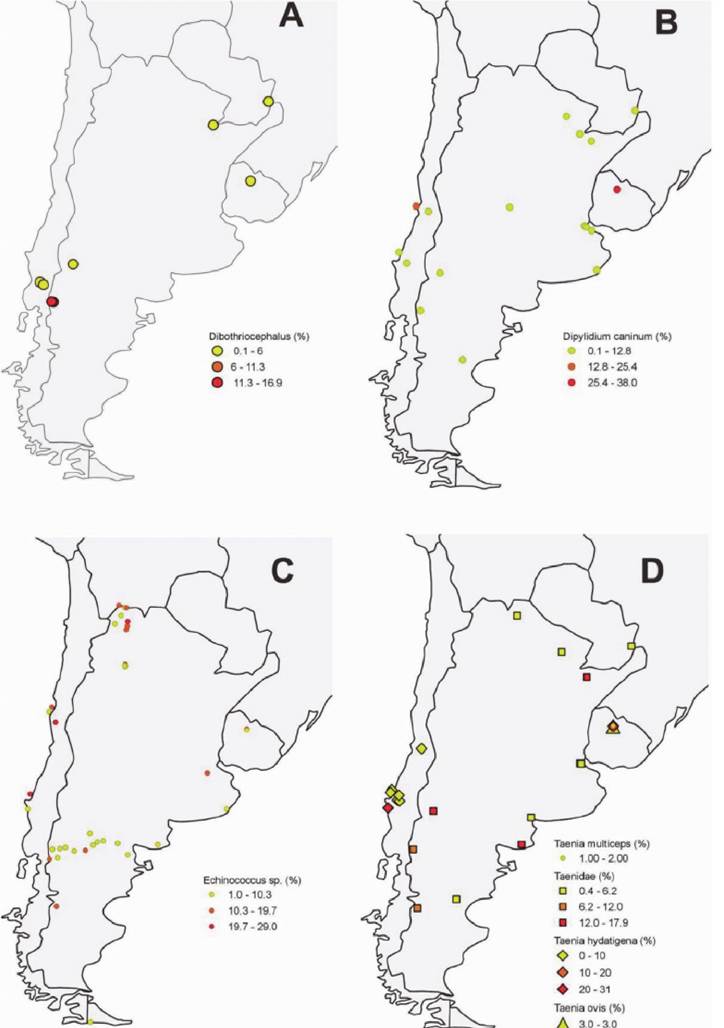
Figure 3.
Distribution of Cestoda collected in Argentina, Chile and Uruguay. A.: Dibothriocephalus sp.; B.: Dipilidium caninum; C.: Echinococcus sp.; D.: Taenids.
in Argentina there are records at all latitudes, except in an arid zone in the northwest, close to the Andes mountains. Species richness was correlated only with sample size (R = 0.44809, p < 0.05) and varied between sites, from 1 to 10 species (Argentina 1 to 10; Chile 1 to 9; Uruguay 1 to 6) (Figure 2).
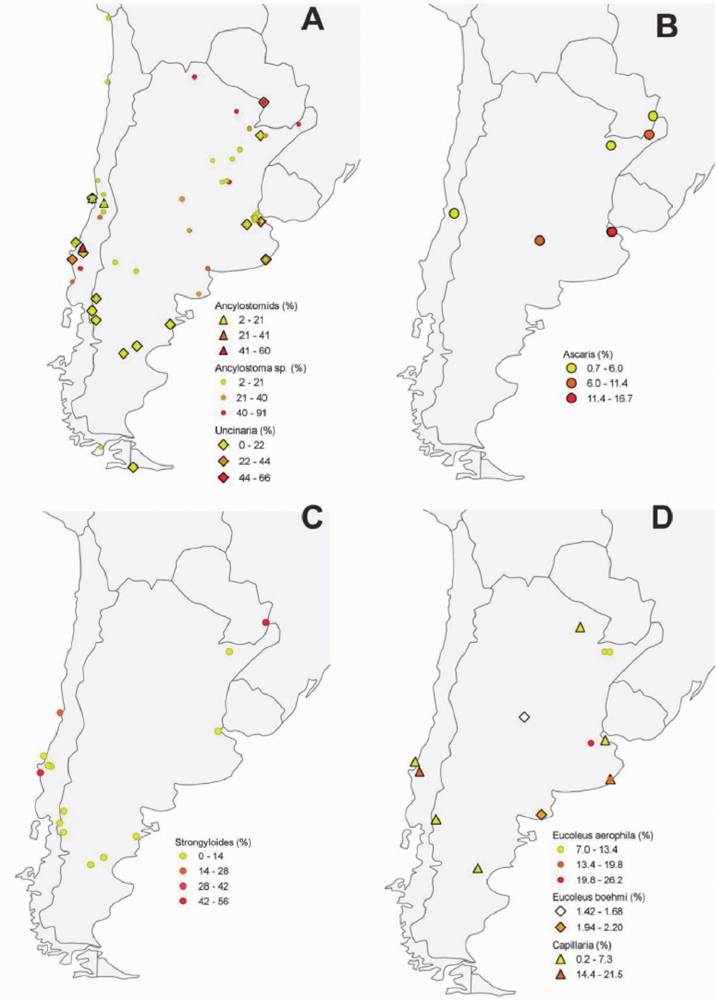
Figure 4.
Distribution of Nematoda (part 1) in Argentina, Chile and Uruguay. A.: Ancylostomatidae.; B.: Ascaris sp.; C.: Strongyloides; D.: Eucocleus spp. and Capillariasp.
The most frequently recorded species was T. canis (86 sites), followed by Ancylostoma sp. (66); Trichuris vulpis (60 sites), andEchinococcus sp. (52) (Table 3; Figure 4A, 5B, 3E, respectively); others were recorded only once, e.g.: Trematoda sp. and O. canis in Argentina, and Physaloptera sp. in Chile. The species detected in Uruguay, except for Echinococcus sp., correspond to different taeniid cestodes. Argentina and Chile shared 10 helminth species: Dibothriocephalus sp., D. caninum
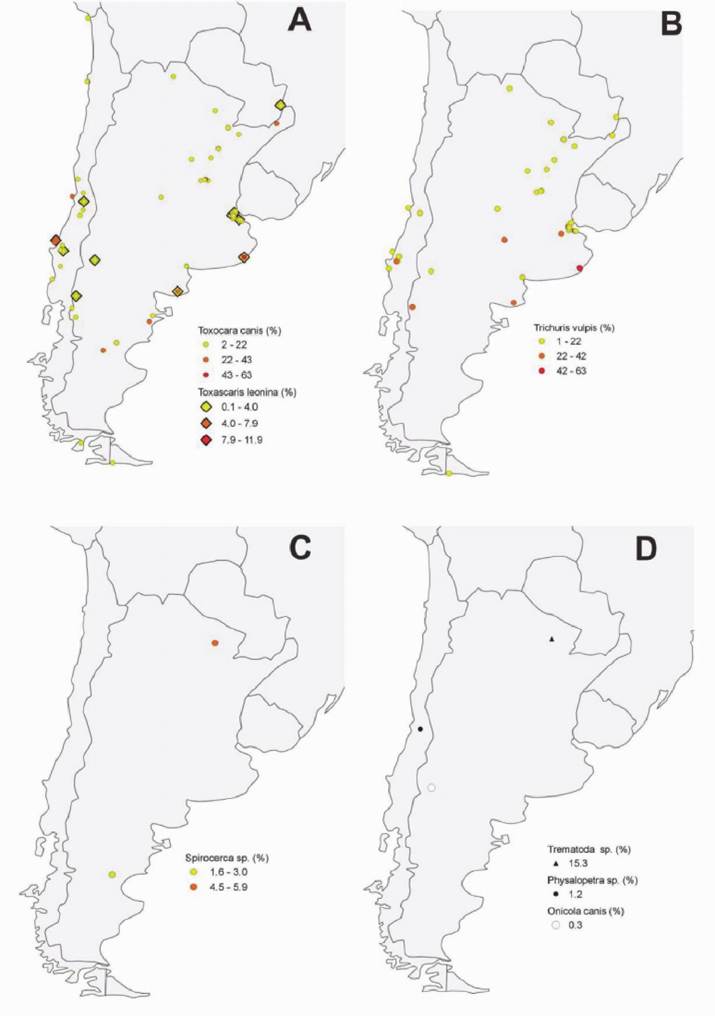
Figure 5.
Distribution of Nematoda (part 2) in Argentina, Chile and Uruguay. A.: Toxocara canis and Toxascaris
Ieonina.; B.: Trichuris vulpis; C.: Spirocerca; D.: Physalopetra5Trematoda sp. and Oncicola canis.
sp., Echinococcus sp., Ascaris sp., Capillaria sp., Strongyloides sp., T. leonina,T. canis, T. vulpis, and Uncinaria sp.
The species richness in urban areas (20 species) was slightly higher than in rural areas (17 species) (Table 3). In addition, a higher number of zoonotic species was recorded in urban areas, species such as Uncinaria sp., Ancylostoma sp. and Echinococcus sp. being widespread and prevalent in the cities (Table 3). Many parasite
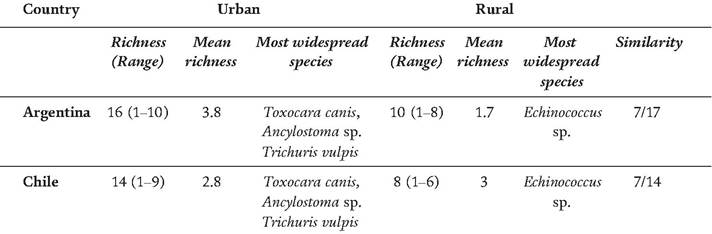
Table 4.
Characterisation of urban and rural areas in terms of richness and most widespread species, present in Argentina and Chile.
species showed greater prevalence in urban areas than in rural ones. The only exception to this was T. canis which had higher values in the rural areas (Table 3). In Chile 8 species were registered in rural areas and 14 in urban locations, whereas in Argentina the species richness was 10 and 16, respectively (Table 4).
Of the total taxa recorded, 14 (63.6%) have been registered in humans: Dibothriocephalus sp., D. caninum, Echinococcus (sensu lato), Taenidae,T. multiceps, T. hydatigena, Ancylostomatidae sp., Ancylostoma sp., Uncinaria sp., Ascaris sp., E. aerophila, E. boehmi, T. leonina, and T. canis. Some of these species are only occasionally recorded infecting humans, such as D. caninum, Taenia multiceps, E. aerophila, E. boehmi and T. leonina.
4.