Species Variations
10.3.1 Horse
The spleen lies beneath the last three ribs. Dorsally it is broad but narrows cranially and ventrally. On rectal examination it lies against the body wall and feels smooth with a sharp border.
The spleen can contract and release red blood cells in response to strenuous exercise. The nephrosplenic (renosplenic) ligament connects the left kidney to the spleen. The colon can become trapped between this ligament and the spleen, resulting in colic (Figure 10.1).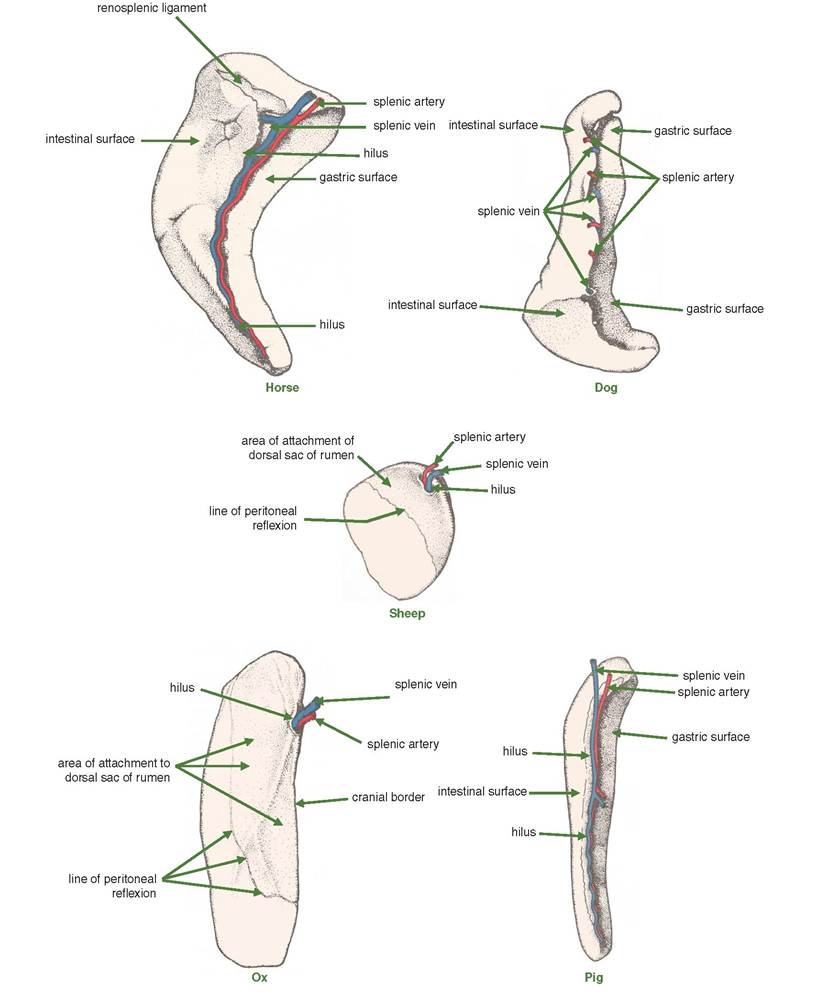
Figure 10.1 Visceral surface of the spleen of the domestic species.
10.3.2 Ruminants
The spleen is flat and oblong-shaped. The ventral end of the spleen is in contact with the reticulum in the ox. Nodules of lymphoid tissue, splenic corpuscles, are prominent on the cut surface of the spleen. The spleen of the sheep is relatively smaller than that of the ox.
10.3.3 Pig
The spleen is long and strap-like, lying under the last three ribs. It is very similar to the spleen of ox, complete with splenic corpuscles.
10.3.4 Carnivore
The spleen is long and dumbbell-shaped, wider ventrally. The location of the spleen depends on the size of the stomach. It is attached to the greater curvature of the stomach by the gastrosplenic ligament.
10.3.5 Whale
Uniquely there are up to 14 separate small spleens in these mammals.
10.4