TAXONOMY
Amphibians are classified into three orders (Table 1.1):
1. Anura (Salientia) - the frogs and toads
2. Caudata (Urodela) - the salamanders, newts, and sirens
3. Gymnophiona (Apoda) - the caecilians
Anura
By far, the Anura represent the greatest diversity of amphibians, with over 3500 living species divided among 21 families.
Anura comes from the Greek, meaning “without a tail,” and with the exception of the tailed frogs (Leiopelmatidae), the remainder of anurans have either a very poorly developed tail or lack one (Fig. 1.7). The larvae are unlike the adults, and lack teeth. Neoteny, the condition in which animals become able to reproduce while arrested developmentally in the larval stage (Wallace et al. 1991), is not present. The anuran families are listed in Table 1.2 (Frank & Ramus 1995; Goin et al. 1978; Mitchell et al. 1988; Wright 1996, 2001b).Caudata
The order Caudata comprises nine families, with around 375 species described (Table 1.3). Urodeles have a long tail, with the toothed larval forms often being similar in appearance to the adults. Neoteny is common among the salamander families, with the axolotl (Ambystoma mexicanum) (Fig. 1.8) being the most common example (Frank & Ramus 1995; Goin et al. 1978; Mitchell et al. 1988; Wright 1996, 2001b).
Amphibians
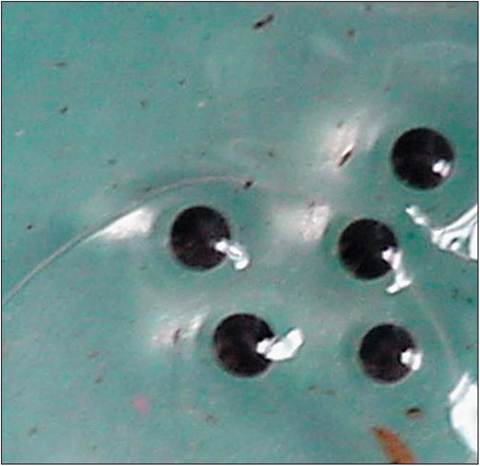
Figure 1.1 • Egg mass of Dyeing poison frog Dendrobates tinctorius. (Photo by Helmer.)
Gymnophiona
Although there are approximately 160 known species of caecilians, which are classified into six families (Table 1.4), clinicians will likely see them only on a sporadic basis. They are limbless, with elongate worm-like bodies, and short or absent tails (Frank & Ramus 1995; Goin et al.
1978; Mitchell et al. 1988; Wright 1996, 2001b).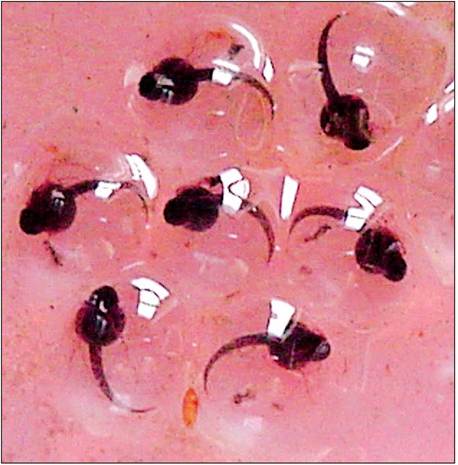
Figure 1.2 • Developing embryos of Dyeing poison frog Dendrobates tinctorius. (Photo by Helmer.)
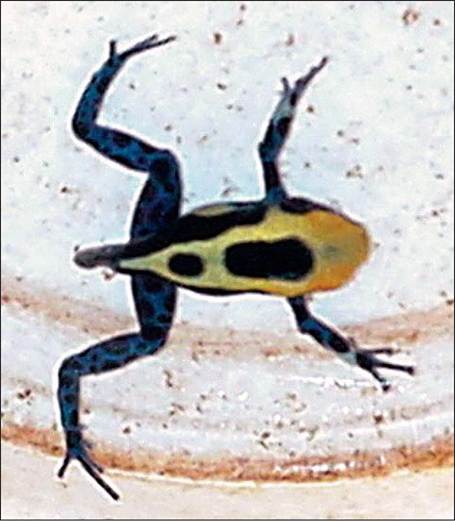
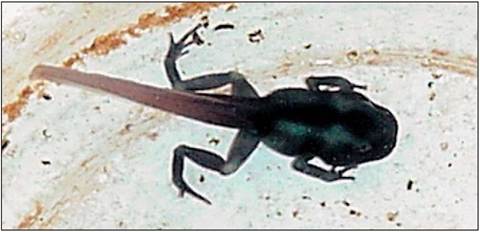
Figures 1.3-1.5 • Progression of metamorphosis of Dyeing poison frog Dendrobates tinctorius. The process from egg to adult takes approximately 3 months. (Photo by Helmer.)
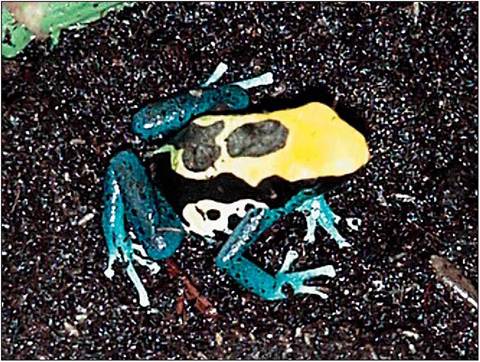
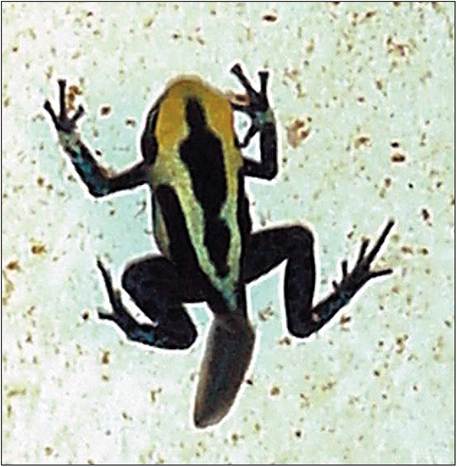
Figure 1.6 • Young adult Dyeing poison frog Dendrobates tinctorius. (Photo by Helmer.)
METABOLISM
Based on the theory of metabolic scaling, larger amphibians, in general, will require proportionately fewer calories than smaller animals. Metabolic requirements also vary with environmental temperature and activity level. Active, foodseeking species, such as Dendrobatid frogs, have a higher energy requirement than those species that ambush prey, such as the horned frogs (Ceratophrys spp.). Metabolic rate will increase by up to 1.5 to 2 times with illness or surgical recovery, and by up to 9 times with strenuous activity (Wright & Whitaker 2001). Formulae for the determination of metabolic requirements of various amphibians are presented in Table 1.5.
Thermoregulatory and hydrational homeostasis
Amphibians are poikilotherms (ectothermic), relying on a combination of environmental heat and adaptive behavior to maintain a preferred body temperature. This preferential temperature is dependent on a number of factors, including species, age, and season, and is essential for optimal metabolism. However, the ideal body temperature is also dictated by specific metabolic processes; for example, the
| Table 1.1 The class Amphibia is composed of three orders | |
| Order | Representative species |
| Anura | Red-eyed treefrog (Agalychnis callidryas) |
| Gymnophionia | Caecilians |
| Caudata | Tiger salamander (Ambystoma tigrinum) |
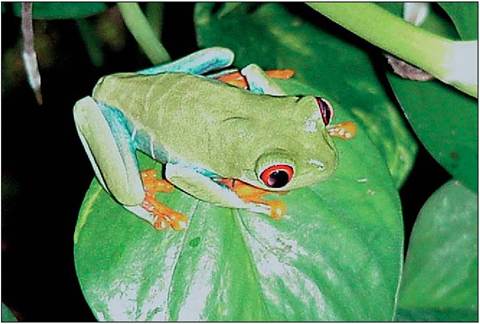
Figure 1.7 • Adult Red-eyed tree frog (Agalychnis callidryas).
(Photo by Helmer.)Amphibians
body temperature required for optimal digestion is likely different from that required for gametogenesis (Goin et al. 1978; Whitaker et al. 1999; Wright 1996, 2001d).
A number of physiological and behavioral adaptations have developed in amphibians that allow them to control
| Table 1.2 Composition of the order Anura | |
| Family | Representative species |
| Brachycephalidae | Saddleback toads |
| Bufonidae | True toads |
| Centrolenidae | Glass frogs |
| Dendrobatidae | Poison frogs |
| Discoglossidae | Painted frogs |
| Heleophrynidae | Ghost frogs |
| Hylidae | Treefrogs |
| Hyperoliidae | African reed frogs |
| Leiopelmatidae | Tailed frogs |
| Leptodactylidae | Tropical frogs |
| Microhylidae | Narrowmouth frogs |
| Myobatrachidae | Australian froglets |
| Pelobatidae | Spadefoot toads |
| Pelodytidae | Parsley frogs |
| Pipidae | Clawed frogs |
| Pseudidae | Harlequin frogs |
| Ranidae | True frogs |
| Rhacophoridae | Flying frogs |
| Rhinodermatidae | Darwin’s frogs |
| Rhinophrynidae | Mexican burrowing toads |
| Sooglossidae | Seychelles frogs |
Amphibians
| Table 1.3 Composition of the order Caudata | |
| Family | Representative species |
| Ambystomatidae | Mole salamanders |
| Amphiumidae | Amphiumas |
| Cryptobranchidae | Giant salamanders |
| Dicamptodontidae | American giant salamanders |
| Hynobiidae | Asian salamanders |
| Plethodontidae | Lungless salamanders |
| Proteidae | Neotenic salamanders |
| Salamandridae | True salamanders |
| Sirenidae | Sirens |
their body temperatures to a limited degree. The most obvious of these are postural and Iocomotory controls that allow the amphibian to actively seek or move away from heat sources.
Another important method of thermoregulation is peripheral vasodilation and constriction to regulate body core temperature, often in conjunction with glandular secretions to regulate evaporative cooling in some species (Goin et al. 1978; Whitaker et al. 1999; Wright 1996, 2001d). A change in skin color to modulate absorption of solar energy is another significant adaptation that has been studied in terrestrial anurans. Melanophores (melanin-rich pigment cells) in the skin of amphibians can regulate internal melanin aggregation or dispersal, thus changing the skin to a lighter coloration to enhance reflectivity, and thus decrease heat absorption in periods of light. In addition, some anurans have extraordinarily high skin reflectivity for near infra-red light (700-900 nm), owing to their iridophores (color pigment cells), which significantly reduces solar heat load (Kobelt & Linsenmair 1992, 1995; Schwalm et al. 1977).Finally, a number of crucial physiological adaptations are found in wild temperate anuran and caudate species that are necessary for winter survival. These include protein
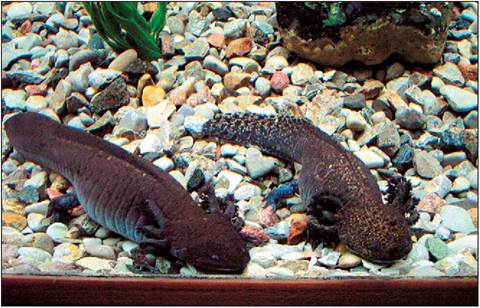
Figure 1.8 • Axolotl (Ambystoma mexicanum). (Photo by Whiteside.)
| Table 1.4 Composition of the order Gymnophiona | |
| Family | Representative species |
| Caeciliidae | Common caecilians |
| Ichthyophiidae | Fish caecilians |
| Rhinatrematidae | Beaked caecilians |
| Scolecomorphidae | Tropical caecilians |
| Typhlonectidae | Aquatic caecilians |
| Uraeotyphlidae | Indian caecilians |
| Table 1.5 Formulae for determination of caloric needs of resting amphibians at 25° C | |
| Order | Caloric requirement per 24 hours in kcala |
| Anuran | 0.02 (BM)0.84 |
| Salamander | 0.01(BM)0.80 |
| Caecilian | 0.01(BM)1.06 |
a Value should be increased by a minimum of 50% during periods of injury or illness.
BM represents the animal's body mass in grams.(Adapted from Tables 7.1-7.4 in Wright KM and Whitaker BR, 2001).
adaptations (increased fibrinogen, shock proteins, and glucose transporter proteins, and the appearance of ice nucleating proteins in blood that guide ice formation), the accumulation of low molecular weight carbohydrates (glycerol or glucose) in blood and tissues, and increasing plasma osmolarity through dehydration. These adaptations serve to lower the freezing point of tissues (super-cooling) and promote ice growth in extracellular compartments. Amphibians that are freeze tolerant have also good tissue anoxia tolerance during freeze-induced ischemia (Lee & Costanzo 1998; Storey & Storey 1986).
Physiology, behavior, pathology, and therapies are all influenced by temperature; therefore it is important for the clinician to realize that amphibians must be kept within environments that allow for them to stay within their preferred optimal temperature zone (POTZ) for normal metabolic homeostasis (Whitaker et al. 1999; Wright 2001d). It is equally important that amphibians not be subjected to rapid temperature fluctuations because thermal shock may ensue (Crawshaw 1998; Whitaker et al. 1999).
CLINICAL NOTE
Amphibians that are kept above their POTZ may show signs of inappetence, weight loss, agitation, changes in skin color, and immunosuppression. Those kept below the POTZ may become inappetent, lethargic, develop abdominal bloating associated with bacterial overgrowth from poor digestion, have poor growth rates, or become immunocompromised.
Thus enclosures that contain a mosaic of thermal zones are ideal to allow the amphibian to thermoregulate normally (Whitaker et al. 1999; Wright 2001d).
Due to the permeability of most amphibians’ skin, desiccation is always a threat to survival, necessitating the development of physiological adaptations and behaviors to ensure hydrational homeostasis in aquatic or terrestrial environments.
Amphibians are limited in their activities and ranges as their evaporative water loss is greater than that of other terrestrial vertebrates. Some species of amphibian, such as axolotls and mud puppies, are totally dependent on an aquatic environment, and even most terrestrial amphibians must remain moist in order for gas exchange to be effective (Boutilier et al. 1992; Shoemaker et al. 1992; Wright 2001d). For most captive amphibian species, a relative environmental humidity of greater than 70% is appropriate as it provides a humidity gradient and the animals can then select a level that is suitable for them. Clinicians should always remain aware of the need for the amphibian patient to remain in moist settings when being examined (Whitaker et al.1999).Behavioral responses to minimize water losses include postural changes and limitation of activities to periods of elevated humidity. One well-documented physiological adaptation to prevent water loss that has been described in South American treefrogs (Phyllomedusa spp.), and likely exists in other treefrog species, is the secretion of a waterproofing substance from lipid glands in their skin (Heatwole & Barthalamus 1994; Wright 2001d). This waxy exudate is smeared over the surface of the frog with stereotyped movements of the feet and imparts a surface resistance to evaporative losses comparable to many reptiles. Other described physiological mechanisms in terrestrial amphibians include stacked iridophores in the dermis, and dried mucus on the epidermis (McClanahan et al. 1978; Wright 1996, 2001c). It is important to realize that these protective mechanisms are often lacking on the ventral surface of amphibians; the ventrum serves as an important route for water uptake from the environment, with some anurans even having a modified area on their ventral pelvis, known as a “drinking patch,” that is responsible for up to 80% of water uptake (Parsons 1994).
CLINICAL NOTE
Absorption of water from the gastrointestinal tract is negligible in most species, thus oral fluids are of little benefit in rehydrating an amphibian. For most terrestrial species, shallow water soaks and subcutaneous or intracelomic dilute fluid administration are most effective in combating dehydration (Whitaker et al. 1999; Wright 2001d).
Aquatic amphibians face a different problem in that they are constantly immersed in a hypo-osmotic environment. Overhydration is a constant threat, with plasma expansion resulting in cardiac stress. To combat this, they have developed physiological mechanisms to excrete excess water while conserving plasma solutes (Goin et al. 1978; Mitchell et al. 1998; Wright 2001d).