Diagnostic Tests That Can Be Applied in the Field
Laboratory procedures can be performed in the field, the results of which would prove beneficial in the development of a diagnostic plan. These include the CMT, partial urinalysis (dipsticks), ruminal pH determination, and milk or blood progesterone tests.
In addition, some serum chemistries can be performed cowside with the use of the i-Stat Serum Chemistry Analyzer (i-Stat Corporation, Princeton, NJ.).The CMT is a simple procedure that aids in the detection of clinical or subclinical mastitis (see Chapter 36). This procedure is done routinely during all physical examinations of lactating cows. Partial urinalysis is accomplished by collecting the urine and using any one of a number of urine dipsticks that can be commercially obtained. With a suspected case of lactic acidosis, a rumen sample can be collected through the stomach tube or via percutaneous needle puncture and rumen pH can be determined. Most drugstores carry pH paper that can be used for this procedure; however, confirm that the
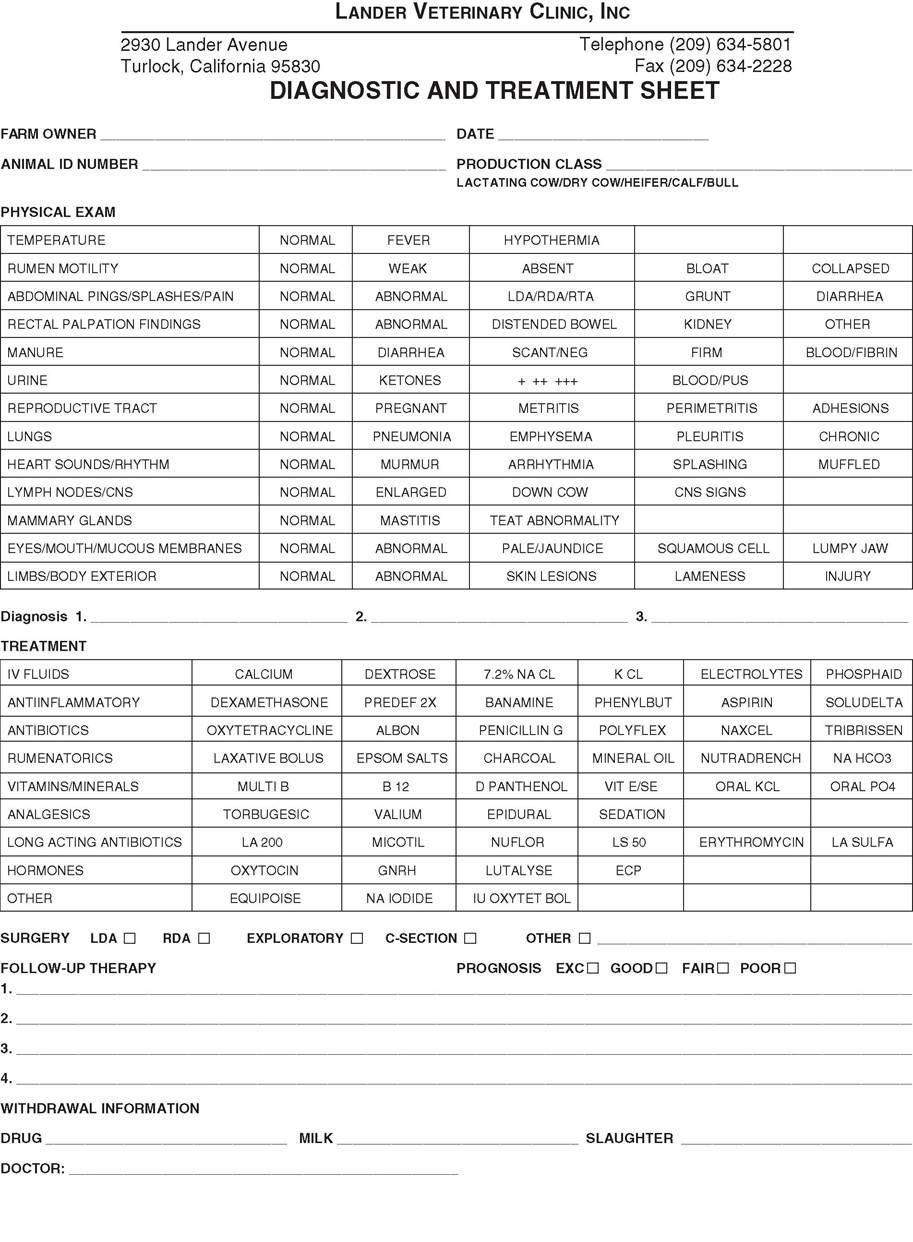
FIG. 1.6 Example of a diagnostic and treatment sheet. (Courtesy Lander Veterinary Clinic, Turlock, Calif.)
paper has a standard range, because certain papers are specific for the acidic or alkaline range. A rumen pH below 4.5 would be indicative of lactic acidosis. Numerous cowside progesterone assays that use either milk or blood as substrate have recently been developed. These can be relatively easy to use and interpret or they can be difficult, so discretion should be used when making initial purchases. These ancillary diagnostic procedures are explained in greater detail later in this text.