Feeding Lactating Goats
In the past, the best-producing goats in a herd were usually the ones that consumed the most forage. This may be because of intensive selection pressure in herds in which little or no grain was fed.
As feeding practices change, goats may adapt to using grain in preference to forage. However, it remains true that goats have an aptitude to consume much forage, a characteristic that makes them well adapted to many extensive agricultural situations.The forage-to-concentrate ratio should always be kept in mind (Kawas et al. 1991). With an alfalfa hay/grain ration, a forage : concentrate (F : C) ratio of 2 : 1 on a weight basis gives excellent results. With mediocre hay, F : C ratios of 1 : 1 to 1 : 2 are more appropriate. For best production of milk and butterfat, hay consumption should be maximized while still maintaining a positive energy balance. This requires good forage that is not overmature and lignified. As the proportion of concentrates in the ration increases (especially above two-thirds), butterfat percentage drops. It is not economically sound to force hay consumption if the hay is of poor quality. Green chops and dehydrated forages are better than most hays.
In early lactation, when goats are mobilizing body fat as an energy source, it is important to feed adequate protein to support milk production. A crude protein concentration of 17-18% of DM has been recommended for high- producing goats at this stage (Skjevdal 1981). During midlactation, total crude protein in the ration should be 13-16% of DM.
Lactation Curves
In recent years, numerous researchers have taken production data acquired in the course of milk recording schemes and attempted to fit mathematic functions to the data to describe dairy goat lactation curves (Gipson and Grossman 1990; Macciotta et al. 2008). Factors affecting the lactation curve include breed, parity, season of kidding, and level of production (Gipson and Grossman 1990; Arnal et al.
2018). First-parity does have decreased peak yields, peak later, and are more persistent than later-parity does. Higher-producing does are less persistent than low producers; milk production declines more steeply after peak yield. Does freshening with two kids produce more milk than does with singles, whether suckled or not (Macciotta et al. 2008), which may reflect the influence of placental lactogen on mammary gland development. Does exposed to long day lengths in later lactation (by artificially extending the photoperiod) have more persistent milk production (Russo et al. 2013). The mathematic equations permit prediction of the total milk yield for the entire lactation from a few tests in early lactation, and are thus useful for selection and culling decisions.Figure 19.6 depicts lactation curves (total milk) for goats of different parities freshening at different times of the year. These curves were derived from the original data of Gipson and Grossman (1989).
Lactation curves describing total milk, fat, and protein have been used by dairy cattle consultants as indicators of nutritional status of individual animals or herds. The validity of such an approach for goat herds needs additional evaluation (Gipson 1992). Comparison of lactation curves generated during research trials is useful for demonstrating the beneficial effects of providing appropriate dietary energy and protein (Sahlu et al. 1995) or other nutrients. Looking at the curves from a commercial herd and then trying to predict the adequacy of the diet is more problematic. Goats on the same farm and the same diet can have very diverse lactation curves (Arnal et al. 2018).
Lactational Ketosis
Cows and goats have comparable milk production when the quantity of fat-corrected milk per kg metabolic bw is considered. Goats and cows also have similar body reserves, which are mobilized to support milk production (Sauvant et al. 1991a). Goats selected for high production but improperly fed may develop lactational ketosis.
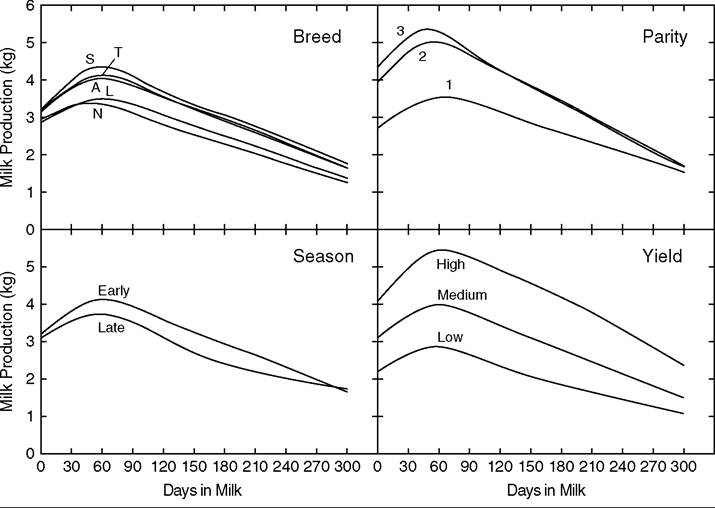
Figure 19.6 Lactation curves for dairy goats. A, Alpine; L, LaMancha; N, Nubian; S, Saanen; T, Toggenburg. Source: Redrawn from Gipson (1992).
Pathogenesis
Glucose is required by the mammary gland for synthesis of lactose. After parturition, the quantity of milk produced and thus the nutrient requirements of the goat increase more rapidly than does the level of intake. Plasma glucose is significantly influenced by the digestibility of the diet, whereas the level of lipomobilization is more independent of the quality of the diet, increasing instead exponentially with production potential.
Older goats are generally larger and heavier and have an increased potential DMI than yearlings. However, this increased intake is inadequate to compensate for their higher requirements, which reflect higher milk production. The increased mammary uptake of glucose in high producers is not adequately offset by increased hepatic gluconeogenesis and increased absorption of glucogenic precursors. Thus, high producers tend to be hypoglycemic (Sauvant et al. 1984).
Clinical Signs and Treatment
In view of the typical signs of lactational ketosis in cattle, decreased appetite (especially for concentrates) and decreased milk production are to be expected in goats with ketosis. Ketonuria is present and some people can detect the odor of ketones on the animal's breath. Treatment consists of corticosteroids (2—6 mg dexamethasone or more; Braun 1989) for their gluconeogenic and appetitestimulating effects and oral propylene glycol (60 mL two to three times daily). Intravenous dextrose may also be given, as discussed under pregnancy toxemia. Provision of tempting browse or force feeding with a slurry of pelleted complete horse feed is used if needed to increase feed consumption.
A more severe syndrome sometimes occurs in which the best-producing goat in the herd suddenly collapses.
A severe hypocalcemia frequently accompanies ketonuria. Dramatic recovery often results from “shotgun” therapy with intravenous fluids, dextrose, calcium, and B vitamins. The exact pathogenesis remains obscure. An indigestion or acidosis from excessive grain consumption when hay is of poor quality may be involved.Although clinical lactational ketosis is not common, the availability of hand-held ketone meters has allowed researchers to diagnose and study subclinical ketosis in goats in lactation, where the goat appears healthy but blood ketones are elevated above a selected threshold. Along with hyperketonemia, these goats typically exhibit hypoglycemia, hypoproteinemia, bilirubinemia, and elevated liver enzyme activities, including AST, ALT, lactase dehydrogenase (LDH), and gamma-glutamyl transferase (GGT) (Marutsova and Binev 2020). Goats with subclinical lactational ketosis have also been successfully treated with a variety of protocols (glycerin, dextrose, dexamethasone, B vitamins, etc.) that decrease beta-hydroxybutyrate and increase glucose in the blood (Yadav et al. 2018). It is not obvious that such treatment is cost effective.
Prevention
It is important to limit the early lactation energy deficit as much as possible, to avoid clinical ketosis. This can be done by stimulating appetite and feeding a balanced ration that includes grain early in lactation. The quantity of grain is increased by 0.1 kg every three days until requirements are met. Peak energy intake can be achieved several weeks earlier than peak DMI if concentrates are fed judiciously. This is because the capacity to ingest concentrates rises more rapidly than does the capacity to ingest forages. Normally the goat achieves a positive energy balance during the second month of lactation.
Indigestion and Rumen Acidosis
When a high proportion of concentrates is fed in the ration, indigestion can lead to a marked day-to-day variation in feed consumption. The goat has subacute ruminal acidosis, a metabolic disease that is considered to be economically important in dairy cattle, but is poorly described in goats (Stelletta et al.
2008). With even higher concentrate intake, life-threatening rumen acidosis may occur. Nutritionally induced rumen bloat, which is also potentially lifethreatening, is discussed in Chapter 10.Pathogenesis
In general, roughages have an increased fiber content compared to concentrates and stimulate long periods of rumination. This in turn results in buffering of the rumen fluid by bicarbonate in saliva. The rumen pH remains in a range (6.0-6.8) favorable for cellulolytic bacteria. The major end product of roughage digestion is acetate. Grains lack long fiber. Because of a decreased rumination rate, less saliva reaches the rumen and the pH of the rumen contents drops when grain is consumed. This is desirable within limits, because the bacteria for degrading starches and sugars multiply best at a pH of 5.5-6.0. Also, the volatile fatty acids propionate and butyrate are produced in large quantities by digestion of concentrates and are absorbed faster at lower pH levels.
If too much grain is eaten at one time (improper diet or unplanned entry into the feed room), lactic acid-producing streptococci overgrow in the rumen and the pH decreases even more to a point where lactobacilli can proliferate. The ensuing lactic acid production lowers the rumen pH below the physiologic limit of 5.5 and kills the normal bacteria and protozoa. Bacteria produce both dextro- and levo-rotatory isomeric forms of lactic acid, but the mammalian liver is only able to efficiently degrade the l form. This allows the d form to build up in the blood, causing a systemic acidosis. Increased production of histamine and other toxins is associated with the occurrence of laminitis in some animals. Deranged synthesis of B vitamins or production of thiamine antimetabolites can lead to poli- oencephalomalacia (see Chapter 5). It should be noted that liver abscesses in goats are usually caused by Corynebacterium pseudotuberculosis rather than by other bacteria passing through a rumen epithelium damaged by toxic indigestion, as in cattle.
Clinical Findings and Clinical Pathology
Mild overeating of grain results in an off-feed condition. Rumen motility decreases but does not stop. The goat may grind its teeth. Milk production decreases and diarrhea may develop. Because the goat stops eating for one or two days, the rumen pH levels increase to a near-neutral range and recovery follows.
Severe overloading is accompanied by a systemic and often fatal acidosis. Rumen motility ceases and the contents are initially firm; mild bloat may be present. Constipation followed by diarrhea, muscle tremors, teeth grinding, groaning or blatting, increased heart and respiratory rates, and even a low fever may be noted. As the disease progresses, splashy (abnormally liquid) rumen contents, abdominal distension, and dehydration (evidenced by sunken eyes, decreased skin turgor, and increased packed cell volume) develop. This is because the rumen contents become hyperosmotic and pull water from the systemic circulation into the rumen. The urine is acidic and blood pH and bicarbonate values may be markedly decreased. Blood lactate levels greater than 40 mg/dL can occur in severe cases, with levels in normal goats of 8-10 mg/dL. Significant decreases in blood calcium sometimes occur. Some cases are fatal within 24 hours, while less severe cases may develop over 24-72 hours.
Diagnosis and Necropsy Findings
Rumen acidosis should be suspected when a goat is depressed and off feed and has had chronic or acute access to large quantities of readily fermentable carbohydrates (i.e., grain, bread, sugar beets, apples) (Braun et al. 1992). If diarrhea is present, fecal pH may be reduced; in one experimental study feeding wheat flour, fecal pH dropped from above 7.0 to below 5.0 at 24 hours (Aslan et al. 1995).
A sample of rumen fluid obtained with the aid of a stomach tube (up to 1 cm diameter) or a specially designed device (a metal sound with many perforations; see Figure 19.7) or even a needle aspirate can be helpful both for establishing a diagnosis and for determining if a
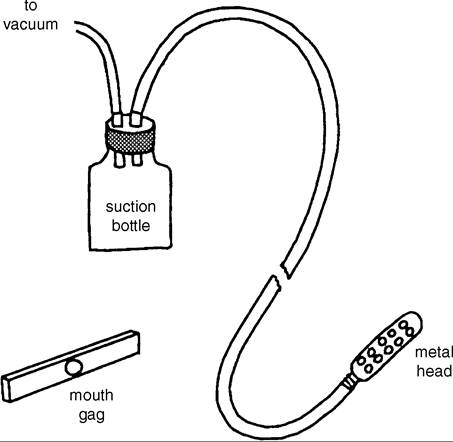
Figure 19.7 Homemade sound for obtaining rumen fluid from an adult goat.
rumenotomy is justified. Ruminocentesis carries risks of peritonitis or localized abscesses, but these risks can be lessened by shearing and disinfection of the chosen site over the ventral rumen, restraining the goat to prevent sudden movement during the procedure, and avoiding needle insertion during a contraction of the ventral sac of the rumen (Stelletta et al. 2008).
A milky gray fluid with a sour smell and a pH level less than 5.0 is conclusive evidence of rumen acidosis. Slightly increased pH levels may result from contamination of the rumen fluid sample with saliva during collection. A pH level in the normal range (5.5-7.0) does not rule out rumen acidosis because absorption of acid, passage of ingesta to the abomasum, and flow of saliva cause increase of the pH level if the goat survives long enough. A Gram-stained smear of rumen fluid demonstrates an overwhelming preponderance of Gram-positive organisms when rumen acidosis has occurred. Rumen protozoa are dead or absent (Nour et al. 1998). In dairy goats in early lactation, the advanced stages of rumen acidosis may mimic toxic mastitis or milk fever. Animals recumbent with milk fever are not dehydrated or diarrheic and respond to parenteral administration of calcium salts. Enterotoxemia occurs under similar circumstances of accidental or excessive exposure to carbohydrates and may have a similar clinical appearance. Enterotoxemia generally has a more rapid clinical course and the degree of systemic acidosis and dehydration is not as severe.
At necropsy, the same changes in rumen fluid are apparent. Additionally, there may be evidence of large quantities of grain in the rumen or of rumenitis and localized peritonitis. Abomasal ulcers, sometimes perforating, have been produced experimentally by grain overload (Aslan et al. 1995). Dehydration is evidenced by sunken eyes.
Treatment
When the indigestion is judged to be mild, offering grass hay is sufficient treatment, and mixed B vitamins may be given “on general principles” and to protect against development of polioencephalomalacia.
Early in the course of the indigestion, oral antacids (Baumgartner and Loibl 1986) should stop progression of the disease. Various suggested adult dosages include 10-20 g magnesium oxide, 50 g magnesium hydroxide, or 20 g sodium bicarbonate. In an experimental model that produced ruminal acidosis by feeding 80 g of wheat flour per kg bw, oral sodium bicarbonate at 1 g/kg 24 hours later was an effective treatment, whereas oral baking yeast at 1 g/kg was not helpful (Aslan et al. 1995). Oral tetracycline (single dose of 0.5-1 g) also helps to inhibit additional bacterial proliferation. Concentrate is withheld and palatable forage is offered free choice.
A rumenotomy to remove the rumen contents and rinse the mucosa may be life-saving in acute, severe cases. If the rumen fluid pH is near neutral, and especially if the rumen contents have a splashy consistency, rumenotomy is no longer of great benefit. Instead, as much fluid as possible is drained off with a stomach tube. Then warm water, antacids, and (if available) rumen fluid from a healthy animal are administered through the tube.
If available, determination of acid-base status is helpful in guiding therapy; the severely affected goat has a metabolic acidosis. The base deficit is multiplied by 0.3 ? bw in kg to determine the milliequivalents of bicarbonate (HCO3-) needed. Each gram of sodium bicarbonate supplies 12 mEq of bicarbonate. Even when clinical laboratory support is lacking, dehydrated goats should be treated intravenously with 3-5 L or more of physiologic saline with added bicarbonate. A goat weighing 50 kg with moderate acidosis (base deficit of 12) needs approximately 15 g of sodium bicarbonate.
Thiamine (300-500 mg several times a day), other B vitamins, and calcium gluconate administered subcutaneously are commonly given. Glucose solutions are not necessary, and lactated Ringer's solution is contraindicated. Repeated oral administration by drench or stomach tube of a liter of rumen fluid from a healthy cow, sheep, or goat (obtained fresh from a slaughterhouse or from a fistulated cow or with the aid of a rumen fluid sampling device) is very beneficial in restoring normal rumen flora and fauna (Braun et al. 1992; DePeters and George 2014).
Prevention
If the goat has two to (preferably) four weeks to adapt to gradually increasing quantities of grain, then many cases of indigestion can be avoided. Adaptation occurs in two ways. First, the rumen microorganisms that digest readily fermentable carbohydrates to volatile fatty acids increase in number. At the same time, certain bacteria (such as streptococci) produce lactic acid from starches and sugars, but still other species of bacteria with the ability to metabolize lactate to propionate have time to proliferate (Ogimoto and Giesecke 1974). Second, increased concentrations of propionic and butyric acid stimulate the development of rumen papillae so that there is an increased surface area for absorption of fatty acids. Rapid removal of volatile fatty acids from the rumen helps to keep the pH within physiologic bounds.
Another management technique that is very helpful with high-concentrate feeding is to distribute the grain over three or more meals a day of 0.3 kg (Broqua 1990) per meal or slightly more. This results in a less drastic pH level decrease after each meal than if all the grain is fed at once. Grains that are digested very rapidly (e.g., wheat and high- moisture corn) can be replaced by slower-digesting grains (e.g., sorghum, dry corn). Whole grain is digested more slowly than finely ground grain that has more surface area for bacterial attack. Roughage should be fed before grain, first thing in the morning. Regular supplementation with buffers (bicarbonate of soda or calcium carbonate at 1.5-2% of concentrate; Broqua 1990) also reduces the risk of acidosis. Producers sometimes offer bicarbonate of soda free choice to goats on high-grain diets. Corn silage should also be distributed three or more times a day; otherwise, the goat may initially select out a large quantity of corn grain from the silage, risking acidosis.
When individual feeding of grain is not possible, as when supplementing animals on range because of drought conditions, the use of alkali-treated grain with an ionophore has permitted feeding of relatively large quantities of grain to unadapted goats, as described above for prevention of abortion. Dried beet pulp, citrus pulp, and soybean hulls are other energy sources that carry less risk of acidosis than do standard grain products, because they are high in fermentable cell walls and support healthy rumen fermentation (Di Trana and Sepe 2008).
Enterotoxemia
Clostridium perfringens type D is a normal inhabitant of the goat's intestinal tract. Sudden changes in diet (consumption of unaccustomed quantities of grain or of lush pasture when first turned out in the spring) can result in incomplete digestion in the rumen. The ingesta that passes to the small intestine then favors overgrowth of the clostridia and production of epsilon toxin. This toxin is activated by trypsin and absorbed. The syndrome produced is called enterotoxemia or overeating disease and is described more fully in Chapter 10. Sudden death is common.
Because many of the same factors predispose to both enterotoxemia and to rumen acidosis, the two conditions can occur in the same outbreak and can be confused clinically. Necropsy findings (pH level less than 5.5 in rumen fluid for acute acidosis; fluid and fibrin in the pericardial sac, glucosuria, epsilon toxin in ingesta for enterotoxemia) can usually distinguish between the two diseases. Presence of epsilon toxin without other signs is not proof of enterotoxemia. A vaccination program against enterotoxemia should be instituted if it is lacking on the farm, regardless of the clinical or necropsy diagnosis of the present case.
Milk Fat Depression
When a poor-quality roughage is supplemented with concentrate, intakes of both DM and energy increase and milk production is increased. However, the amount of butterfat produced increases less than does the amount of milk, and thus butterfat percentage tends to drop (Morand-Fehr and Sauvant 1980). High-concentrate, low- roughage diets are associated, as discussed earlier, with decreases in rumen fluid pH and in the ratio of acetate to propionate produced in the rumen (Lu et al. 2005). These changes in turn are associated with decreased butterfat production, because acetate rather than propionate or butyrate is the main precursor of milk fat (Davis et al. 1964) and propionate stimulates insulin secretion, which inhibits release of fatty acids from adipose tissue (Emmanuel and Kennelly 1984). In many places where high-producing dairy goats are raised, good-quality roughages to support production are unavailable or else very expensive. In select instances, it may be necessary to add a buffer, such as sodium bicarbonate at 4%, to the concentrate portion of the ration to maintain butterfat production (Hadjipanayiotou 1982). Other causes of milk fat depression are discussed in Chapter 14.