Hospice Care
As hard as we may try to thwart the progression of disease and the aging process, there comes a time when we simply need to care for the pet (and the owner) and provide the best quality of life possible regardless of the quantity of time left.
This is when veterinary hospice services are best utilized. The term hospice has a Latin derivative stemming word hospitium, which means to host. Hospice for humans has been around for centuries as a place of hospitality for the sick, wounded, or dying. The more modern concept of hospice is a type of care that focuses on the palliation of pain and symptoms of a terminally or chronically ill patient which could occur in the hospital, nursing home, or in the patient's home (Figure 36.1) or in the home of family members. Within the veterinary world, hospice is still very much misunderstood.Some define veterinary hospice as a medically supervised service dedicated to providing comfort and quality of life for the pet (and the owners) until euthanasia is elected or natural death occurs. It is important to understand that hospice is not prolonging suffering nor is it intended to preclude euthanasia. The AVMA has established guidelines for Veterinary Hospice Care and states that if the practice is consistent with veterinary practice acts, veterinary hospice gives clients time to make decisions regarding a companion animal with a terminal illness or condition and to prepare for the pending death of the animal (AVMA 2017).
Hospice does not mean you stop treatment for the pet or even possible curable options. Take the case of Romeo. Romeo was a male, neutered, 12-year-old domestic short hair, cat with a 2-month history of vomiting and diarrhea also exhibiting signs of decreased appetite and dehydration; Romeo was just not “himself.” After being diagnosed with intestinal lymphoma by the primary care veterinarian, the caregiver was told that not much could be done for Romeo besides supportive care and steroids which they had already started.
Romeo's caregiver Anthony reached out to me for hospice care and advice on quality-of-life assessment. After examination of Romeo (Figure 36.2) and a long c onversation with Anthony, I suggested a consultation with an oncologist since the owner was willing to do anything for Romeo. I felt that minimally we could get a better idea of length of time left and to give Anthony the opportunity for other treatment options from an expert. He followed my suggestion and took Romeo to the oncologist the next day and Romeo was started on chemotherapy right away. Anthony however knew that chemotherapy may not work so he wanted to continue hospice care. I worked in tandem with the oncologist, providing updates from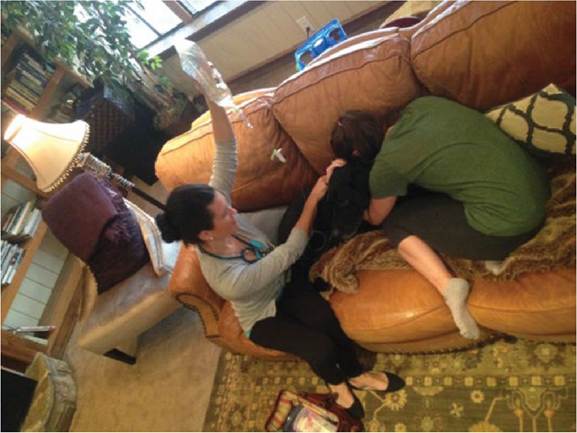
Figure 36.1 Dr. Dani McVety teaching owners how to give sub-cutaneous fluids to a terminally ill patient. (Courtesy of Dr. Dani McVety.)
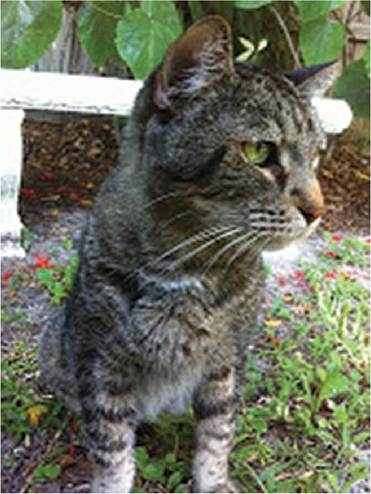
Figure 36.2 Romeo during his first hospice appointment.
Four months later, Romeo was doing really well and his quality of life was actually great. He was the first hospice patient that I happily suspended from hospice care. Almost 30 months later, Anthony reached out to us again and this time it was to help say goodbye to Romeo. We provided a peaceful passing in his home with no regrets. The reason I tell you about this case is to exemplify that Romeo's family was prepared to say goodbye during his first struggle but they still wanted to try curative measures. Hospice does not mean we have to give up all hope and treatment - but it can be used in conjunction with treatment in order to afford owners a better sense of control over the entire process.
What qualifies a pet for hospice treatment? Much of the answer is based on the evaluation of the pet, the beliefs of the family, and the goals for care.
Here are a few scenario's in which pets can benefit from veterinary hospice care:
the home visits, changing supportive care protocols when needed and helping Anthony with quality-of-life assessments and preparing him for the eventual euthanasia.
• Advanced aged and dealing with symptoms that limit their quality of life
• Struggling with symptoms from a chronic disease
• Diagnosed with a terminal illness with no treatment options or treatments have failed
• Diagnosed with an illness but treatment is not pursued by the family
• Struggling with life limiting disease but still attempting curative options
• Family's ability to care for the sick pet is not conducive to quality of life
Hospice can be a part of any life stage. In veterinary medicine, there are the three well known stages of life; puppy, adult, and senior. I encourage us to consider geriatrics as the fourth life stage. A pet can be within any one of these life stages but circumstances present themselves such that hospice is warranted. It could be a kitten with FIP, a 5-year-old Great Dane with osteosarcoma or a 17-year-old Chihuahua in heart failure. All could greatly benefit from hospice care and the caregivers would value the support your team provides.
Many families wish to keep their pets alive for as long as possible while maintaining a good quality of life but simply don't know how, which leads to feelings of helplessness. With the advancement of treatment options, we have never been in a more powerful position to provide comfort care to pets and help owners face the struggles of dealing with a dying pet.
While much of veterinary hospice is ideally done in the home (one can garner a lot of information in the home environment that may be missed at the clinic) where the pet is most comfortable, foundational discussions and treatments should be started at the clinic with their primary veterinarian who has enjoyed a long-term relationship with the pet parent.
Hospice veterinarian Tamara Shearer uses a Five Step strategy for hospice care including:
• Evaluation of the pet owner's needs, beliefs, and goals for the pet
• Education about the disease process
• Development of a personalized plan for the pet and pet owner
• Application of palliative or hospice care techniques
• Emotional support during the care process and after the death of the pet (Shearer 2011, p. 508).
By using the word “hospice” with your clients, it redirects their thoughts from curing their pet to caring for their pet and preparing themselves for death and grieving. This, then allows you to tailor your medical management appropriately to make sure the pet is kept comfortable and safe.
Every veterinary practice should provide a Hospice Package (similar to “puppy/kitten” packages) to families with pets in hospice care. Included in the package is disease information, quality of life assessment information and scales, ways to tell if a pet is in pain or discomfort, information on local adjunctive services (mobile pet grooming, acupuncture, etc), information on euthanasia (what to expect, how to make the appointment, and local in-home euthanasia services), information on aftercare (plus crematory contact information in case the pet passes on its own and they need assistance), and pet loss information.
In addition to the Hospice Package, clinics can offer the following services to their clients:
Consultations: Dedicating 30-60 minutes with the veterinarian to discuss the disease or ailment the pet is facing, the progression or trajectory of the symptoms, and creating a plan can be of tremendous benefit to the care giver. When a client calls us for euthanasia but says, “It's not time yet - but I want to be in your system” - to me, this signifies a call for help. Their pet is bad but not quite ready for euthanasia. This is the perfect opportunity to offer a consultation (Figure 36.3).
Pain and Anxiety Management: Providing adequate pain medication is vital and evaluating its effectiveness is just as important. I also equip the owner with an “emergency intervention” they can do themselves. For example, a dog with osteosarcoma should leave your clinic with a dose of injectable pain medication and the client should have knowledge of how to administer it in case
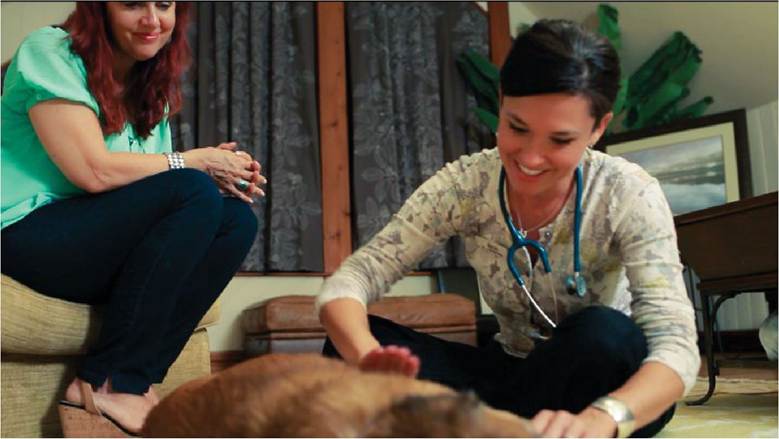
Figure 36.3 Dr.
Dani McVety during a hospice visit with patient Fiona.of a pathologic fracture. This allows the pet some relief while the next steps are organized.
Anxiety Control: Many dogs are up all night panting and pacing. Providing medications that help the pet sleep through the night helps the anxiety level and can be appreciated by everyone in the house. In addition, anxiety and distress change pain perception and pain threshold which can exacerbate the pet's level of pain and making management even more difficult.
Hygiene Maintenance and Infection Control: Urinary and fecal incontinence is usually an ailment geriatric pets succumb to. Although incontinence may not affect quality of life too drastically - some pets do become anxious when they have accidents in the house. Let unmanaged infection and urine scalding can occur. It's important to keep the pet clean with sanitary grooming/ shaving, baby-wipes, diapers, waterproof bedding, low litter boxes, and frequent walks. A pet that has inappropriate urination can also lead to the human-animal bond being tested as well as internal disputes among family members.
Nutritional Support: Some diseases will lead to a decrease in appetite. While appetite stimulants are useful at times, often their effectiveness decreases quickly (Figure 36.4). Many owners are willing to cook for their pets, so providing nutritious recipes with alternating protein sources can be helpful.
Nausea Control: Often pets dealing with certain illnesses or those on medications can become nauseous. It's best to control nausea proactively so that the pet doesn't stop eating which can lead to even more issues.
In Home Technician Visits and Care: Seeing the pets in their own environment is important since they can act differently in familiar surroundings. More importantly, modifications can be made that may have been overlooked and treatments can be done in the home without a potentially distressing trip to your clinic.
Visiting Hours: If an aging pet is in your hospital for treatment or boarding for more than a day - encourage visiting hours.
The joy both the pet and owner receive is priceless.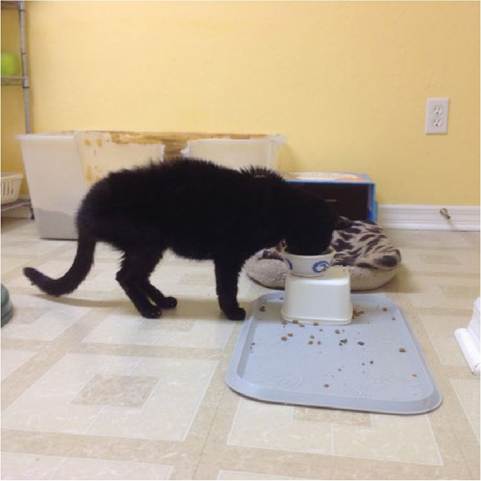
Figure 36.4 Hospice patient Lance who's food bowl needed to be elevated.
SpecializedBoarding: Create a special boarding program for geriatric or hospice pets including specialized cage/kennel set up, visiting hours (Figure 36.5), twice daily pictures, and updates.
While offering veterinary hospice may not provide the largest avenue of revenue - the immeasurable benefits are great. The satisfaction your clients will have with the full circle of veterinary care at your clinic will be priceless. This can lead to positive word of mouth, referrals, and repeat business with other pets from that client when necessary and most importantly - it's what's best for the pet. A study in 2010 looked at patients that received palliative care early in their treatment of metastatic lung cancer. It was found that those patients had better quality of life at the end as well as an increased survival time (Temel et al. 2010). One could extrapolate that this may also occur with our companion animals - that not only can they live longer but the time they live is better.
With more and more people having positive experiences with human hospice, I believe veterinary hospice will continue to become a requested service and the future of the field looks promising. Textbooks are being written on this topic, national groups have been formed with annual conferences (www.IAAHPC.org), there has even been an increase in pet loss counseling certifications and possibly in the works is an AVMA approved board certification.