Introduction
The stomach is a muscular and glandular organ with its main functions being the storage, mechanical and enzymatic processing, and transportation of partially digested food into the small intestine.
The muscular action of the stomach causes mechanical breakdown of food boluses into smaller particles, facilitating duodenal digestion and absorption. The glandular portion of the stomach produces gastric acid, pepsinogen (the precursor of the proteolytic enzyme pepsin), gastric lipase, and several hormones that play an important role in gastric acid secretion. Chemical and enzymatic digestion, particularly of proteins and triglycerides, is initiated in the stomach. The acidic environment in the stomach denatures alimentary protein and provides an optimal pH for activation and proteolytic activity of pepsin. Liquefied food is gradually released into the small intestine for further digestion. Only a few substances (e.g., NSAIDs) are absorbed in the stomach.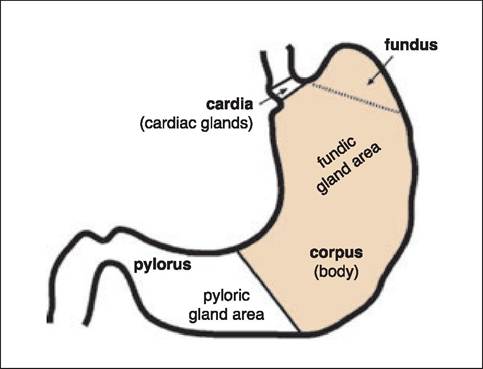
Figure 4.1:
Anatomical division of the stomach. This figure shows the idealized anatomical division of the stomach.
4.2
More on the topic Introduction:
-
Veterinarian -