Medication Use in Food-Producing Animals
Lisa A. TeU • Krysta Martin • Michael Payne
Abbreviations
AMDUCA Animal Medicinal Drug Use Clarification Act
ANADA Abbreviated New Animal Drug
Application
ANDA Abbreviated New Drug Application
AOAC Association of Official Analytical Chemists
AVMA American Veterinary Medical Association
CFR Code of Federal Regulations
CPG Compliance Policy Guide
CVM Center for Veterinary Medicine
ELDU Extralabel Drug Use
EPA Environmental Protection Agency
FAO Food and Agriculture Organization
FARAD Food Animal Residue Avoidance &
Depletion
FDA U.S.
Food and Drug AdministrationFDA-CVM U.S. Food and Drug Administration
Center for Veterinary Medicine
FSIS Food Safety and Inspection Service
GFI Guidance for Industry
JECFA Joint FAO/WHO Expert Committee on
Food Additives
MRL Maximum Residue Limit
MUADP Minor Use Animal Drug Program
MUMs Minor Use and Minor Species Animal
Health Act
NADA New Animal Drug Application
NDA New Drug Application
NRP National Residue Program
ONADE Office of New Animal Drug Evaluation
PAMTA Preservation of Antibiotics for Medical
Treatment Act
USDA United States Department of Agriculture
VCPR Veterinarian-Client-Patient Relationship
VFD Veterinary Feed Directive
WDI Withdrawal Interval
WDT Withdrawal Time
WHO World Health Organization
Medicating animals that are used to produce food for human consumption is a worldwide phenomenon. Medications can be used to increase production, treat illnesses, produce healthier animals, or prophylactically and/or metaphylactically prevent or reduce morbidity and/or mortality caused by diseases. In recent years the potential impacts of drug residues have become of increasing concern for consumers, regulators, and legislators. To maintain public safety, it is important for veterinarians to educate themselves and work closely with their clients to help minimize drug residues in the human food chain.
Definition of Food-Producing Animal Species
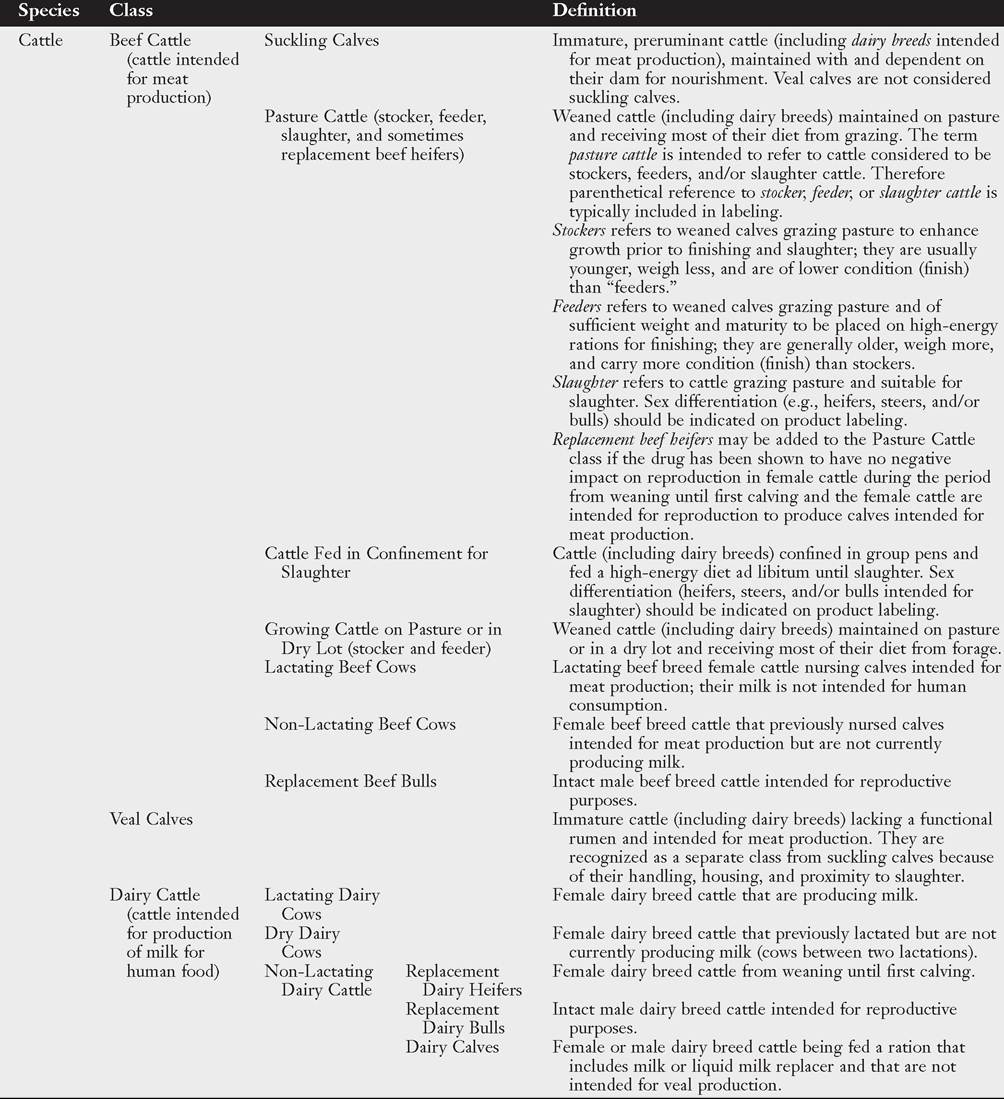
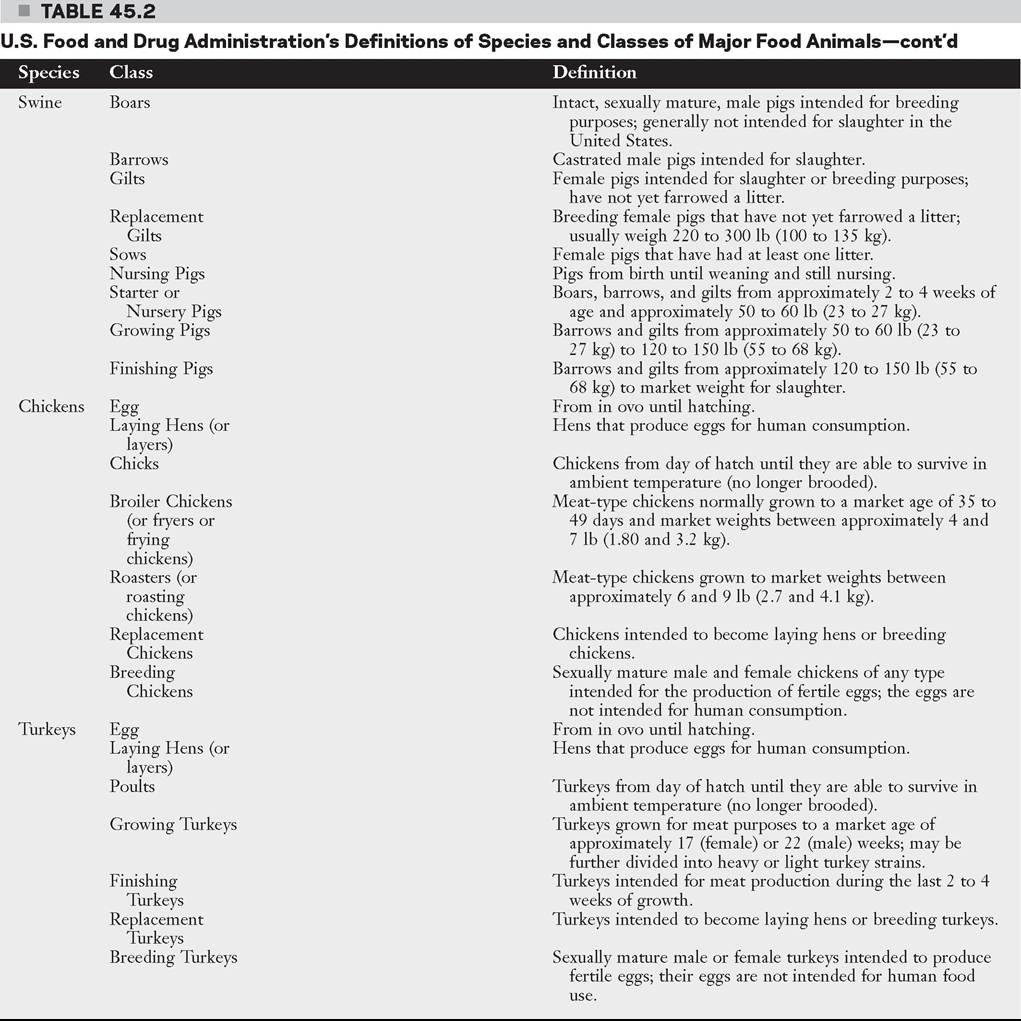
For the purposes of this chapter, a food animal is any animal whose tissues or products have the potential to enter the human food chain. In the United States, food animals are further categorized as major or minor food animal species. The Food, Drug, and Cosmetic Act defines the major food-producing species of animals to include cattle, swine, chickens, and turkeys. The CVM, a branch of the FDA, has a list of definitions for bovine, swine, and poultry species and classes, which can be found in Table 45.2.1 Furthermore, in addition to these definitions, the Code of Federal Regulations (CFR) has defined dairy cattle to include all female cattle of a recognized dairy breed over 20 months of age.2 Both dry and lactating dairy cattle are in this category. “Minor” food animal species are defined by exclusion, meaning that the “major” animal species have been identified and all others are considered “minor.”
Examples of “minor” food animal species are goats, sheep, and cervids.
On-Label Drug Use
In food animal medicine, medications can be administered to an individual animal or a herd or flock depending on numbers of animals needing treatment, disease, and/or overall management practices. Practitioners treating food-producing animals in the United States can use FDA-approved veterinary products according to the label. Using medications according to the label directions is called on-label drug use, where all of the drug label specifications (animal species and class, administration route, dose, dosing frequency or interval, indication, limitations, and withdrawal time) are fulfilled and the FDA-approved withdrawal time (WDT) is observed. The FDA-approved WDT is the amount of time that must be observed after the last dose is administered and before the food product intended for human consumption can enter the human food chain. There are multiple databases where label information for FDA-approved veterinary medications is accessible and can be consulted.
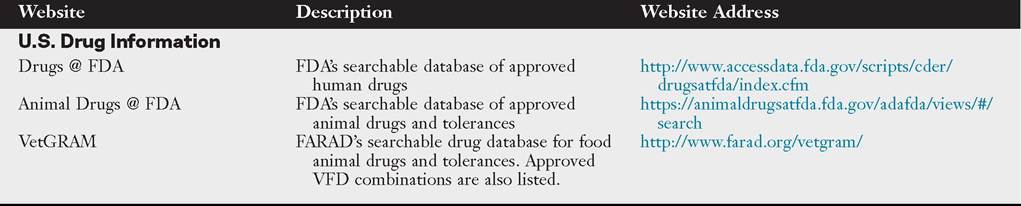
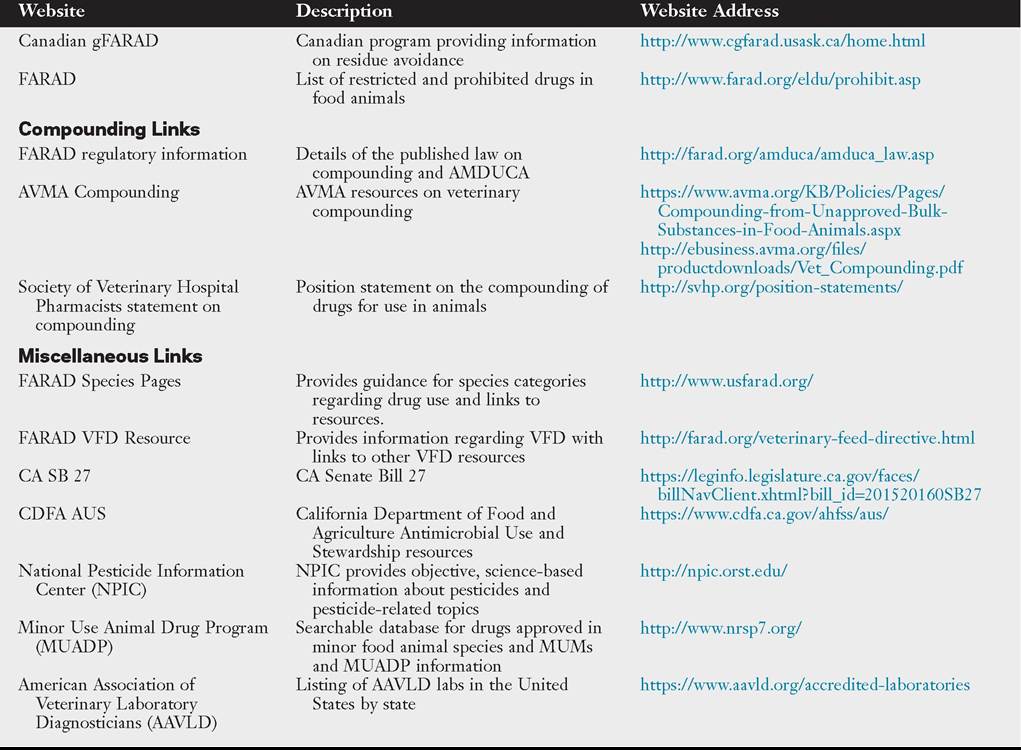
Table 45.3 lists a few resources.Extralabel Drug Use and the Animal Medicinal Drug Use Clarification Act of 1994
Prior to the enactment of the Animal Medicinal Drug Use Clarification Act (AMDUCA) in 1994, veterinarians could legally treat food animals with on-label medications only. Passage of AMDUCA legalized most instances of extralabel drug use (ELDU) in food animals by or on the order of veterinarians.3 Extralabel drug uses include prescribing or administering a human or veterinary drug at a higher or lower dose, frequency, or duration; by a different route of administration; in a different species or production class; or for a different indication than described on the product's label. For food animal practitioners, with this privilege comes the weighty responsibility of protecting the health of consumers of animal products. Veterinarians must meet very specific conditions before they may legally use or prescribe drugs in an extralabel fashion. Under AMDUCA, ELDU is limited to cases in which the health of the animal is threatened or suffering or death may result from a lack of treatment. ELDU may not be used to enhance production or for nontherapeutic reproductive cycle
■ TABLE 45.2
U.S. Food and Drug Administration's Definitions of Species and Classes of Major Food Animals1
■ TABLE 45.3
Useful Internet Links for Online Resources on Drug Use and Drug Residues in Food Animals
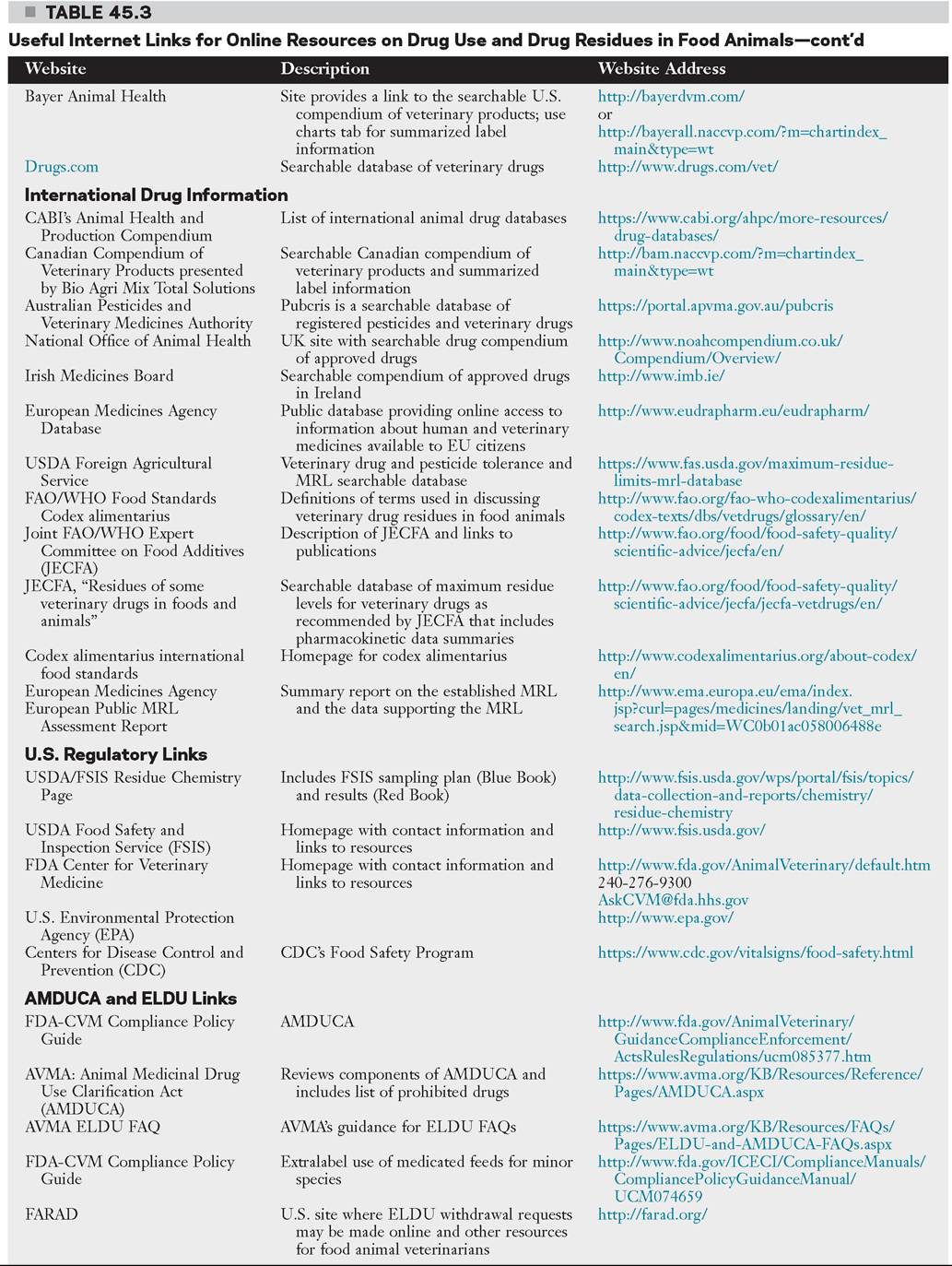
■ TABLE 45.3
Useful Internet Links for Online Resources on Drug Use and Drug Residues in Food Animals—cont'd
Modified from U.S.
Food and Drug Administration: Animal & Veterinary. 2009. Appendix III, Species and Classes of Major Food Animals. In CVM’s Guidance for Industry (GFI) #191: Changes to Approved NADAs-New NADAs vs. Category II Supplemental NADAs. [WWW page]. https://www.fda.gov/downloads/ AnimalVeterinary∕GuidanceComplianceEnforcement∕GuidanceforIndustry∕UCM052460.pdf. (Accessed 20 July 2018).manipulation in healthy animals and can occur only on the order of a veterinarian within the context of a veterinarianclient-patient relationship (VCPR), as described in Box 45.3. ELDU may be considered in food-producing animals only when no approved drug is available that contains the same active ingredient in the required dose, form, and concentration or when the veterinarian finds that there is no approved drug that is clinically effective for the intended use. ELDU in or on animal feed is also expressly prohibited.
AMDUCA stipulates that ELDU applies only to FDA- approved human and veterinary medications. It does not legalize the extralabel use of Environmental Protection Agency (EPA)-regulated pesticides or U.S. Department of Agriculture (USDA)-regulated biologics. New animal drug application (NADA) or abbreviated new animal drug application (ANADA) numbers are a good indication of whether a drug is FDA approved. The presence of a NADA or ANADA number on the product label is an indication that the veterinary drug has FDA approval. Similarly, for human drugs, every approval has a unique new drug application (NDA) number for pioneer drugs or abbreviated new drug application (ANDA) number for generic drugs. Approval status of both animal and human drugs can be found on the FDA-CVM (http://www.fda.gov/ AnimalVeterinary/) and FDA (http://www.fda.gov) websites, respectively.
When veterinary products are used in an extralabel manner, a withdrawal “interval” must be estimated based on scientific evidence and extended beyond the FDA-approved WDT regardless of the dose, route, or indication. This ensures that there are no illegal residues, another stipulation in AMDUCA. A residue is considered either the parent compound or a metabolite of that parent compound that may accumulate, deposit, or otherwise be stored within the cells, tissues, organs, or edible products (e.g., milk, eggs) of an animal after its use to prevent, control, or treat animal disease or to enhance production.4 As stipulated by AMDUCA, veterinarians’ obligations regarding ELDU are listed in Box 45.3.
Veterinarians who violate state or federal laws regulating the transport, sale, or use of drugs may face a variety of sanctions, including warning letters, fines, temporary or permanent revocation of license, and incarceration.