Quality ofLife
One of the most common questions care givers will ask their veterinarian is “How will I know when it's time?” This question comes with a heavy heart and is not one that can be quickly answered or given a stock answer such as “you will know” or “when they stop eating” - often the answer can be more convoluted than that.
Although, at times, those stock answers can be good indications of it being time, often, they are not. The 13-year- old Labrador with osteoarthritis may still be eating and looking excited when his owner comes home, yet he can barely get up, falls down the stairs and is sitting in his own feces half the day. Assessing quality of life is an important part of helping families navigate the end of life stage.There are three core components to evaluating quality of life: the pet's disease or ailments, the pet's personality, and the owner's abilities, beliefs, and wishes
The Pet's Disease or Ailments
Each disease or ailment a pet faces will carry a different set of struggles, pain, anxiety, or even suffering. A thorough discussion of the symptoms the pet is currently facing, what they will face in the short term and maybe what they will face during the dying process is needed. The quality of life for the German Shepard with hip dysplasia may be within an acceptable level if they are still maintaining nutrition, hydration, pain control, and interaction with family. However, the cat in heart failure that struggles with respiratory distress everyday may have an unacceptable quality of life and intervention may be needed sooner than later.
When discussing the pet's disease, one must cover what the disease process means in terms of how it feels to the pet. Often owners with cats in kidney failure are told it is not painful, however, dehydration, toxin buildup, ulcers, nausea are not without discomfort. Outlining the most common future problems, time frame, and expectations can help a family navigate through the assessment process and also create a “stop point” for when they should consider intervention.
The Pet's Personality
One must consider how the pet deals with different situations such as pain, anxiety, medications, equipment, and the like and, just like humans, every pet will handle things a little differently. So much so that where one pet may easily tolerate a harness, the next pet will do everything in its power to get out of it. Giving medications to some pets can be very difficult whether it be orally, sub-lingually, or sub-cutaneously. It may be easy for the veterinary team to administer but to the family it can be a struggle which can cause a pet to grow weary of their family consequently straining/compromising the human-animal bond.
What the pet enjoys in life is also important. If a dog enjoys laying around being a couch potato, then a disease that limits mobility may not be as quality crushing as a herding dog whose “job” in life is to heard the flock or family. The very quality that we love in pets - individuality - can be a limiting factor when trying to manage a chronic disease.
Owner's Abilities, Beliefs and Wishes
The ability and desire to care for an aging or terminally ill pet can impact the quality of life for the pet as well as the owner. Some owners may seek treatment until all options have been exhausted, while others will opt for a simpler approach to keep them as comfortable for as long as possible without going to the medical “extremes.” Since pets are unfortunately seen as property, we cannot force a caregiver to partake in medical treatment for the pet. We can step in as the pet's advocate but in chronic cases, that would typically mean euthanasia vs forcing treatment.
As discussed earlier, regarding the family's budget, the quality of life of a pet can be altered by the family's ability to care for the pet, their beliefs of what is right, and what they wish for the pet near the end (Figure 36.7). What one person considers good “quality” can differ from the others.
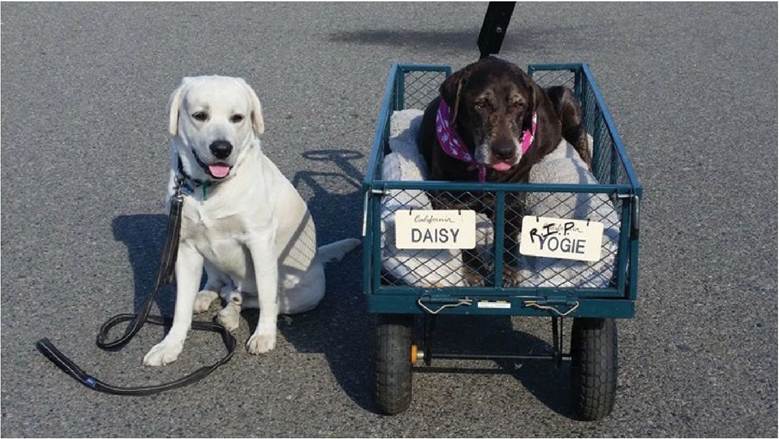
Figure 36.7 Hospice patient Daisy in a cart used for walks.
Daisy's owner was willing to do whatever it took to allow Daisy to enjoy her final days.Luckily most people will agree on one thing - that they don't want their pet to suffer but suffering can still be subjective. This is where assessing quality of life quantitatively can help. But what do you measure? The most commonly used objective measurements for quality of life by veterinarians are mobility, appetite, pain, and proper voiding. I certainly do not disagree with any of these but the presence of quality of life based on these items should not be answered with a “yes or no,” but rather “if/then.”
Quality-of-Life Assessment Tools
There are many tools available that can assist owners and the veterinary team with evaluating quality of life; some are very simple and others are complex. Selecting the right tool for the family will enable them to monitor the quality progression. There is no perfect tool for all situations, pets, and families but finding a tool that covers the most significant concerns is best. Below are some commonly used tools.
Basic Quality of Life Assessment Tools
• Rule of 5: A common suggestion the veterinary team or friends of the family will tell an owner is to pick the pet's five most favorite things to do (Figure 36.8). When the pet no longer does three or more of those, then it's time to consider intervention. This may be eating, going for walks, interacting with family, toys, and so on. The one drawback to this is that the pet may actually still be doing those five favorite things yet their quality of life is clearly not well. For example, cognition issues. While a pet is “alert” they may act, eat, play normally - but when they are in a cognitive state, they are pacing uncontrollably or staring frozen into space until they become physically exhausted. I've witnessed pets that are in a “trance” like state for up to 18 hours a day and the rest of the time they are eating, playing or sleeping comfortably. If this method of evaluation is used, I also suggest including something a pet does NOT like.
If they have passion for hating something and they lose that passion - they may not be well. So if the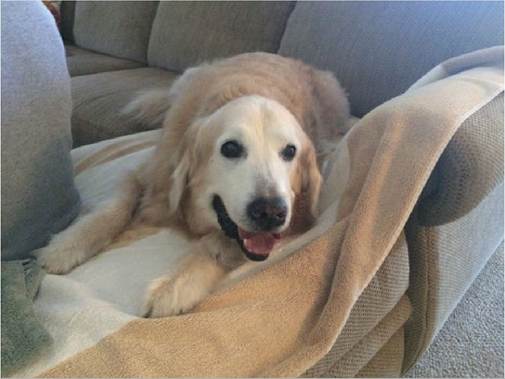
Figure 36.8 Bogey on his favorite couch. It was important to the family that Bogey was still able to get on his couch - even with assistance. And they wanted this final moments to be on the couch.
dog hates the doorbell and eventually doesn't have enough energy to make the smallest bark when it is rung, then the quality of life may be poor.
• Good Days Vs Bad: Ensuring that the good days outweigh the bad may seem like a logical way to evaluate quality however most people don't actually record the number of good days. A suggestion I make with all my clients who want to use this method of evaluation is to simply use a calendar to mark and track the bad days. Actually seeing the bad days accumulate helps owners visualize the severity of the situation. It also prevents them from inadvertently forgetting how bad previous days or weeks were when the cherished “good” day comes around. This calendar was developed by Lap of Love for owners to use (http://lapoflove.com/ Pet_QoL_Calendar.pdf).
• Pennies in a Jar: Another uncomplicated way to track quality of life is to get two jars - one labeled “good day” and the other “bad day.” Have the owner put a penny in the appropriate day jar based on the pet's behavior, habits, daily functions, and so on. After a few weeks - you can see if the pet is having more bad days than good and can signal an appropriate time to recommend euthanasia.
Advanced Quality of Life Assessment Tools
• HHHHHMM Scale: Developed by Dr.
Alice Villalobos, the HHHHHMM Scale (http://pawspice.com/clients/17611/ documents/QualityofLifeScale.pdf) was
one of the first tools that veterinarians could instruct a client to use to evaluate clinical signs with a more objective lens. This scale takes into consideration hurt, hunger, hydration, hygiene, happiness, mobility, and more good days than bad.
Owners score those symptoms with a 1-10 (one being worst and 10 being best) and add the values up to create a grand total. If the pet is above or below a certain mark, then they may be in an acceptable state or in need of intervention.• Lap of Love Quality of Life Scale and Daily Diary: This scale (http://www.lapoflove. com/Pet_Quality_of_Life_Scale.pdf) is similar to the HHHHHMM scale in terms of scoring and meeting an acceptable threshold but has six criteria (mobility, nutrition, hydration, interaction/attitude, elimination, and favorite things). It also has space dedicated to daily notes so that the owners can jot down any significant changes in their pet that day.
• Lap of Love Pet’s Quality of Life and Family Concerns: This scale is a tool that also has questions for the family to make sure their needs are addressed. You can download this tool from http://lapoflove.com/Pet_ Quality_of_Life_Scale_DrMcVety.pdf.The scale is produced here.
Pet's Quality of Life
Score each subsection on a scale of 0-2:
• 0 = agree with statement (describes my pet)
• 1 = some changes seen
• 2 = disagree with statement (does not describe my pet)
1) Social Functions
a) Desire to be with the family has not changed.
b) Interacts normally with family or other pets (i.e., no increased aggression or other changes).
2) Natural Functions
a) Appetite has stayed the same.
b) Drinking has stayed the same.
c) Normal urination habits.
d) Normal bowel movement habits.
e) Ability to ambulate (walk around) has stayed the same.
3) Mental Health
a) Enjoys normal play activities.
b) Still dislikes the same things. (i.e., still hates the mailman = 0, or doesn't bark at the mailman anymore = 2)
c) No outward signs of stress or anxiety.
d) Does not seem confused or apathetic.
e) Nighttime activity is normal, no changes seen.
4) Physical Health
a) No changes in breathing or panting patterns.
b) No outward signs of pain. (See Resources Below)
c) No pacing around the house.
d) My pet's overall condition has not changed recently.
Results:
0-8 = Quality of life is most likely adequate. No medical intervention required yet, but guidance from your veterinarian may help you identify signs to look for in the future.
9-16 = Quality of life is questionable and medical intervention is suggested. Your pet would certainly benefit from veterinary oversight and guidance to evaluate the disease process he/she is experiencing.
17-36 = Quality of life is a definite concern. Changes will likely become more progressive and more severe in the near future. Veterinary guidance will help you better understand the end stages of your pet's disease process in order to make a more informed decision of whether to continue hospice care or elect peaceful euthanasia.
Family's Concerns
Score each section on a scale of 0-2:
• 0 = I am not concerned at this time.
• 1 = There is some concern.
• 2 = I am concerned about this.
I am concerned about the following things:
1) Pet suffering
2) Desire to perform nursing care for your pet
3) Ability to perform nursing care for your pet
4) Pet dying alone
5) Not knowing the right time to euthanize
6) Coping with loss
7) Concern for other household animals
8) Concern for other members of the family (i.e., children)
Results:
0-4 = Your concerns are minimal at this time. You have either accepted the inevitable loss of your pet and understand what lies ahead, or have not yet given it much thought. If you have not considered these things, now is the time to begin evaluating your own concerns and limitations.
5-9 =Your concerns are mounting. Begin your search for information by educating yourself on your pet's condition; it's the best way to ensure you are prepared for the emotional changes ahead.
10-16 = Although you may not place much value on your own quality of life, your concerns about the changes in your pet are valid. Now is the time to prepare yourself and to build a support system around you. Veterinary guidance will help you prepare for the medical changes in your pet while counselors and other health professionals can begin helping you with anticipatory grief.
Interactive Quality of Life Assessments
Pet Hospice Journal
This online quality-of-life scale is the first interactive assessment tool that was developed by Lap of Love. The biggest concern with most quality-of-life scales is that they do not take into consideration the disease the pet has and what symptoms they will experience with that particular disease. The dog with arthritis may score a “0” for mobility but their eating gets a “3” as does their favorite things. This will falsely elevate the Quality- of-Life score. The Pet Hospice Journal was developed so that a caregiver could create a profile for their pet and based on the disease they selected, the criteria for assessment would change as well as the “weight” each answer earned. This tool is free for vets and pet owners and can be found at www. pethospicejournal.com.
Suggestions when using any quality-of-life scale:
1) Complete the scale at different times of the day, note circadian fluctuations in well-being. (We find most pets tend to do worse at night and better during the day.)
2) Request multiple members of the family complete the scale; compare observations.
3) Take periodic photos of the pet to help remember their physical appearance.
4) Keep detailed notes.
5) Create a stop point of when intervention will be sought.
6) Don't get frustrated - this is not an easy time and there is no black and white answer.
7) Pick the tool that best fits the pet's ailment and family's personality. Not everyone is willing to do the interactive tool, yet some people want more than a jar of pennies.
Using any method to help evaluate quality of life of the pet in conjunction with the family's quality of life has helped many owners feel empowered over their decisions - whether to continue with treatment/care or euthanize their pets.
How I wish the answer to the question of “when is it time” was simple and clear cut. I believe that it is our duty to assist owners with end-of-life decisions and to help end and prevent suffering of animals. There are many ways to help families explore quality-of-life questions but the one way that is an injustice to our profession is if you simply say, “Call me when it's time.” Owners need more than this and animals deserve more.