Pet Needs
One of the most important components in veterinary hospice is obviously the needs of the pet. In the role of “veterinarian,” we do our best to manage pain and anxiety, keep nutrition at the highest levels possible, attempt to slow the progression of terminal diseases or manage chronic ones, while at the same time trying to stay within the financial budget of the family.
Those are the subjective aspects for the pet's care but the more objective needs of the pet is usually managed by the family. Is the pet happy? That may be an anthropomorphic concept - but one that most of us could agree is used when describing the pet's condition and what's important to the family. In my practice, when I ask owners what is most important for them in terms of their pet's needs, invariably they all say ‘I don't want him in pain and I want him to be happy.” This can be challenging because how do you know if the pet is happy or what makes them happy? It usually comes down to the family and their profound knowledge of their pet's personality, daily activities, simply put - their favorite things (Figure 36.6).As a hospice veterinarian, I attempt to ensure pets are as free from pain and anxiety as possible, that they are kept clean, have a support system to care for them, are properly nourished and hydrated and that they still receive love and care from the family. Often, older or sick pets are demanding to manage, they may smell horrible, urine soaked, pant and whine at night, and so on and this leads to them being banished to another section of the home or outside. In those cases, the pet's needs are not being met and the fine line of doing what's best for the pet while maintaining
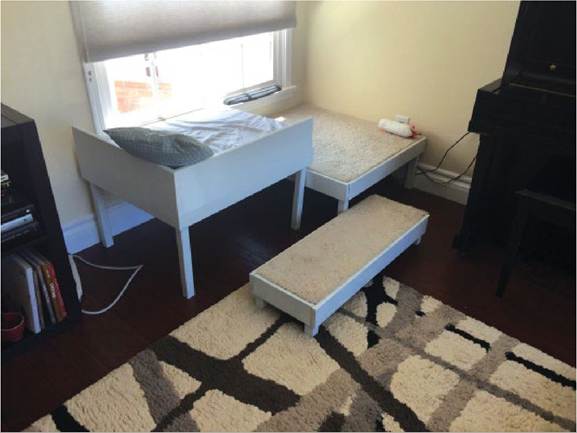
Figure 36.6 Hospice patient Andy loved to sit on his bed by the window but it was too high for him to jump into anymore.
Owners build him a modified bed so he could easily enjoy his favorite pastime.a non-judgmental attitude towards the family becomes a difficult one to assess.
The two most common symptoms to manage in a hospice case are pain and anxiety. Both of which, when left unmanaged, can escalate to the pet suffering. It's a common perception that “animals hide their pain.” However, there are many professionals who believe that carnivorous animals, such as cats and dogs, do not “hide” their pain, rather pain simply does not bother them the same way it bothers humans. Animals do not have an emotional attachment to their pain like we do. Humans react to the diagnosis of cancer much differently than Fluffy does. Fluffy doesn't know she has a terminal illness, it bothers us more than it bothers her. With that said, this is vastly different when compared to prey animals like rabbits or guinea pigs, who must hide their pain to prevent carnivorous attacks. Chapter 5 in Temple Grandin and Catherine Johnson's book Animals in Translation goes into great detail on this topic (Grandin and Johnson 2005).
If you consider that most pain scales ask owners to perform visual assessments of their pets - then one has to hope that the pet is not “hiding” the pain that is being evaluated. We talk about cat's whiskers or ear positioning when looking for signs of pain. The shear fact that we are looking for these signs is counter intuitive to the thought that they are hiding it. The drawback is that once in pain, animals cannot sense an ending to their hurt. As humans, we can take a pill knowing that the headache will eventually subside but animals have no perception of their suffering ending. Robin Downing, once said in a lecture “Pets do not fear or anticipate death - but they do fear and anticipate pain.” I use that often in hospice consultations as well as euthanasia appointments and it really helps owners understand the importance of managing their pet's pain.
Anxiety is not often brought up by the owner unless they actively see it or feel the pain of it occurring during the night when they are trying to sleep.
We should be just as concerned about anxiety in our pet as we are about pain. Let's look at dyspnea - in human medicine it is correlated to the unpleasant sensory experience - not just defining the act of labored breathing. Research shows that dyspnea should to be considered as sufferable as chronic pain. My dog rarely looks as distraught when she's in pain as she does when she's anxious. It's the same for animals that are dying. End-stage arthritis patients begin panting, pacing, whining, and crying, especially at night time. Anti-anxiety medications can sometimes work for a time but for pets that are at this stage, the end is certainly near. Cognition also plays a role in the increased anxiety levels. Circling back to the client's needs - an anxious pet, particularly one that does not sleep well - inhibits the family from sleeping well and thus effects their quality of life too.The best way to manage the pet's needs during the end-of-life stage is to work with the family using a quality-of-life assessment tool as described later in this chapter. The family can be your biggest ally in figuring out what makes the pet “themselves,” what makes them happy and what their needs are and how we can work as a team to make sure those are being met.
Expectations on how painful or dramatic the death may depend on the pet's disease. It is most important to help the family understand the disease process their pet is facing. Although we cannot predict exactly what will happen in the future, we can use our medical training and experience to give each family facing an end-of-life experience with their pet, a possible and probable progression of their pet's disease process. As doctors, this is the most important piece of information we can communicate to families as well as a valuable tool they can use in the decision-making process. We must explain to the best of our abilities the most likely “natural” method of death if the pet is left unattended. This educated approach to the physicality of death is essential to veterinary hospice care; by providing the family with knowledge and expectations, we give them the ability to make an informed decision based on their personal wishes for their pet with the gentle guidance by their veterinarian.
When there is a disease present, I will categorize them based on the trajectory of progression and quickness of death (or likelihood of emergency situation occurring in the end). The three categories are Imminent, Intermediate, and Non-Imminent.
• Imminent diseases are the ones that have a quick progression and a high likelihood of an emergent situation at the end. Examples might be heart disease, uncontrolled seiz- ers, osteosarcoma, laryngeal paralysis, collapsing trachea, and hemangiosarcoma. The decline resulting from these diseases, in many cases, will happen quickly and most likely not allow for planning or arranging a relaxed and peaceful euthanasia.
• Intermediate diseases are ones that may have a longer trajectory and give a bit more time to plan for euthanasia services. Example diseases might be lymphoma, mast cell cancer, nasal tumors, and liver failure.
• Non-imminent diseases tend to have the longest trajectory as decline will most likely be slow, allowing families to plan ahead. Example diseases might be chronic renal failure, mobility issues, and cognitive dysfunction. Due to the longer decline period as well as the lack of appearance of active suffering in these pets, it can be difficult for families to make the decision. In those cases, they need to be assured that they are making the right decisions and often the use of quality-of-life scales can be a huge benefit to families. They tend to have the time to track the pet's progression and see the patterns change.
I am able and willing to help extend life as long as pain and anxiety are controlled, but this is always preceded by a lengthy discussion on the progression of the disease process present and a clear “stop point” which we agree is the endingofagoodqualityoflife.Communication, preparation, and more communication is the hallmark of a successful end-of-life case.