Absorbed Lipids Are Packaged into Chylomicrons Before Leaving the Enterocytes
After passing the apical membrane, the absorbed lipids are quickly picked up by carrier molecules and transported within
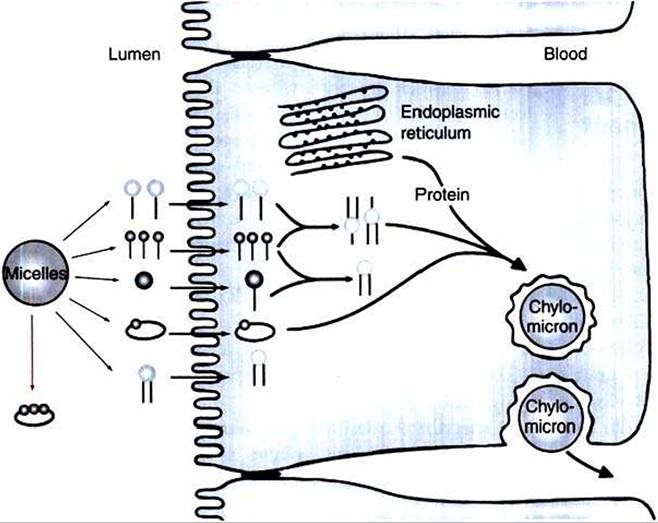
FIGURE 30-27 Lipid absorption from micelles with subsequent formation of chylomicrons.
As micelles come close to the apical membrane, lipid constituents, except bile acids, are transported through the membrane into the cell. Once in the enterocyte, triglycerides are re-formed from fatty acids and monoglycerides.Triglycerides are then packaged into the core of chylomicrons for transport out of the cell.The chylomicron surface is coated with phospholipids, cholesterol, and proteins.the cell to the endoplasmic reticulum. Once on the smooth endoplasmic reticulum, the major lipids are re-esterified to form triglyceride and phospholipids. The re-esterified lipids are then packaged with cholesterol, minor dietary lipids, and
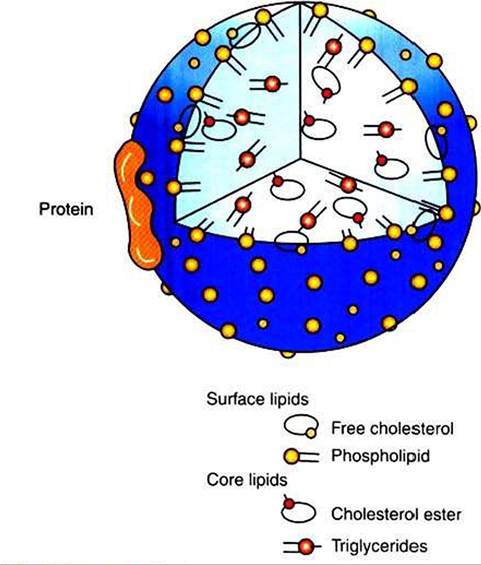
FIGURE 30-28 > Chylomicron structure. Special proteins and lipids with polar groups form the surface coat, whereas nonpolar lipids form the core of the particle.
proteins from the rough endoplasmic reticulum into structures known as chylomicrons. Chylomicrons are spherical structures with a core of triglyceride and cholesterol ester and a surface of phospholipid and cholesterol. The phospholipid and cholesterol are arranged with their hydrophobic (waterrepelling) ends facing the core lipids and their hydrophilic (water-attracting) ends facing the surface of the chylomicron particle (Figure 30-28). Ihis arrangement of surface lipid makes the chylomicron water soluble. A small number of special protein molecules are also present on the chylomicron surface. These proteins help to stabilize the surface and to direct the metabolism of the particle.
After their formation, chylomicrons are expelled from the basolateral membrane into the lateral spaces. Unlike most other nutrients entering the lateral spaces, chylomicrons are too large to pass through the basement membrane of the intestinal capillaries. Thus, chylomicrons cannot be absorbed through the intestinal blood system. Rather, they travel through the intestinal lymphatics, which eventually form a major abdominal lymph duct that passes through the diaphragm and into the thoracic duct. The major lymphcollecting vessel of the body, the thoracic duct, empties into the vena cava. Through this means, chylomicrons eventually reach the blood vascular system. During absorption of a fatty meal, the character of intestinal lymph changes from water-clear to milky white because of the presence of chylomicrons. After a fatty meal, this milky white color can even be seen in blood plasma. In normal animals this white color in blood plasma, known as Iipemia, is transient, disappearing within I to 2 hours after digestion of the meal. The metabolic fate of the chylomicrons is discussed in Chapter 32.