ANIMAL MODELS
Animals used as research models are classified into two groups:
The small animal category requires approval from the local animal ethical commission.
• Rats
• Mice
• Guinea pigs
• Rabbit (largest animal in this group)

FIGURE 26.4 Small animal testing facility.
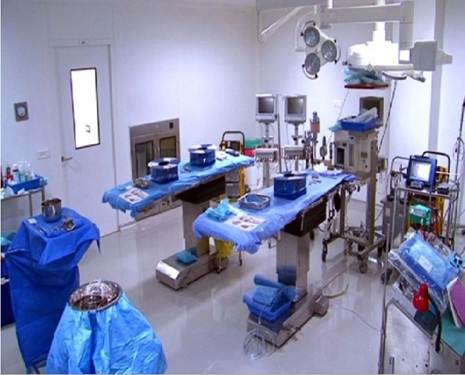
FIGURE 26.5 Operation suite.
Certain large animal categories require clearance from both the central and local animal ethics committees.
• Dogs
• Goats
• Primates
The use of animals in scientific study and treatment is a longstanding tradition that is frequently debated in our communities. The striking anatomical and physiological similarities between humans and animals, particularly mammals, have spurred researchers to examine a wide range of systems and test innovative therapies in animal models before translating their findings to humans. However, not all results acquired on animals can be immediately translated to people, and this insight is emphasised by those who deny the relevance of animal research. In addition, there is constant discussion over the role that animals play in our contemporary cultures, especially in relation to the permissible use of animals for human advantage when there is a chance that the animals would suffer as a result. Politicians and the general public are not helped to understand the issues by the frequent mixing of these two factors in convoluted debates. This was especially true during the assessment of the “Stop Vivisection” European Citizen Initiative (ECI) that was just submitted to the European Commission.
The animal model applies to non-human species because it can replicate the course of an illness, its diagnosis, and a human-like course of therapy.
Finding a drug or component, apparatus, toxicological research, dosage, and adverse effects are all investigated in vivo before being used on humans in the future, taking ethical considerations into account. This highlights the significance of the animal model and its wide application in biological research.Numerous aspects of animal models closely resemble human illness circumstances, including autoimmune disorders of the system, rheumatoid arthritis, epilepsy, Alzheimer’s disease, cardiovascular diseases, atherosclerosis, diabetes, and many more. In addition, the model is extremely valuable for research on bone and cartilage regeneration, tissue engineering, medication development, medical device development, wound healing, and vascular and spinal disc regeneration surgery. Despite this, the use of animal models in research has allowed scientists to conduct studies that, given ethical constraints, would not have been feasible to complete on humans.
Mammals, including humans, are extremely complex animals with highly interconnected and controlled organ systems performing various physiological roles. A complex network of hormones, circulatory substances, cells, and cross-talk between cells in every compartment is involved in relationships. Biologists examine organisms on a variety of levels, including molecules, cells, organs, and physiological processes in both healthy and sick states. To fully describe and comprehend the mechanics, all levels of inquiry are necessary. Through the use of in vitro techniques (such as cell culture), the first two and occasionally the third levels of organisation can be investigated. These days, very advanced procedures are used to replicate the intricate and three-dimensional structures of tissues. They have supplanted the usage of animals and represent significant scientific advancements. However, investigating physiological processes and the relationships across organ systems necessitates an entire organism. This is true, for instance, of the majority of hormone controls, the spread of microbes during infectious disorders, the impact of gut microbes on immune response, and the development of brain functions.
In many of these instances, research on humans and animals is still required because there is yet no in vitro model that can accurately replicate these interactions.In vitro research can lead to the emergence of hypotheses and models, but these must then be verified and evaluated in a complete organism to avoid remaining theoretical. The functioning of a complex organism cannot be predicted by scientists based only on the study of individual cells, tissues, and organs. Therefore, in vitro approaches cannot yet totally replace animal studies, and it will be some time before they can, despite the claims made by proponents of the ECI.
A wide range of scientific issues, from fundamental research to the creation and evaluation of innovative vaccinations or treatments, have been addressed through the use of animal models. Animals are used for research not just because human diseases frequently affect other animal species but also because most mammals share a large number of biological similarities. In particular, this is true for the majority of viral diseases as well as for many common ailments like Type I diabetes, high blood pressure, allergies, cancer, epilepsy, myopathies, and so forth. Not only do these illnesses share same causes, but 90 percent of veterinary medications used to treat animals are the same or extremely similar to those used to treat humans due to these related mechanisms. Tests using animal models and observations have led to some significant advances in basic science and medical research. The majority of vaccinations have been successfully created using animal models, saving millions of lives each year, both human and animal. Insulin therapy for Type I diabetes was initially developed in dogs by Banting and McLeod, who were awarded the Nobel Prize in 1921. Animal tests have been conducted on engineered cellular therapies that use stem cells to regenerate tissue. Several surgical methods have been developed and refined in a variety of animal species prior to being used on humans.
Animal models have been essential in many discoveries that have resulted in multiple Nobel Prizes.It is apparent, therefore, that additional research on humans may not always corroborate the findings from studies conducted on animals. One can evoke several explanations. First, despite their many similarities, different animal species and humans have unique characteristics. For instance, more than 95% of the genes in humans and mice are similar, but there are some variations as well, such as in the members of gene families, in gene redundancies, and in the precise control of gene expression levels. These genetic variations result in physiological variations that are becoming more well defined and comprehended. While some, like the proponents of ECI, use these distinctions to argue against the usefulness of animal models, many others, including ourselves, fervently support expanding our understanding of these distinctions and incorporating them into the planning of experiments and the interpretation of data. Furthermore, these variations can present chances to identify new pathways and develop creative treatments.
Genetic and physiological differences within species or between closely related species account for the second cause. Inbred strains of laboratory mice with a highly uniform genetic makeup were established in order to improve experiment statistical power and reliability. “The mouse model of...” is a term frequently used in reports on animal models of human problems, however it actually refers to observations performed in a particular genetic context. If an alternative strain of mice is taken into consideration, the clinical presentation frequently differs. A startling illustration comes from a research team’s November 2014 publication in Science, wherein they found that certain mice strains are completely immune to the Ebola virus, while others die from the disease without exhibiting any symptoms and yet others suffer from deadly haemorrhagic fever.
These examples show why it is important to take into account animal models: no single animal model can accurately represent a particular human disease, which is polymorphic in and of itself among patients; however, the variations among strains or species offer unparalleled opportunities to comprehend the development of diseases and the varying host response, and ultimately to discover novel treatments.Animal welfare and protection are the second concern when it comes to using animals for scientific research. The European Directive 2010/63/EU, which established the guidelines for all animal research, covers this territory. Three basic concepts have been acknowledged by scientists for many years as being crucial, and they have formed the core of the European Directive. First, where there are equally relevant and reliable non-animal-based experimental methods available, they should be employed instead of animals in experiments. Secondly, the quantity of animals employed needs to be reduced to the bare minimum required to draw a conclusion. Third, every precaution needs to be used during the process to reduce any damage done to the animals. These guidelines - also referred to as “the three Rs rules” - for replacement, reduction, and refinement have developed into the benchmark by which all projects involving the use of animals are assessed.
Animal research is carried out in accordance with legal regulations that address the licensing and inspection of animal facilities, the education and experience of project designers, the performance of animal procedures and animal care, and the requirement that all projects be approved by a responsible body following an ethical assessment by an Animal Ethics Committee. The evaluation criteria are founded on the 3Rs guidelines and a cost-benefit analysis to determine whether substantial advancements in our understanding of human or animal health outweigh the potential harm to animals, which must be minimised to the lowest feasible degree. Ethics committees are required by law to have members who care about animal welfare but are not engaged in animal experimentation. In a statement released on June 3, 2015 [8], the European Commission responded to the ECI by highlighting the continued importance of animal experimentation in advancing both human and animal health. In addition, it is dedicated to encouraging the creation and approval of non-animal methods and to making sure that everyone, even the scientific community, abides by the 3Rs. As a result, Europe has put in place one of the tightest legal structures to safeguard research animals.
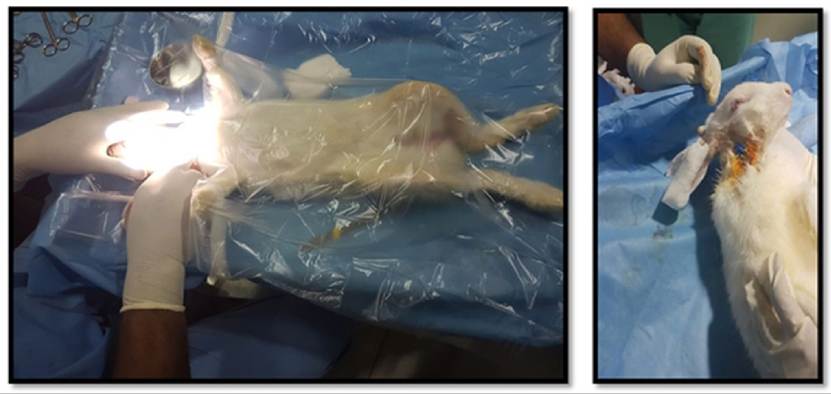
FIGURE 26.6 Rabbit jugular vein catheter implantation - Frontier Mediville.
26.7