Bile Secretion Is Initiated by the Presence of Food in the Duodenum and Stimulated by the Return of BiIeAcids to the Liver
When food, especially hit-containing food, reaches the duodenum, the CiI endocrine cells are stimulated to secrete CCK, which in turn causes relaxation of the sphincter of Oddi and
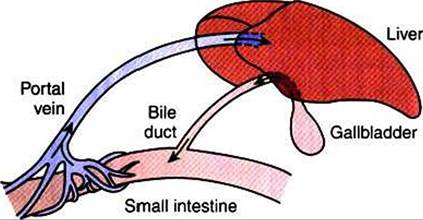
FIGURE 29-7 Bile acids and other molecules circulate in an enterohepatic cycle.
Phases of the cycle include the portal vein, biliary system, and intestinal lumen.contraction of the gallbladder. These actions force stored bile into the intestine. Bile acids aid in the digestion and absorption of fats in the jejunum (see Chapter 30) but are not absorbed themselves until they reach the ileum. After absorption in the ileum, the bile acids travel via the hepatic portal vein to the liver. In the liver, bile acids arc almost completely absorbed from the portal blood. As a result, almost no bile acids reach the posterior vena cava, and they are consequently found only in low concentrations in the systemic circulation. The flow of bile acids from liver to intestine to portal blood to liver and back to intestine is known as enterohepatic circulation (Figure 29-7).
Bile acids arriving at the liver, by way of the portal circulation, stimulate further bile synthesis. Thus a positive feedback system is initiated when the gallbladder contracts: the absorption of gallbladder bile from the intestine stimulates additional bile synthesis by the hepatocytes. Rapid bile synthesis and secretion continue as long as the sphincter of Oddi is open and the gallbladder is contracted. When fats have been digested and absorbed, the stimulus for CCK secretion is removed, resulting in closure of the sphincter of Oddi and diversion of bile to the gallbladder. Because bile acids are no longer reaching the intestine, they are no longer being absorbed, and thus the stimulus for bile secretion is reduced, and bile flow slows down.
In addition to the effect of CCK on bile secretion, secretin influences secretion from the bile duct epithelium. Secretin stimulates water and bicarbonate secretion from the bile ducts in a manner similar to that of its effects on the duct cells of the pancreas. Thus, bile may participate in the neutralization of stomach acids.