Functional Specific Gravity Determines the Rateat Which Particulate Matter (Solids) Moves Through the Zones of the Reticulorumen
As forage is consumed by ruminants, the particles are only partially comminuted by the initial mastication and thus arrive at the reticulum as a tangled, masticated bolus of fairly long forage pieces.
The bolus has a functional specific gravity of less than 1 because of air that is trapped both within and between the feed particles. (The term functional is applied to specific gravity in this context to indicate that the effects of trapped air are taken into consideration.) Because of the low specific gravity, the bolus floats in the ejection zone until a reticulum contraction occurs, when the pressure exerted by the reticular contraction washes, or ejects, the bolus from the reticulum into the solid zone of the dorsal sac.In the dorsal sac, bacteria adhere to the forage particles, and fermentation begins. As fermentation proceeds, small bubbles of fermentation gases form and help keep the functional specific gravity of the particles low. Motility in the dorsal sac mixes ingesta in the solid zone in a counterclockwise (when viewed from the left side of the animal) movement (Figure 31-10). As the ingesta are mixed, the particles begin to break up because of fermentative destruction of structural carbohydrates in the plants. As fermentation proceeds, particle size is reduced, entrapped air escapes, and there is a lower rate of fermentation gas formation. Because of these events, the functional specific gravity of the feed particles increases.
As functional specific gravity rises, particles tend to sink and separate into a slurry zone between the solid and liquid zones of the rumen, where further fermentation and size reduction occur. In the ventral sac the motility pattern creates a clockwise movement of ingesta (Figure 31-10). As the flowing mass of ingesta moves against the cranial pillar of the rumen, material that still has a relatively low functional specific gravity tends to remain in suspension in the slurry zone and is retained in the circulating mass within the ventral sac.
Material that has become relatively dense tends to fall over the cranial pillar and into the cranial sac, thus into the zone of potential escape. During contractions of the cranial sac, dense material can move into the reticulum, from which it can exit the rumen through the reticulo-omasal orifice.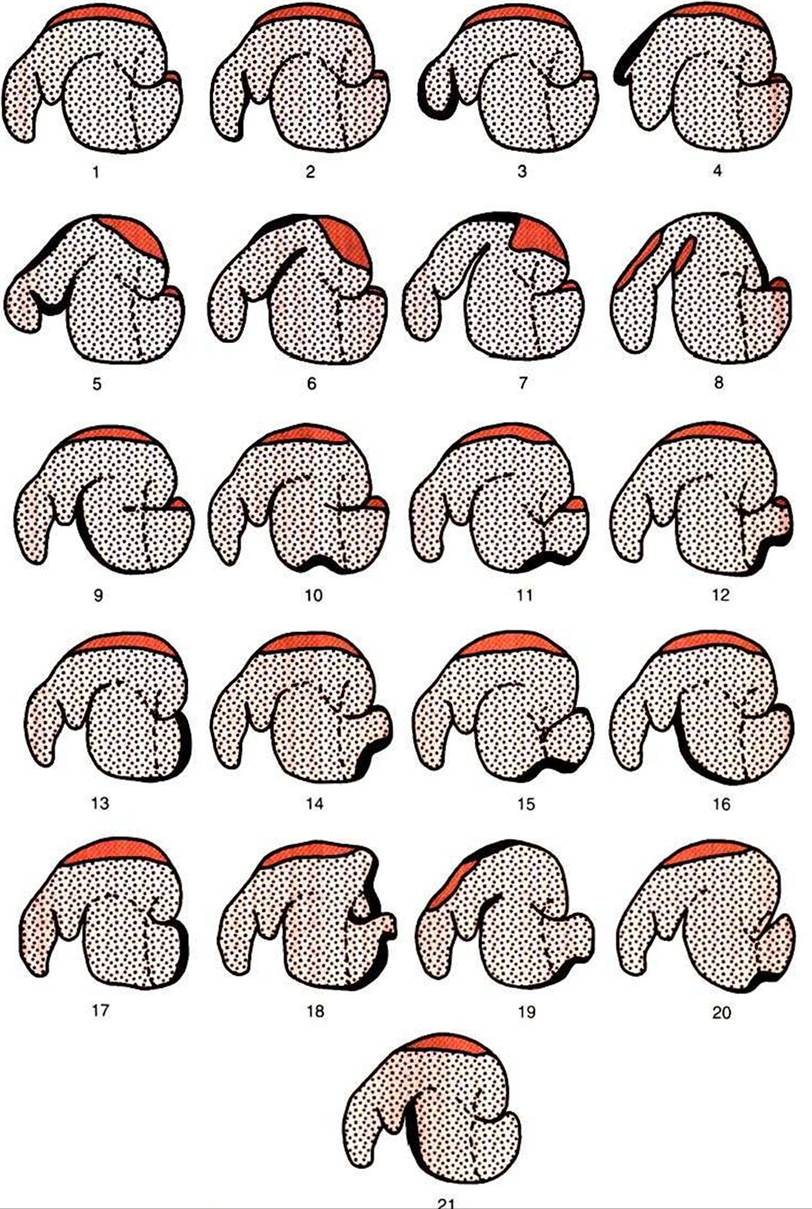
FIGURE 31-8 See legend on opposite page.
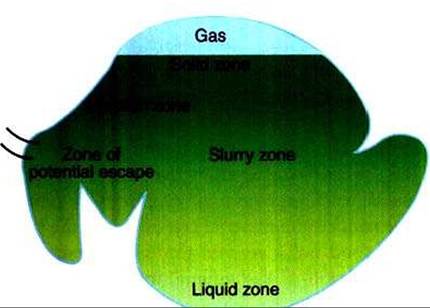
FIGURE 31-9 ■ The rumen is stratified into indistinct zones, varying in consistency of ingesta.The dorsal solid zone contains relatively undigested forage material and continues imperceptibly into the slurry and liquid zones.The ejection zone, near the cardia, is the area that receives newly swallowed feed; contractions of the reticulum eject feed material from this area into the solid zone. As material becomes digested, it sinks into the liquid zone, eventually returning from the liquid zone to the cranial sac and reticulum. Once in the reticulum and cranial sac, material is in a zone of potential escape, from which it may enter the reticulo-omasal orifice.
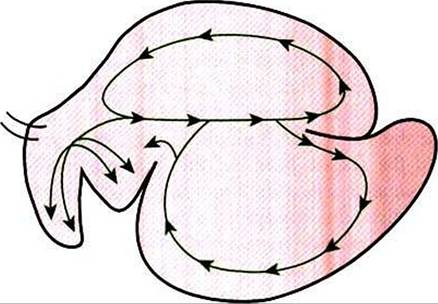
FIGURE 31-10 ■ Patterns of movement of rumen ingesta. Rumen motility results in more or less circular patterns of ingesta movement. (From RuckebuschYzThivend P: Digestive physiology and metabolism in ruminants, Westport, Conn, 1980, AVI Publishing.)
FIGURE 31-8 Contraction sequence in the reticulorumen. These drawings were derived by taking tracings directly from radiographs.The open regions represent the rumen gas cap (zone), whereas the stippled region represents ingesta.The heavy lines indicate portions of the wall that are actively contracting. Drawings 1 through 16 represent the sequence of events in a primary contraction in a normally fed sheep.
Drawings 17 through 21 represent the sequence of events in a secondary or eructation contraction. 1, Resting stage. 2, Initiation of sequence with elevation of reticuloruminal fold. 3, End of first phase of reticular contraction. 4, End of second phase of reticular contraction; note dilation of cranial sac. 5 to 7, Contraction of cranial sac followed by contraction of cranial pillar and dorsal sac. 8, Contraction of caudal-dorsal blind sac and caudal pillar, causing cranial displacement of gas cap toward reticulum, under cranial pillar, and into caudal-ventral blind sac.9, Contraction of longitudinal pillar and cranial ventral rumen; in anorectic sheep, the sequence frequently ceases at this point, and the occurrence of the remaining steps in the sequence varies according to the degree of filling of the reticulorumen. 10 to 12, Wave of contraction migrating caudally onto the caudal-ventral blind sac, associated with a ventral displacement of the caudal pillar. 13, Contraction of the pole of the caudal-ventral blind sac displacing gas cap around the caudal pillar. 14 to 16, Cranial migration of contraction if no secondary contraction sequence occurs. 17, When a secondary contraction follows a primary, the terminal contraction of the caudal-ventral blind sac may be maintained over a prolonged period or may be repeated simultaneously with a second contraction of the caudal pillar. 18, Contraction of caudal pillar and dorsal blind sac start to push gas cap cranially; contraction starts to move cranially across caudal-ventral blind sac.
19, Contraction has moved rapidly across dorsal rumen, and cranial pillar has moved for the second time; eructation, if it occurs, occurs at this point. 20 and 21, Contraction migrates cranially onto ventral rumen, causing contraction of ventral coronary pillars and second ventral displacement of the caudal pillar; cycle terminates with a contraction of the cranial ventral rumen. (From RuckebuschYThivend P: Digestive physiology and metabolism in ruminants, Westport, Conn, 1980, AVI Publishing.)
You can appreciate the effectiveness of the particle separation system in the rumen by considering particle sizes at different points in the digestive process. Long forage material is reduced by initial mastication to particles of 1 to 2 cm or shorter. Most of the material in the dorsal rumen is of similar particle size. Particle size diminishes in the more ventral portions of the rumen. Most particles that move through the reticulo-omasal orifice are 2 to 3 mm long. The selection of small particles for passage into the omasum occurs even though the reticulo-omasal orifice, when dilated for food passage, is probably about 2 cm in diameter, indicating that size discrimination is not based on sieving action at the orifice.