Functions of Bones
Protection of vital organs is one of the important functions of bones. The central nervous system is protected by the skull and vertebral column; the heart and lungs, by the rib cage; and internal parts of the urogenital system, by the pelvis.
In the vertebrates, locomotion, defense, offense, grasping, and other activities of this type depend largely upon the action of muscles that attach to levers. Almost without exception, these levers are made of bone and are integral parts of the skeleton.
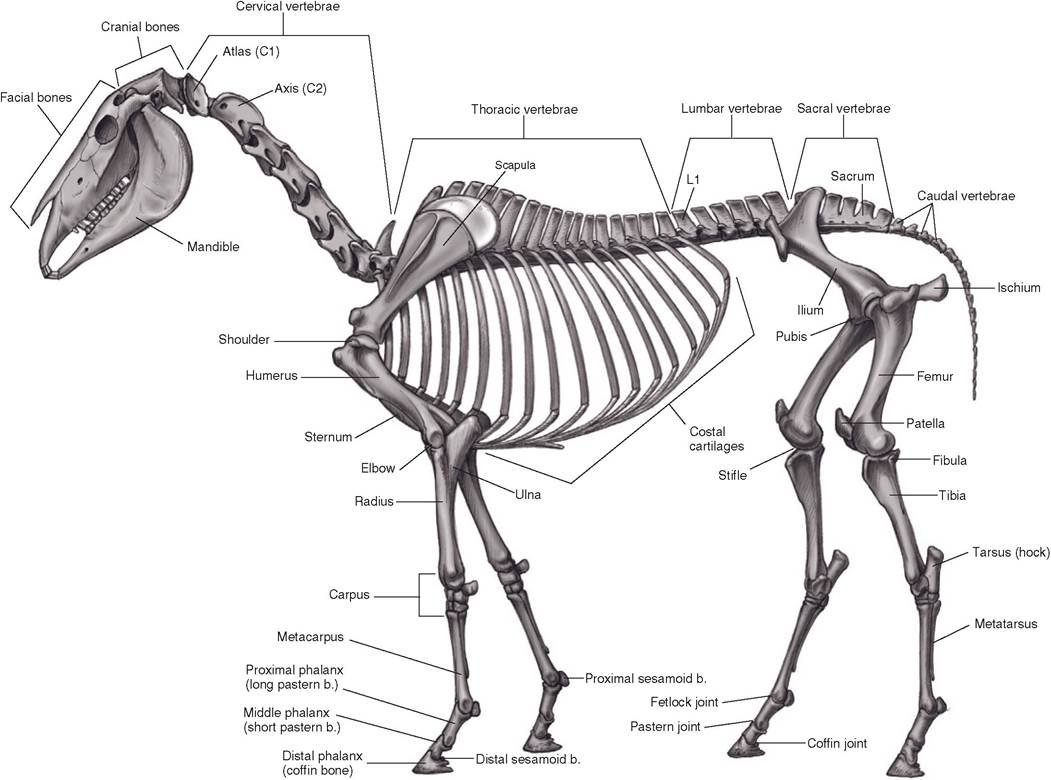
Figure 4-1. Skeleton of the horse. (Adapted with permission of Wiley-Blackwell from Spurgeon’s Color Atlas of Large Animal Medieine. Baltimore: Lippincott Williams & Wilkins, 1999, p. 5.)
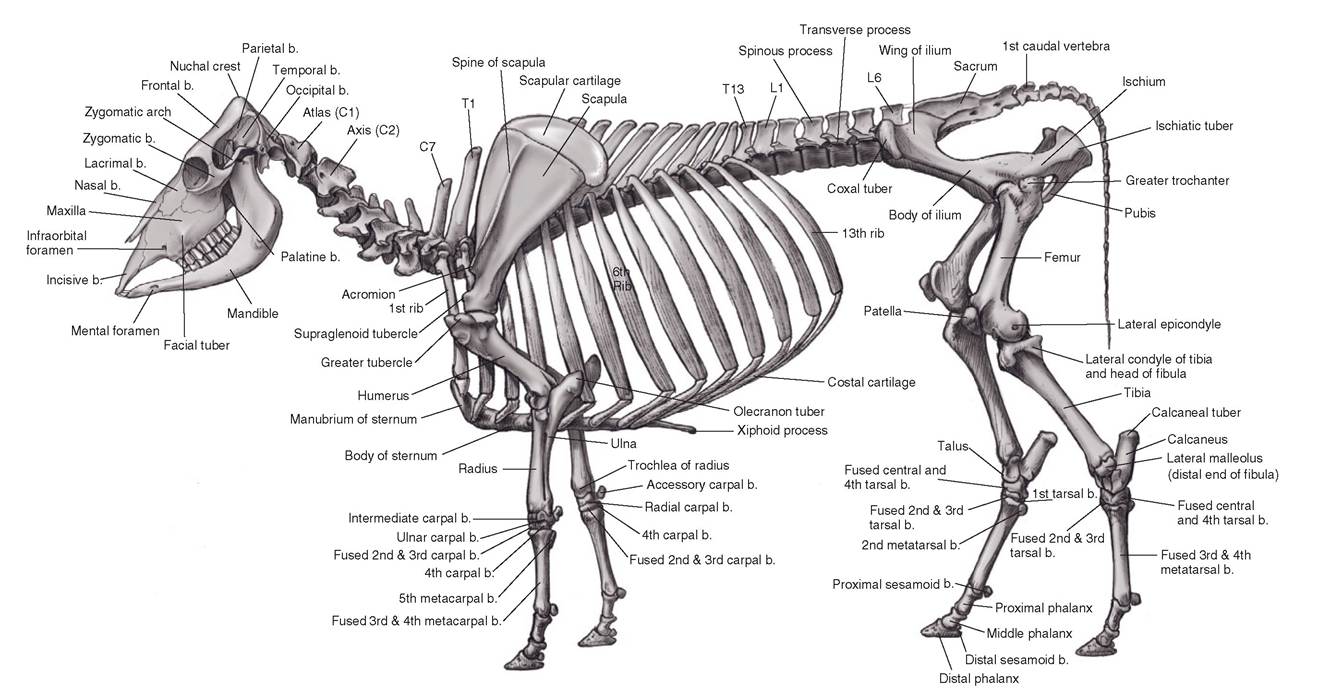
Figure 4-2. Skeleton of the ox. (Adapted with permission of Wiley-Blackwell from Spurgeon’s ColorAtlas of Large Animal Medieine. Baltimore: Lippincott Williams & Wilkins, 1999, p. 35.)
The entire skeleton serves as a dynamic storage area for minerals, particularly calcium and phosphorus. These minerals are deposited and withdrawn as needed in the ongoing homeokinetic process. Blood formation is not strictly a function of bone itself but of the marrow within the cavity of long bones and the spongy substance of all young bones.