IMMUNE SYSTEM
Hematolymphopoiesis
The cellular composition of the blood of amphibians consists of oval, nucleated erythrocytes, thrombocytes, monocytic cells (lymphocytes and monocytes), and poorly described
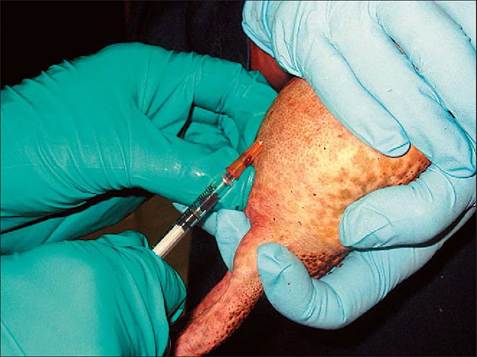
Figure 1.11 • Venepuncture of ventral midline abdominal vein of Marine toad (Bufo marinum).
(Photo by Whiteside.)granulocytic cells that are not homologous or analogous to mammalian granulocytes with similar staining characteristics (Wright 1996). Plyzycz et al. (1995) offer an excellent review of the hematolymphopoietic system of amphibians.
Bone marrow is found in a number of terrestrial amphibian species although it does not function to the same capacity as seen in higher vertebrates. Caecilians lack functional bone marrow, as do aquatic salamanders, relying on functionally equivalent centers in the liver and kidneys. Terrestrial salamanders have sites of lymphomyelocytopoiesis within their bone marrow, while the bone marrow of anurans serves only as a site for lymphocytopoiesis and myelothrombocytopoiesis (Goin et al. 1978; Wright 2001c).
The spleen of amphibians contains a mosaic of red and white pulp, which serve as centers of erythropoiesis and myelopoiesis respectively. All amphibians possess a thymus, which is one source of T-lymphocyte production, and remains functional throughout the life of the animal. The size of the spleen and the thymus can be affected by seasonal variations, and other factors such as malnutrition and chronic stress can lead to thymic involution. Amphibians lack lymph nodes; however, the intestinal tract contains scattered aggregates of lymphoid tissue known as gut-associated lymphoid tissue (GALT) (Plyzycz et al. 1995; Wright 2001c).