Luminal-Phase Carbohydrate Digestion Results in the Production of Short-Chain Polysaccharides
Carbohydrates are nutrients containing carbon, hydrogen, and oxygen atoms arranged as long chains of repeating simple- sugar molecules. Dietary carbohydrates originate primarily from plants.
There are three general types of plant carbohydrates: fibers, sugars, and starches. Fibers, the structural parts of plants, form an important energy source for herbivorous animals; however, plant fibers are not subject to hydrolytic digestion by mammalian enzymes and therefore cannot be digested directly by animals (see Chapter 31).Sugars are energy-transport molecules in plants. Sugars, or saccharides, may be simple (made up of a single molecular unit, monosaccharides) or complex (made up of two or more repeating saccharide subunits, polysaccharides). Glucose, galactose, and fructose are the most important simple sugars in animal diets. These monosaccharides are present, preformed in small quantities, in normal diets; however, most monosaccharides absorbed from the gut arise from the enzymatic
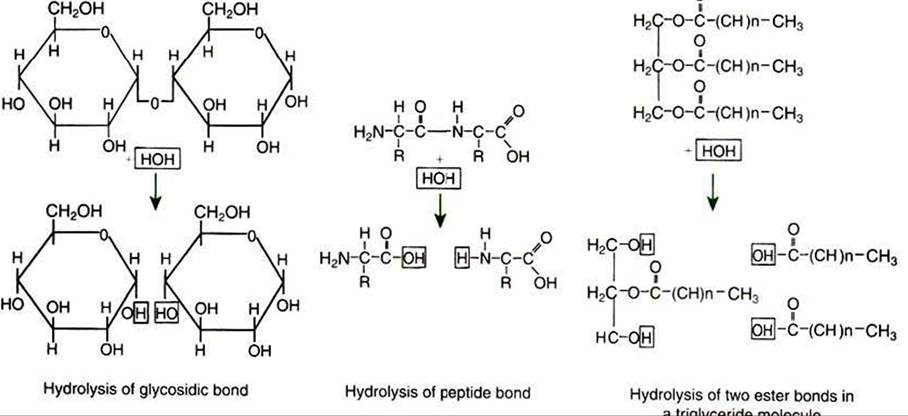
FIGURE 30-5 Major polymeric molecules *'orming food nutrients can be split into their constituent monomers by the insertion of a water molecule. This process, referred to as hydrolysis, is the major action of the digestive enzymes.
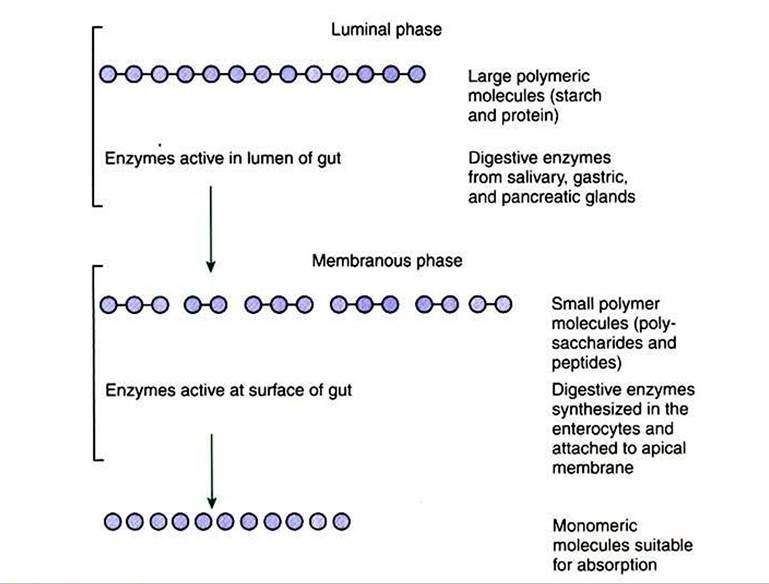
FIGURE 30-6 Luminal-phase and membranous-phase oligosaccharides.
hydrolysis of more complex carbohydrates. Complex sugars are referred to as disaccharides, trisaccharides, and oligosaccharides,, depending on the number of repeating simple* sugar subunits. Oligosaccharides contain several monomer units, usually between 3 and 10. Important complex sugars in
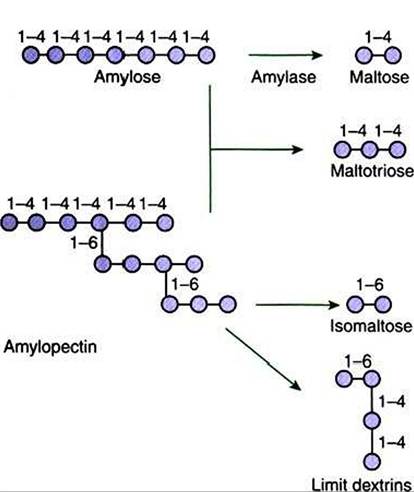
FIGURE 30-7 ■ Two major forms of dietary starch are amylose and amylopectin. Amylose is composed of repeating glucose units joined by α[1-4] linkages.
Amylopectin is a similar molecule, except that it has branch points formed by α[1-6] linkages. Because of the different linkage points, various polysaccharides result from luminal-phase digestion, as illustrated.animal diets are lactose, or milk sugar, and sucrose, or table sugar. Lactose is a disaccharide composed of glucose and galactose, whereas sucrose is a disaccharide composed of glucose and fructose. Other important complex sugars are maltose, isomaltoset and maltotriose; these three sugars are composed of two or three repeating glucose units (Figure 30-7). They are seldom present preformed in the diet but rather are formed in the gut as intermediate products of starch digestion.
Starch is an energy-storage carbohydrate of plants that forms the major energy-yielding nutrient in the diets of many omnivorous animals, such as pigs, rats, and primates. There are two chemical forms of starch, amylose and amylopectin. Both are long-chain glucose polymers, but amylose is a straight-chain molecule containing glucose monomers linked by α[l-4] glycosidic linkages. Amylopectin also contains glucose chains joined by α∣ 1-4) glycosidic linkages, but the amylopectin chains are branched, having an α[l-6] linkage at each branch point (Figure 30-7). Although the chemical structure of starch is limited to these two molecular types, the physical structure and encapsulation of starches vary among plant sources. This variation results in the unique characteristics of starches from different sources, such as wheat, corn, and barlev.