Most Autonomic Neurons Secrete Either Acetylcholine or Norepinephrine as a Neurotransmitter
As described in Chapter 5, acetylcholine is the neurotransmitter at the somatic neuromuscular synapse. Acetylcholine is also the neurotransmitter at all autonomic ganglia (Figure 13-4).
The neurotransmitter secreted by parasympathetic postganglionic neurons is also acetylcholine. Acetylcholine- releasing synapses are often called cholinergic. Most anatomically sympathetic postganglionic neurons secrete norepinephrine. However, anatomically sympathetic postganglionic neurons traveling to blood vessels of skeletal muscle produce vasodilation and secrete acetylcholine, as do sympathetic, postganglionic neurons to sweat glands in some species. Norepinephrine-Teleasing synapses are often called adrenergic.In the case of the adrenal medulla, incoming preganglionic axons release acetylcholine, but the vestigial, postganglionic neurons of the adrenal medullary tissue release primarily epinephrine and some norepinephrine into the circulating blood.
It is important that, once released, the neurotransmitter not linger in the synaptic cleft. 'Γhe neurotransmitter must be either
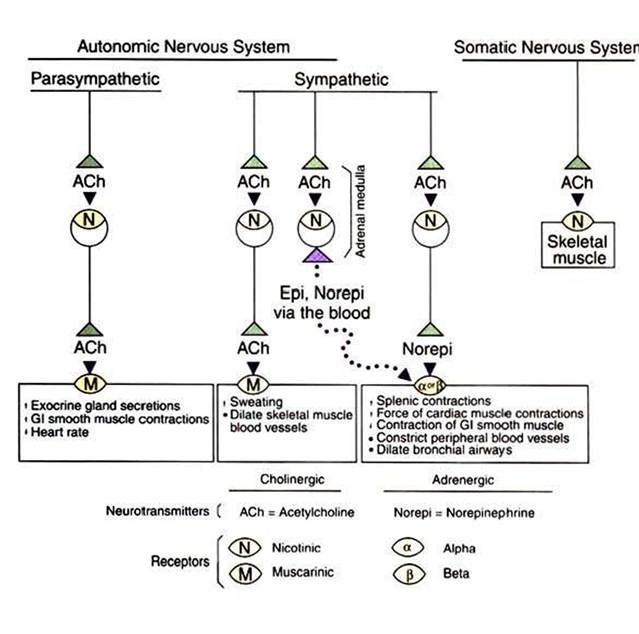
FIGURE 13-4 Classification of autonomic and somatic motor neurons with regard to their transmitter or mediator released, their Postsynaptic receptors, and their general influence on the effector organ. Acetylcholine (ACh), released from the presynaptic membrane, can stimulate either a muscarinic (M) or a nicotinic (N) postsynaptic receptor, depending on the particular location of the synapse. Similarly, norepinephrine (Norepi) can stimulate either α or β receptors, again depending on the location of the synapse. Epi, Epinephrine; Gl, gastrointestinal.
destroyed in the cleft or dissipated so that the postsynaptic membrane can recover its resting potential and be ready for the next synaptic transmission. Because some synapses can transmit impulses up to several hundred times per second» neurotransmitter destruction must occur quickly. In the case of acetylcholine» acetylcholinesterase destroys the transmitter in the cleft. For norepinephrine, reuptake by the presynaptic neuron is the principal way in which its synaptic effect on the postsynaptic membrane is terminated. The hormonal actions of CircuIatingepinephrine and norepinephrine released by the adrenal medulla, however, are primarily terminated by the enzyme catechol-O-methyltransferase (COMT), with a lesser contribution of the enzyme monoamine oxidase (MAO). These enzymes are widely distributed in the body, with highest concentrations in the liver and kidney.