Prolactin, Inhibited by Dopamine and Stimulated by Vasoactive Intestinal Peptide, Is the Most Important Hormone Involved in the Process of Milk Synthesis, or Lactogenesis; Growth Hormone Is Also Important for Lactogenesis
Prolactin plays an important role in the secretion of milk, or lactogenesis. Prolactin is released in conjunction with manipulation of the teat through either the suckling or the milking process.
Sensory stimuli are carried into the hypothalamus, and the synthesis and release of dopamine, a major inhibitor of prolactin secretion, is blocked while neurons in the paraventricular nucleus are stimulated to produce and release vasoactive intestinal peptide, a stimulator of prolactin release (Figure 39-6). A short-lived surge of prolactin secretion occurs immediately after the onset of milk removal; peak values are usually reached within 30 minutes after the initial stimulus. Major surges of prolactin apparently do not need to be elicited on an hourly basis to maintain lactation because 12-hour release intervals, as occur in association with the milking of dairy cows, are sufficient to maintain lactogenesis. Prolactin responses, as judged by the amount of hormone release after mammary gland stimulation, decrease as the lactation period progresses.Another major hormone required for milk production in ruminants is growth hormone (GH). 'There is now considerable interest in the use of CiH to promote additional milk production from cows through exogenous administration of the hormone.
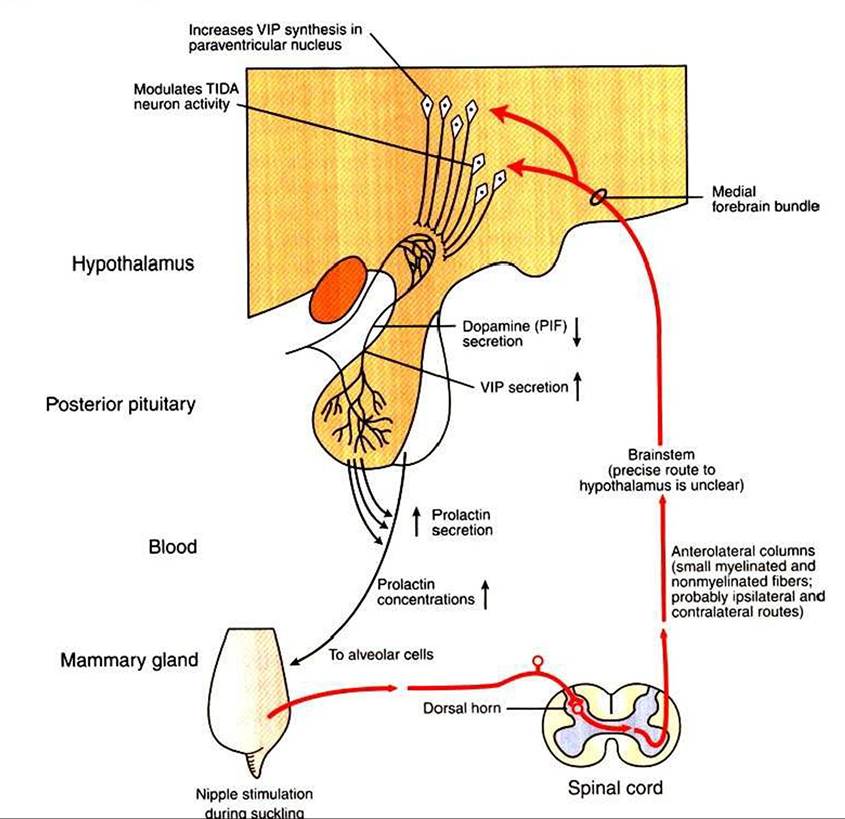
FIGURE 39-6 Somatosensory pathways in the suckling-induced reflex release of prolactin.The exact route taken by sensory information between brainstem and hypothalamus is speculative. Although tuberoinfundibular (TIDA) dopamine neuron activity is modulated as a result of the arrival of this somatosensory-derived input (prolactin inhibiting factor, PIF}l the increased secretory activity of neurons containing vasoactive intestinal peptide (VtP) in the paraventricular nucleus is probably also crucial in driving prolactin secretion during suckling. (Modified from Johnson M, Everitt B: Essential reproduction, ed 3, London, 1988, Blackwell Scientific.)