Pulmonary Circulation
The pulmonary circulation is the part of the vascular system that circulates the blood through the lungs (Fig. 17-5). Deoxygenated blood is delivered into the pulmonary system by contraction of the right ventricle.
After passing into the pulmonary trunk, blood enters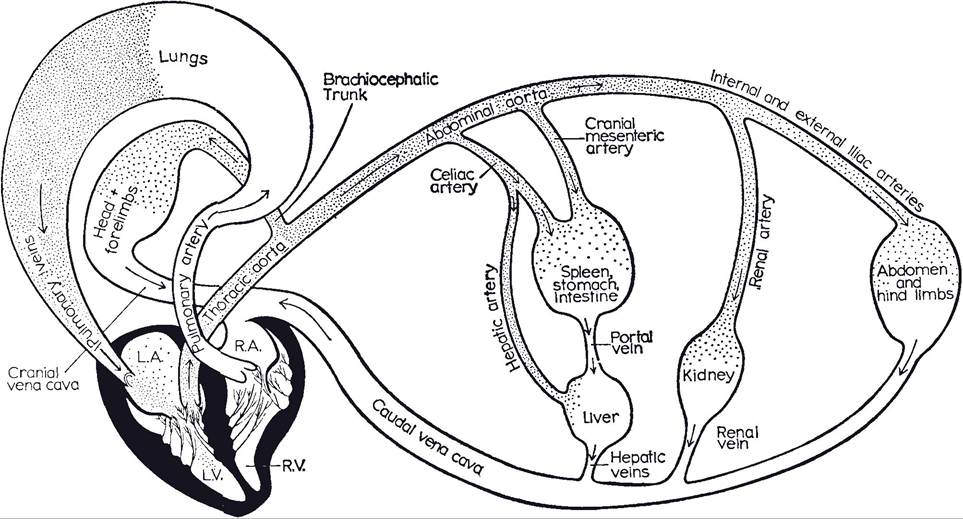
Figure 17-5. General scheme of important vascular beds in the adult animal. Stippling indicates high oxygenation; in this diagram the left atrium and ventricle are depicted on the left. Note the hepatic portal system associated with the viscera.
the right pulmonary artery to go to the right lung and the left pulmonary artery to go to the left lung. Each pulmonary artery subdivides into lobar arteries going to individual lobes of the lungs. The lobar arteries again subdivide many times, finally forming arterioles that supply the extensive capillary beds of the lungs, where gaseous exchange takes place (see Chapter 19). After the blood passes through the capillary bed of the lungs, it enters venules, which combine to form pulmonary veins. These pulmonary veins, after leaving the lungs, deliver oxygenated blood to the left atrium, completing the pulmonary circulation.
As gases are exchanged, the color of the blood changes from the bluish maroon color of deoxygenated blood to the bright red of oxygenated blood. in the adult the pulmonary circulation is the only place where deoxygenated blood is found in arteries (which, by definition, carry blood away from the heart) and oxygenated blood is found in veins (returning blood to the heart).