REPRODUCTIVE SYSTEM
Male
The male has a rounded penile sheath with a round urethra. They can be easily extruded in rabbits over 2-months-old. On either side of the anogenital area are blind, hairless inguinal sacs, which contain scent glands.
The testes descend at 10 weeks and the hairless scrotal sacs can be seen cranial to the penis. They are relatively large with large epididymal fat pads. There is no os penis (Donnelly 1997).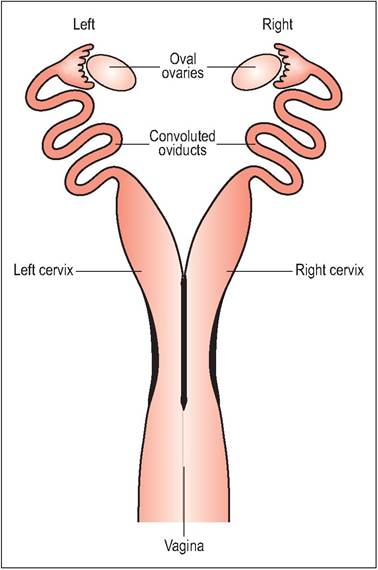
Figure 8.26 • Duplex uterus of the rabbit.
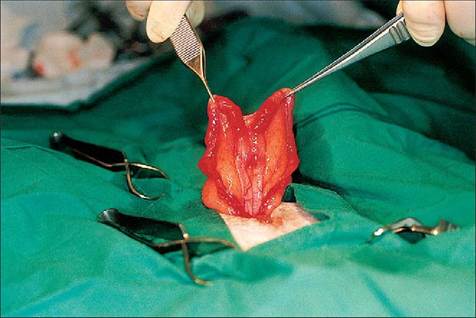
Figure 8.25 • Rabbit ovariohysterectomy showing duplex uterus - there are two cervices and a large saccular vagina. The mesometrium is a site of fat storage so early spaying is advised.
It is colored bright pink and lies dorsal to the urinary bladder. The mesometrium is a site of fat storage and, even in young does, builds up fat tissue rapidly. The suspensory ligaments are long, making exteriorization of the uterus easy. The urethra enters the vagina via the vestibule, in the dorsal wall of which is found the bulbourethral gland, while the clitoris lies along the ventral surface (Cruise & Nathan 1994). The rabbit has only a minor anastomoses between the uterine and ovarian vasculature, unlike the guinea pig and rat where the arteries and veins share many common associations (Del Campo & Ginther 1972).
CLINICAL NOTE
The uterus and ovarian pedicle are more friable than in the cat or dog so early spaying (before 6 months) is advisable to avoid excess fat.
Reproductive physiology
Rabbits literally do “breed like rabbits.” In fact the cult of the Easter Bunny arose from the old pagan spring festival symbolizing new life and fertility. Smaller breeds reach sexual maturity at 4-4.5 months while large breeds mature at 4.5-5 months (Batchelor 1999).
The reproductive capacity of rabbits is potentially up to 60 young per year as the doe has a post partum estrus within 24 hours of kindling (Lebas et al. 1997b).Ovulation
Rabbits, just like the cat and ferret, are induced ovulators (Bell 1999) and ovulation occurs 10 to 13 hours after coitus. There is no regular estrous cycle but a period of receptivity every 5 to 6 days. Ovarian activity decreases with shorter days in late summer to winter.
The vaginal smear technique is not useful in the rabbit but the appearance of the vulva can give a guideline. Anestrus shows a narrow, pale pink vulva, while during estrus the vulva becomes swollen and reddish purple under the effect of estrogen (Batchelor 1999; Lebas et al. 1997b).
Pregnancy
The gestation period is 31-32 days. Larger litters have shorter gestation periods than small litters. A fetus can be felt by gentle palpation between 12 and 14 days gestation. If a litter has not kindled by day 32 there is a higher risk of the kits being stillborn.
Embryonic mortality is very high in rabbits with only about 60 to 70% successful births (Lebas et al. 1997b). Rabbits are particularly prone to fetal loss at day 13, when placentation changes from yolk sacs to hemochorial, and at 23 days when the fetuses are susceptible to dislodgement by rough handling (Harkness & Wagner 1995). External factors like poor nutrition or body condition, age, and time of year also play a role (Lebas et al. 1997b).
Parturition
Within the last week of kindling estrogen increases as progesterone declines, causing hair loss to line the nest. Oxytocin peaks prior to parturition. Parturition usually occurs in the early morning and normally takes about 30 minutes, although young have been born hours or even days apart.
Neonates
The young are altricial with sealed eyelids and ear canals and weigh 40-50 g (Harkness & Wagner 1995; Nowak 1999b). Like the guinea pig and humans, rabbits get their passive immunity before birth (Brewer & Cruise 1994).
Neonates are very vulnerable to hypothermia as they are hairless and the doe shows little maternal behavior. They keep warm via brown fat, which is highest in the first 2 weeks and helps protect against low ambient temperatures. Rabbit pups are normoglycemic, even without suckling until 6 hours post partum when the glycogen reserves become exhausted (Brewer & Cruise 1994; Harkness & Wagner 1995).Pseudopregnancy
Pseudopregnancy can be caused by infertile mating or the presence of a male nearby. It can last for 16 or 17 days during which the dam will be unable to conceive. After 18 to 22 days she may pluck hair from her belly to make a nest. During pseudopregnancy the corpus luteum secretes progesterone, which causes the uterus and mammary glands to grow. This is most pronounced in the first 10 days; by day 16 the organs will involute and at day 18 the corpus luteum will be disintegrating (Lebas et al. 1997b).
Lactation
The eight mammary glands develop in the last week of pregnancy. Milk let down will be delayed until after kindling. There is a post partum estrus but receptivity declines once lactation begins and continues until after weaning.
Rabbit milk is richer than cow milk, with an unusually low lactose content and very high protein and fat content (13% protein, 9% fat, 1% lactose, 2.3% minerals) (Cheeke 1987d, 1987h). Suckling is stimulated via a pheromone produced by a gland near the nipple. Consumption of water increases 10-fold during lactation, as does consumption of cecotrophs.
CLINICAL NOTE
Many rabbit owners think the doe has abandoned her young. However, the doe only nurses her young once a day, spending about 3-5 minutes with them. Her milk is so rich the kits can ingest 20% of body weight while suckling (Cheeke I987h; Lebas et al. I997b).