RESPIRATORY SYSTEM
The respiratory rate is approximately 30-32 breaths per minute. Hamsters have well-developed nasal turbinates that are lined by nasal mucosa whose function is to filter and humidify the incoming air and also to warm or cool the air before it passes to the lungs.
This is aided by many nasal glands which open into the external nares. Like the rat, they also have well-developed olfactory epithelium and bulbs, giving the hamster its keen sense of smell (Bivin et al. 1987; Magalhaes 1968). The lungs have a large single left lobe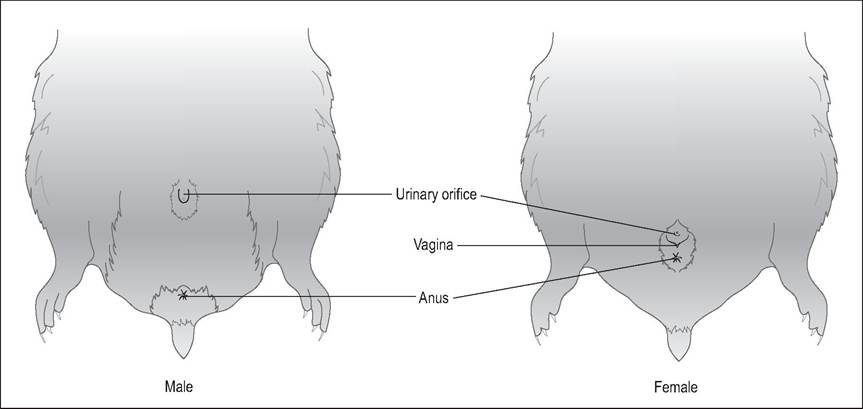
Figure 11.2 • External genitalia. (a) The male has a longer anogenital distance, (b) The female has a short anogenital distance with a completely separate vaginal and urethral opening.
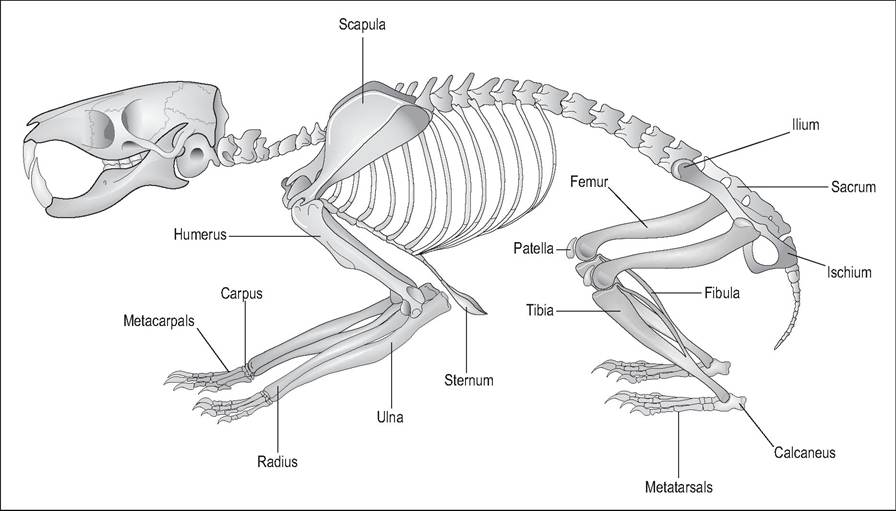
Figure 11.3 • Skeleton of the Syrian hamster (Mesocricetus auratus). From Popesko, P., Rajtova, V., & Horak, J. (1990) A colour atlas of anatomy of small laboratory animals. Vol. 2. Aylesbury, UK: Wolfe with permission.
with four lobes on the right: the cranial, middle, caudal, and accessory (Bivin et al. 1987). The thymus lies in the cranial mediastinum and consists of two lobes that decrease in size with age (Fig. 11.9).