Ruminant Saliva Is a Bicarbonate- Phosphate Buffer Secreted in Large Quantities
The normal composition of ruminant parotid saliva is quite different from the saliva of monogastric animals. Bovine and canine saliva are compared in Figure 29-2. Runiinant saliva is
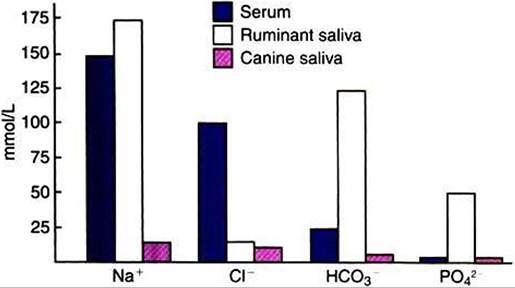
FIGURE 29-2 Electrolyte composition of blood serum and of canine and ruminant saliva.
Note that the electrolyte concentration of canine saliva is much lower than that of serum, in contrast to the concentration in ruminant saliva. Also note the high concentrations of bicarbonate (HCO3 j and phosphate (PO42^) in ruminant saliva; these ions give ruminant saliva its alkalizing quality.isotonic and, compared with blood serum, has high concentrations of bicarbonate and phosphate and a high pH. This well-buffered solution is necessary for neutralizing acids formed by fermentation in the rumen, and ruminants secrete it in enormous quantities. An adult cow may secrete IOO to 200 L of saliva per day. This volume is approximately equivalent to the extracellular fluid volume of most adult cattle. It is obvious that much of the water and electrolytes secreted in saliva must be reabsorbed rapidly and recirculated through the total body water, or the cow would die of dehydration. In abnormal circumstances, such as blockage of the esophagus, in which the flow of saliva is diverted from the gastrointestinal (GI) tract, cattle quickly become dehydrated and acidotic.
In general, the salivary glands of domestic animals are seldom involved in disease processes and infrequently require veterinary attention.