SKELETAL SYSTEM
The vertebral formula is: C7, T15, L5 (6), S3, Cd 18 (Fig. 12.1). The ferret spine is very flexible, as befits an agile animal whose ancestor, the polecat, ranks among the most efficient of hunters.
The ferret can turn around in a pipe or rabbit burrow in its own length and come racing out.The ferret chest is very large compared to its body size. This is said to relate to the ancestry of the polecat as a slim, active hunter with useful increased lung capacity. The ferret has 15 pairs of ribs with the first 12 pairs attached to the sternum. The last five ribs make up the costal arch. The first ribs are relatively small, as are the last two, making the thoracic inlet narrow in contrast to other animals for the passage of the trachea, esophagus and large blood vessels. This can be significant when discussing chest problems.
The spinal cord can be subject to damage resulting from fractured vertebrae or disc protrusion. This is a particular risk in breeding jills, especially in a heavily pregnant or lactating jill when trying to clamber over some high object. Heavily-
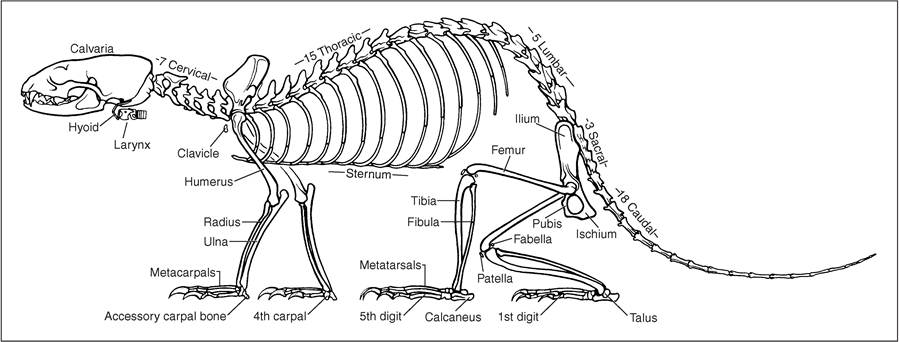
Figure 12.1 • The ferret skeleton. (Courtesy of Howard Evans.)
pregnant jills and heavy hobs should be well-supported by a hand under the rump when handling, to guard against excessive strain on the vertebral column.
The appendicular skeleton is naturally fine, light bone with long bones of matchstick diameter. In accident situations the long bones may fracture and require pinning with K-wire. It is also possible to use the femur for intraosseous blood transfusion. The ferret resembles the dog in having five toes with non-retractable claws, which in the house pet may require clipping.
Skull
The ferret skull shows the characteristics of the carnivore and it can be noted from Figure 12.2 that the ferret and dog have unclosed zygomatic bones to the eye orbit, in contrast to the cat (Wen et al. 1985). It can be seen from Figure 12.3a that one third of the ferret skull represents the short facial region and that the brain case is relatively large. Smith (1982) discovered that Australian ferrets had about two thirds the brain size of polecats.