Spermatogenesis Is a Lengthy Orchestrated Process in Which Diploid Stem Cells Divide by Mitosis to Maintain Their Own Numbers and Cyclically Produce Progeny That Undergo Meiotic Division and Differentiation into Haploid Germ Cells
Spermatogenesis is a lengthy orchestrated process in which diploid stem cells at the base of the seminiferous tubules (spermatogonia) divide through mitosis to maintain their
own numbers.
These cells also cyclically produce progeny that undergo further meiotic division and differentiation into haploid spermatids, which are released as spermatozoa (Figure 40-1). Spermatogenesis is generally divided into three major events: Spermatocytogenesis, meiosis, and spermiogenesis. Spermatocytogenesis accomplishes two important functions. First, the mitotic divisions of type A spermatogonia produce other spermatogonia that are not yet committed to the immediate Spermatozoal production process, thus maintaining a population of stem cells. These stem cell divisions are responsible for the ability of the male to continuously produce spermatozoa throughout his adult life. Second, type A spermatogonia become type B spermatogonia, which further divide through mitosis to produce primary spermatocytes. The primary Spermatocyles enter into the pool of meioti- cally dividing cells and ultimately produce spermatozoa.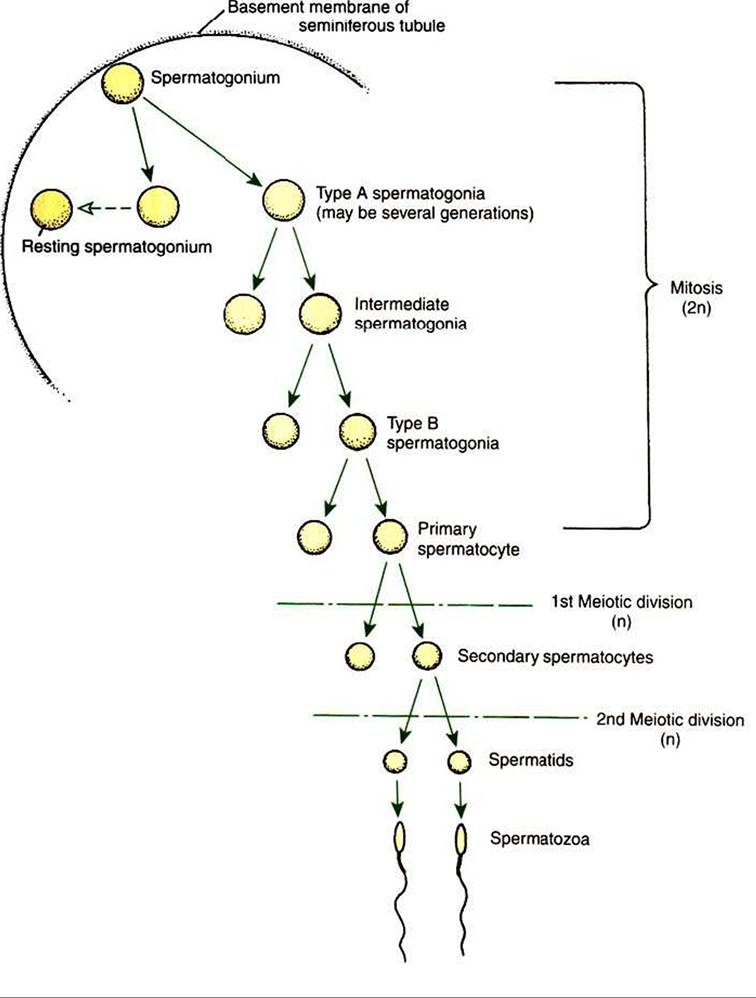
FIGURE 40-1 Diagramof spermatogenesis. (From McDonald LE, Pineda MH, editors: Veterinary endocrinology and reproduction, Philadelphia, 1989, Lea & Febiger.)
Meiosis occurs only during the processes of oogenesis and spermatogenesis, in which the haploid condition results after two cell divisions with only one chromosomal duplication. During meiosis, homologous chromosomes pair up, and this facilitates the exchange of genetic material between chromosomes. At the first meiotic division, the homologous chromosomes segregate into the two resulting cells, creating a haploid condition. In the male the resultant haploid cells are the secondary spermatocytes with duplicated chromatids.
In less than 1 day after their formation, secondary spermatocytes divide to form spermatids that contain one chromatid from each of the haploid chromosomes.The newly formed spermatids continue to differentiate without dividing to form mature spermatids through the process of spermiogenesis. Spermiogenesis occurs just before spermatids are released as spermatozoa at the luminal surface of the seminiferous tubule (Spermiation). The major features of spermiogenesis include formation of the acrosome from the Golgi apparatus, condensation and elongation of the nucleus, formation of the flagellum, and extensive shedding of cytoplasm. The spermiated spermatozoon consists of a head, middle piece, and tail (Figure 40-2). The head contains the genetic material to be combined with that of the oocyte during fertilization. Overlying the head is the acrosome, which contains hydrolytic enzymes necessary for penetration of the oocyte. The middle piece contains mitochondria, which provide the energy for microtubules extending into the tail to slide back and forth, past each other, thus producing tail movement.
Taking epididymal transit time into account, the interval from type A spermatogonia to ejaculated spermatozoa is approximately 60 to 70 days for the ram and the bull and 50 to 60 days for the boar, the dog, and the stallion. Therefore the interval from an event that may adversely affect the testis or epididymis to a decline in seminal quality may be as short as a few days to as long as 2 months. Similarly, at least 60 days would likely be required for an ejaculate to return to normal after a toxic insult to the testis.
In theory, 16 primary spermatocytes and 64 spermatozoa develop from one type A spermatogonium in the bull and the ram. However, a percentage of potential sperm production is lost to degeneration during the normal course of spermatogenesis. In humans, approximately 40% of the sperm production potential is lost during the latter stages of meiosis.
Daily sperm production is the number of spermatozoa produced per day by the testes. It is highly correlated with testicular size and is not affected by frequency of use for breeding. Because of the influence of testicular size, there is a wide range in daily sperm production among domestic species. For example, daily sperm production has been calculated to be 0.37 ? IO9 in the dog and 16.2 ? IO9 in the boar. Within a species, both individual and breed variation in testicular size can also influence daily sperm production.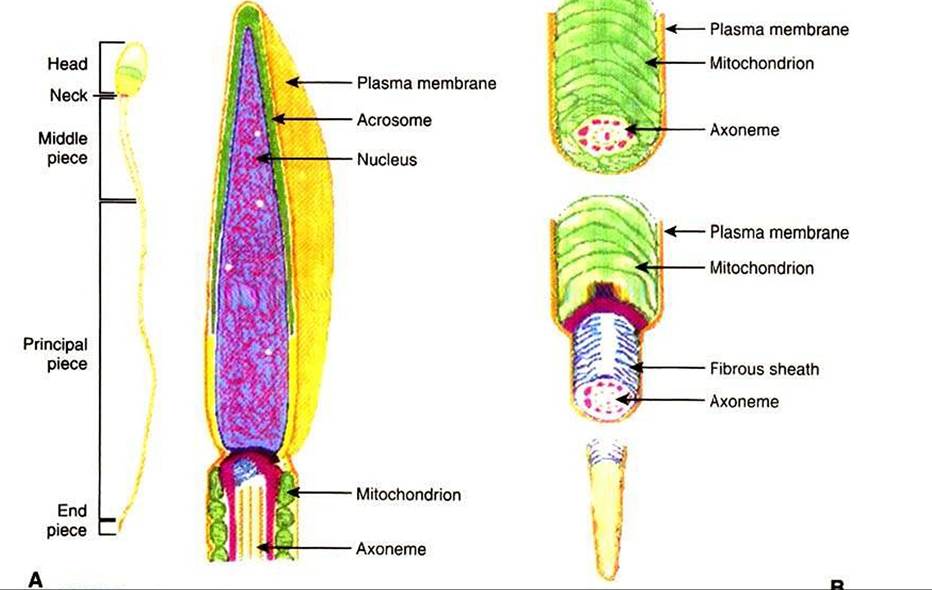
FIGURE 40-2 A, Major elements of the mammalian spermatozoa B, Middle piece (top), principal (middle), and end piece (bottom) of a spermatozoon viewed in cross,sθc'i0"; (Fr°m Roba,re b' pW jL Trasler JM: Handbook Ofandrology. Lawrence Kan iWb, Alien Press.)
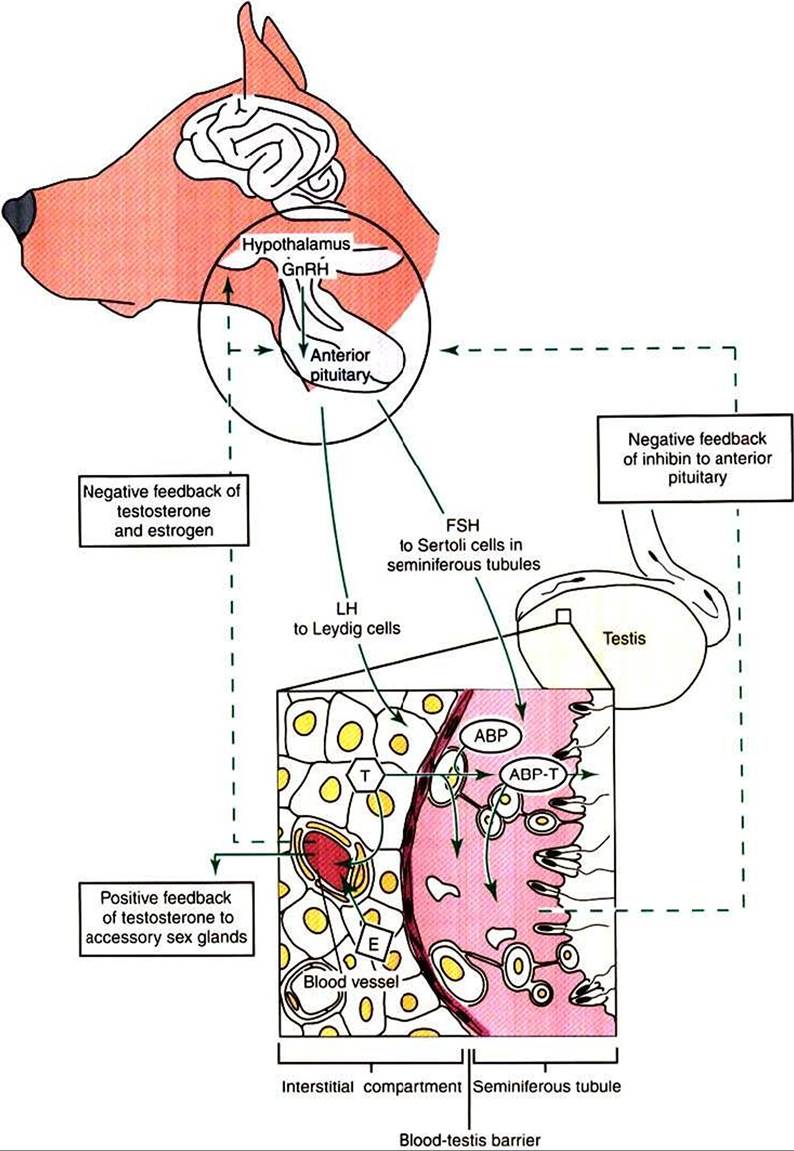
FIGURE 40-3 The reproductive system of male mammals is regulated by intricate feedback mechanisms that involve the hypothalamus, anterior pituitary, and testes. GnRHt Gonadotropin-releasing hormone; FSHt follicle-stimulating hormone; LHt luteinizing hormone; ABPt androgen-binding protein; ABP-Tt androgen-binding protein-testostero∩e; Et estrogen; Tt testosterone.