STRUCTURE OF DNA
DNA is a complex double-stranded nucleic acid composed of two polynucleotide chains, which are twisted with each other into a double helix structure. It is formed by phosphoric acid, deoxyribose, and four different types of bases.
Each DNA molecule consists of two polynucleotide chains, which are twisted around one another in the form of a double helix. The phosphate and deoxyribose molecules come together to create the two chains that make up the DNA molecule. Additionally, organic bases connect the two DNA strands to each other (Figure 2.4).The DNA molecule chain is composed of numerous nucleotides. Each nucleotide is made by:
1. Deoxyribose - sugar
2. Phosphate
3. One of the following organic (nitrogenous) bases: Purines {Adenine (A) and Guanine (G)} and Pyrimidines {Thymine (T) and Cytosine (C)}.
The arrangement of DNA strands involves specific pairing of bases, where each strand is bound by particular pairs.
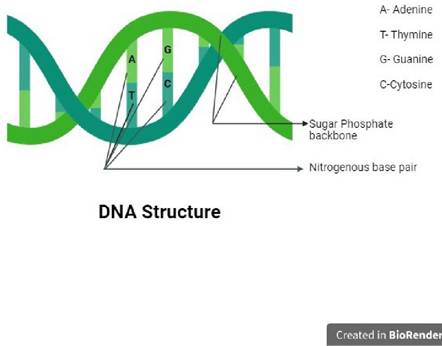
FIGURE 2.4 Nucleus
One strand’s adenine specifically binds with the opposite strand’s thymine, while the cytosine of one strand binds with the guanine of the other strand.
Chromosomes are composed of DNA, which contains the genetic information. This genetic information, stored in DNA, is referred to as the genome. Genes are the individual units into which a DNA molecule is divided.