Subdivisions
The ANS is subdivided both functionally and anatomically. The parasympathetic system, also known colloquially as the ‘rest and digest’ system, is responsible for processes that conserve and restore energy.
It functions in the day-to-day control of viscera for basic ‘ticking over’ type functions, for example, breathing at rest, digestion and elimination of wastes.The sympathetic system, also called the ‘fight or flight’ system, functions when the animal is stressed, that is, when confronted by a need to fight or flee. It enables vigorous physical activity with rapid production of energy (ATP). Thus it is responsible for increasing heart rate, respiration, diverting blood flow to active muscles and pupil dilation for increased vision.
Anatomically, the two systems arise from different areas of the CNS, with the parasympathetic system arising from the brain and sacral spinal cord, and the sympathetic system from the thoracolumbar spinal cord. Hence, they are also known as the craniosacral and thoracolumbar systems, respectively (Fig. 12.1).
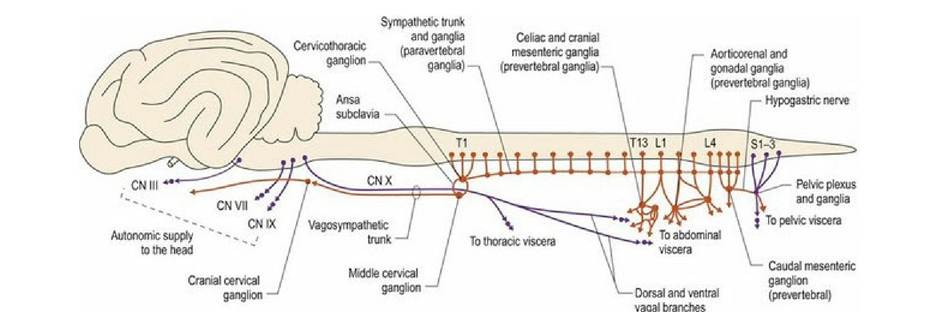
Fig. 12.1 The two efferent components of the autonomic nervous system. Purple = parasympathetic nervous system; orange = sympathetic nervous system. Note: dots represent ganglia, but fibres may pass
through ganglia without synapsing and synapse in a subsequent ganglion.
Despite the different origins, each organ receives both sympathetic and parasympathetic input. The balance of input from each system determines the organ’s function.
The neurotransmitter elaborated at the terminal determines the physiological effect with the parasympathetic system being cholinergic, using acetylcholine, and the sympathetic system being adrenergic, using noradrenaline (norepinephrine). Adrenaline and noradrenaline are also secreted by the adrenal medulla into the circulation enhancing the effect of sympathetic nervous system stimulation.