SUMMATION, TETANIZATION, AND FORCE MODULATION IN MUSCLE CONTRACTION
Muscle contraction strength can be adjusted through a process known as summation, which involves the additive effect of individual muscle twitches. There are two main types of summation: multiple fibre summation and
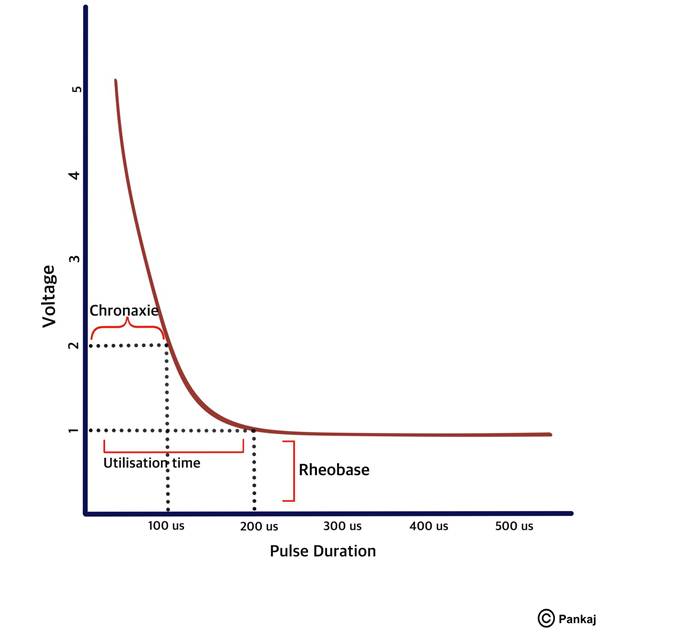
FIGURE 7.12 Graph shows the relationship between the application of strength and duration of stimuli.
frequency summation, both of which can lead to sustained contraction called tetanisation.
Multiple Fibre Summation: The central nervous system can selectively recruit motor units within a muscle, starting with smaller units and progressing to larger ones as needed. This recruitment strategy, known as the size principle, allows for precise control of muscle force, with small increments for light contractions and larger increments for stronger contractions. Smaller motor units are typically activated first due to their more excitable motoneurons, and motor units are activated asynchronously to ensure smooth muscle contractions.
Frequency Summation and Tetanisation: At lower frequencies of stimulation, individual muscle twitches are distinct. As the frequency increases, subsequent contractions begin before the previous ones have fully relaxed, leading to a progressive increase in overall muscle contraction strength. When the frequency reaches a certain threshold, the contractions merge into a smooth, sustained muscle contraction known as tetanisation. Beyond this frequency, further increases do not enhance contraction strength due to the high level of calcium ions in the muscle, which prevents relaxation between action potentials.
Staircase Effect (Treppe): When a muscle begins contracting after a period of rest, its initial strength may gradually increase to a plateau after several twitches, a phenomenon known as the staircase effect or treppe.
This effect is believed to be due to the accumulation of calcium ions in the cytosol. Strength of Stimulus: The force of muscle contraction is dependent on the intensity of the stimulus received. Various levels of stimuli can result in varying degrees of contraction force.Effect of Number of Stimuli: The contractility of a muscle is affected by the number of stimuli it receives. A single stimulus results in a simple muscle twitch, while multiple stimuli can lead to beneficial effects, superposition, or summation effects, enhancing the contraction force and altering the contraction profile.
Effect of Load on Muscle Contraction: The muscle’s work is assessed in two scenarios: free-loaded and after-loaded. The work done in the free-loaded condition is higher than in the after-loaded condition. This is consistent with the Frank-Starling law, as the initial length of the muscle fibre (or the degree of stretch) is greater in the free-loaded condition, leading to a stronger contraction and, thus, more work done. The free-loaded condition refers to a situation where the muscle contracts without any resistance, while the after-loaded condition refers to a situation where the muscle contracts against a load or resistance.
Muscle Fatigue: When a muscle contracts strongly for an extended period, it can become fatigued. This is primarily due to muscle glycogen depletion, which impairs the contractile and metabolic processes. In addition, the transmission of nerve signals through the neuromuscular junction can decrease after prolonged, intense muscle activity, which also contributes to muscle fatigue. Furthermore, suppose blood flow to a contracting muscle is interrupted. In that case, the muscle can become almost completely fatigued within a minute or two due to the loss of nutrient supply, particularly oxygen.
The coordination of agonist and antagonist muscles is essential to move body parts across a joint. This process, known as coactivation, is the brain and spinal cord’s motor control centres regulate it. To position an animal’s limb in the middle, the degree of contraction of the muscles that move the limb in opposite directions is balanced accordingly. By varying the activation of these muscle sets, the nervous system directs the precise positioning of the animal’s body parts.
7.12