The Descent of the Testes (Figure 16.6)
The gonads differentiate in the early embryo in the sublumbar region but, in all the domestic species, the testes migrate through the inguinal canal to the scrotum. Cryptorchidism is when one or both of the testicles fail to descend from the
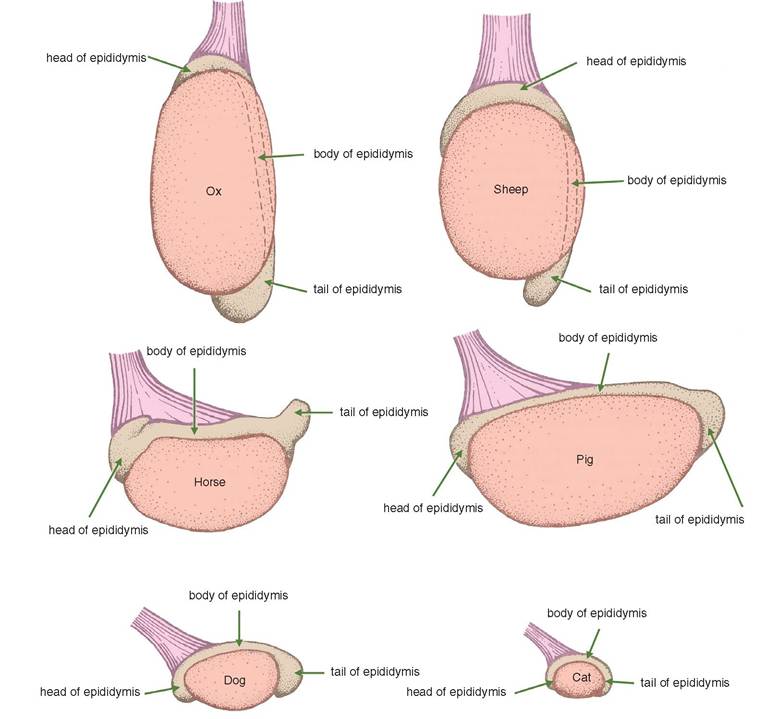
Figure 16.5 Testis and epididymis of the domestic animals.
All the drawings are of the lateral surface of the left testicle. The relative sizes are not entirely accurate. For instance the testicle of the cat is drawn much larger than it should be in relation to the large farm animals.abdominal cavity into the scrotum. An account of the cause and the mechanism of this migration are considered here because of the incidence of cryptorchidism in the domestic animals. The process of testicular descent can be divided into four phases as follows:
1) The early stages of testicular descent result from the development of an embryonic structure, present in both sexes, called the gubernaculum. (See section 3.4.4) This structure is a fibrous cord (originating from mesenchyme) that, in the male, extends from the caudal pole of the testis, through the inguinal canal to attach to the distal scrotum. At this stage there is also concurrent development of the mesonephros or embryonic kidney. Despite its name and temporary function, the mesonephros does
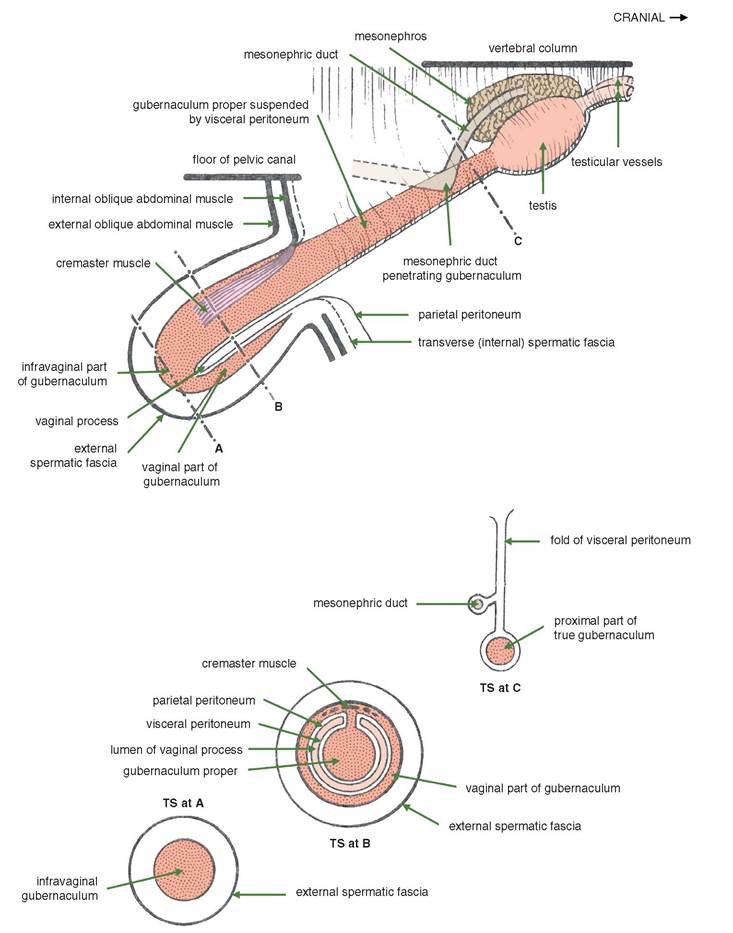
Figure 16.6 Diagram of the right gubernaculum showing its components and their relationships shortly before the mesonephros degenrates.
not contribute to the development of the metanephros, or kidney. However, the mesonephros does give rise to the epididymis, and the mesonephric duct becomes the ductus deferens. Also at this stage of development of the gubernaculum, an evag- ination of the peritoneum, the vaginal process, is invaded by the gubernaculum.
2) The next phase is a transabdominal migration of the testis across the abdomen to occupy a position within the deep inguinal ring. The actual mechanism of this movement is a matter of debate. However, Gier and Marion (1969) believe that continued growth of the vaginal process distally maintains tension on an unchanging gubernaculum that, therefore, pulls the testis caudally towards the inguinal ring. By the end of this phase the mesonephros has developed into the epididymis and the ductus deferens; the cremaster muscle has developed within the vaginal part of the gubernaculum.
3) In this phase the testes pass through the inguinal ring. Formerly this descent through the inguinal ring was attributed to contraction of the gubernaculum. However, it is now accepted that this is not the case, and increase in abdominal pressure seems more significant. The testes do not become retroperitoneal during their passage into the scrotum, rather they remain encased in visceral peritoneum.
4) During this phase the gubernaculum shortens and shrinks. The infravaginal part of the gubernaculum becomes the scrotal ligament, which connects the distal part of the vaginal tunic to the scrotum. The gubernaculum proper becomes the ligament of the tail of the epididymis attaching to the distal part of the vaginal tunic. The proximal part of the gubernaculum (the part that joins the embryonic caudal pole of the gonad to the mesonephric duct) becomes the proper ligament of the testis.
16.7