THE HYPOPHYSIS
The hypophysis or pituitary gland is sometimes described as the master gland because it produces certain hormones that directly influence the activities of other endocrine glands.
Its location as an appendage of the brain also points to its significance as the relay between the nervous and humoral mechanisms that jointly control certain functions.The hypophysis is a dark ellipsoidal body measuring about 1 ? 0.75 ? 0.5 cm in the medium-sized dog. It is suspended below the hypothalamus by a narrow, fragile stalk and is received into a depression (hypophysial fossa or sella turcica) of the cranial floor that is defined by rostral and caudal crests of bone. A covering of dura directly invests the gland and also roofs the depression, extending from its margins to embrace and confine the hypophysial stalk from all sides; this arrangement (diaphragma sellae) makes it exceedingly difficult to remove the brain at autopsy with the hypophysis attached.
Certain features of topography have a clinical or experimental interest. A large venous channel (cavernous sinus) to each side of the hypophysis provides a longitudinal connection between the ophthalmic plexus (and thus the veins of the face) rostrally and the external jugular vein and vertebral venous plexus caudally (p. 313); transverse (intercavernous) sinuses rostral and caudal to the gland complete an encircling venous ring. The internal carotid artery (or the emissary vessel from the rete mirabile that replaces this in the cat, ruminants, and pig [p. 311]) runs through the cavernous sinus to join the arterial circle below the brain. The optic chiasm is directly rostral to the hypophysis (see Figure 8-22/21,24), and laterally, flanking the cavernous sinus, are the cranial nerves that supply the adnexa of the eye (the oculomotor, trochlear, ophthalmic, and abducent
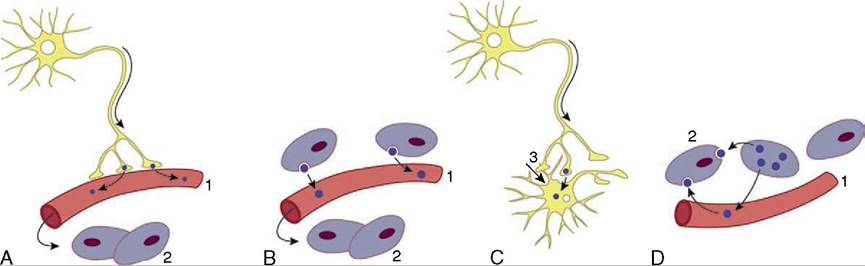
Figure 6-1 The various ways in which peptides reach their targets.
A, Neuroendocrine; B, endocrine; C, neurotransmitter, neuromodulator (action on postsynaptic membrane); D, paracrine (localized hormone action). 1, Bloodstream; 2, target cell; 3, synapse.nerves). Pathological growth or a physiological increase in the size of the hypophysis, which occurs in pregnancy, may exert pressure on these structures, especially on the optic nerves. Specific features in topography affect both the manner of expansion and the most convenient surgical approach. This is made via the nose and the sphenoidal sinus (within the cranial base, rostroventral to the hypophysial fossa) in human patients but more directly from below, via mouth, pharynx, and sphenoid in the dog. A temporal approach has been used in the pig.
Although the hypophysis appears to be a solid unitary organ, it comprises parts with very different origins and functions and includes certain spaces. One part, the neurohypophysis (posterior lobe), is formed by a downgrowth of the hypothalamus; the stalk that persists as the connection with the brain includes an extension of the third ventricle. The other part, the adenohypophysis (anterior lobe), is formed by an epithelial outgrowth of the roof of the developing mouth. It contains a flattened vestigial space, the hypophysial cleft; the tissue caudal to the cleft is directly applied to the neurohypophysis and is distinguished as the pars intermedia (intermediate lobe). The topographical relationships of the three “lobes” show some interspecific differences, but these need concern few readers (Figure 6-2).
The adenohypophysis produces several hormones commonly designated by acronyms: growth (somatotropic) hormone (STH); gonadotropic hormones— follicle-stimulating (FSH) and luteinizing (LH); adrenocorticotropic hormone (ACTH); thyroid-stimulating hormone (TSH); and prolactin. The intermediate part produces α-melanocyte-stimulating hormone (MSH). The production of all these is controlled by regulating, hypophysiotropic hormones and releasing or inhibitory factors such as gonadotropin-releasing hormone (GnRH), somatostatin (SS), growth hormone- releasing hormone (GRH), and corticotropin-releasing hormone (CRH), to name the most important.
They are produced by neurosecretory cells in several hypothalamic nuclei, particularly the paraventricular nucleus, preoptic area, arcuate nucleus, and periventricular nucleus. These hormones are secreted from their axon terminals and are discharged into fenestrated capillaries within the median eminence (see Figure 8-66/6); these releasing and inhibitory hormones are conveyed to a sinusoidal network within the adenohypophysis (Figure 6-3).The hormones stored and later released into the circulation by the neurohypophysis include certain peptides, oxytocin, and vasopressin. Oxytocin stimulates contraction of the smooth muscle of the uterus and the myoepithelial cells of the udder. Vasopressin stimulates vasoconstriction and promotes fluid reabsorption by the kidneys. These substances are produced by magno- cellular neurosecretory neurons within the supraoptic and paraventricular nuclei of the hypothalamus and are conveyed along the axons for direct release via the neurohypophysial capillary bed into the main circulation.
The adenohypophysis and neurohypophysis are separately vascularized. The latter is supplied by small branches from the internal carotid artery (or substitute vessel) and the arterial circle (of Willis) of the brain. The former is supplied indirectly; rostral hypophysial arteries, also from the internal carotid, expend themselves within the floor of the hypothalamus whence the blood is conveyed through the stalk by a portal system of veins. The capillary network of the adenohypophysis subsequently drains into the cavernous sinus.
Certain regions of the brain, collectively known as the circumventricular organs (CVOs), are distinguished from other parts by their susceptibility to direct chemo- sensory stimulation by substances carried within the bloodstream. They owe this distinction to the fenestration of perfusing capillaries, which allows large mole-
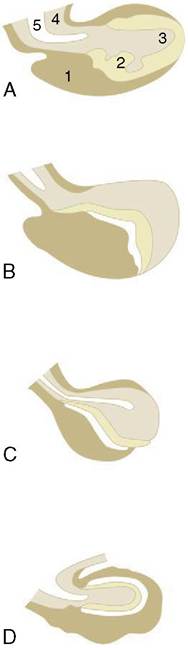
Figure 6-2 Median sections of the hypophysis of the horse (A), ox (B), pig (C), and dog (D).
The rostral extremity of the gland is to the left. 1, Adenohypophysis; 2, intermediate part; 3, neurohypophysis; 4, hypophysial stalk; 5, recess of third ventricle.cules to exchange between the plasma and the extracellular milieu of the CVO, a possibility elsewhere excluded by the existence of the blood-brain barrier. The name given to the assembly emphasizes the proximity of the component regions to the system of ventricles within the brain, which suggests a role for the cerebrospinal fluid in the diffusion of the chemical messengers. The neurons within the different regions are of course able to communicate through synaptic connections in the usual way but also allow CVOs to use neurohormonal mechanisms to influence peripheral function. The CVOs comprise the subfornical organ, the pineal gland, the subcommissural organ, the area postrema, the posterior lobe of the pituitary, the median eminence, and the vascular organ of the lamina terminalis (see Figure 8-66). It is difficult, if not impossible, to assign specific functions to different regions, and it is perhaps sufficient to say that they are broadly concerned with homeostatic and autonomic function (feedback regulation) and with the provision of neuroendocrine mechanisms of peripheral effect dependent on the entry of substances, produced by neurons in certain circum- ventricular regions, into the fenestrated capillaries for diffusion within the general circulation.