THE KIDNEYS
The shape of the pig’s kidneys is very distinctive. They are flattened (see Figure 5-21, C) against the abdominal roof (within a fatty capsule), extending between the level of the last rib to that of the fourth lumbar vertebra (Figure 34-9/5).
This symmetry of position is most unusual and deprives the right kidney of the expected contact with the liver. The left kidney is related ventrally to the colic spiral, the cecum, and the pancreas; the right one is related to the descending duodenum and also possibly to the pancreas.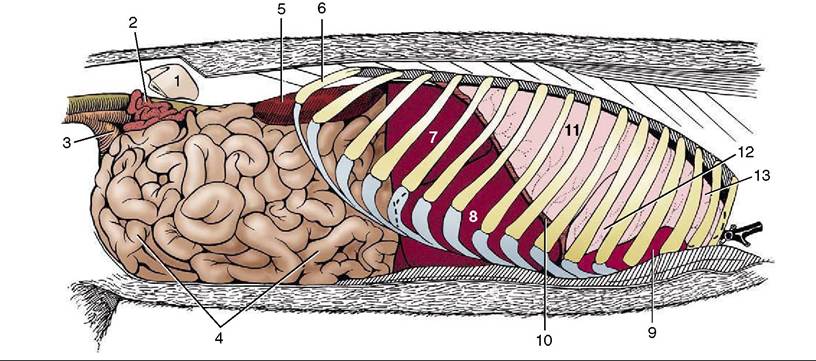
Figure 34-9 Abdominal and thoracic viscera, right lateral view. 1, Wing of ilium; 2, uterine horns; 3, bladder; 4, jejunum; 5, right kidney; 6, last rib; 7, 8, right lateral and medial lobes of liver; 9, heart in pericardium; 10, diaphragm, cut; 11-13, caudal, middle, and cranial lobes of right lung.
The internal structure resembles that of the human kidney (Figure 34-10). A central cavity with two recesses (major calices) directed toward the poles comprise the pelvis, which extends about a dozen minor calices, each embracing a renal papilla through which the papillary ducts discharge urine. The papillae correspond to renal pyramids, and because the number of these is reduced by fusions in the course of development, there is some inequality in the size of the units presented by the mature organ.