The Liver Is an Acinar Gland with Small Acinar Lumina Known as Canaliculi
The liver is composed of ‘'plates,” or one-cell-thick layers of hepatocytes that are bathed on either side by blood from the hepatic sinusoids. Between each row of cells is a small space created by cavitations in the plasma membranes of two apposing cells.
The portions of the plasma membranes lining the spaces are isolated from the remainder of the plasma membrane by tight junctions, which seal off the spaces from the surrounding extracellular environment. Within the plates of cells, these spaces join to form channels, or canaliculi, that connect to the bile ductules. Bile is secreted from the hepatocytes into the canaliculi, from which it flows into the bile duct system. From a functional standpoint, the canaliculi may be perceived as acini lined by hepatocytes and emptying into the biliary duct system, as illustrated in Figure 29-5. The bile duct epithelium is metabolically active and capable of altering the composition of canalicular bile by adding additional water and electrolytes, especially bicarbonate. In this function, the bile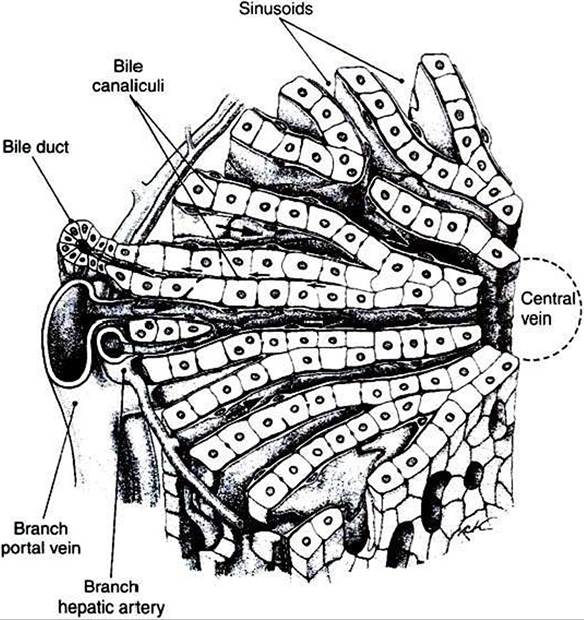
FIGURE 29-5 Hepatic microanatomy is complex and can be visualized in several ways. Note the relationship of the bile canaliculi to the bile ducts; the biliary system may be viewed as an acinar gland with the bile canaliculi forming a long, narrow acinus. (Modified from Ham AW: Textbook of histology, ed 5, Philadelphia, 1965, Lippincott.)
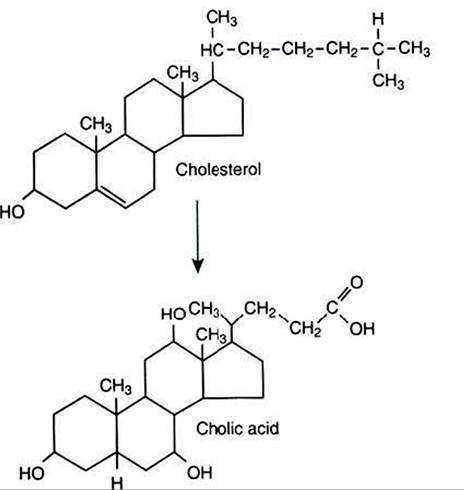
FIGURE 29-6 ■ Conversion of cholesterol to cholic acid, a representative bile acid. Note the presence of two additional hydroxyl groups on the ring structure of cholic acid compared with Cholesterol-These hydroxyl groups enhance the water solubility and detergent action of the bile acid molecule. Other bile acids differ from cholic acid in the number and position of hydroxyl groups.
duct epithelial cells function in a manner similar or identical to the centroacinar and duct cells of the pancreas. In fact» they even respond to secretin by increasing their bicarbonate secretion.