The Rectosphincteric Reflex Is Important in Defecation
The entry of feces into the rectum is accompanied by the reflex relaxation of the internal anal sphincter, followed by peristaltic contractions of the rectum. This is known as the rectosphincteric reflex and is an important part of the act of defecation (Figure 28-12).
The reflex normally results in defecation, but in trained animals its effects can be blocked by voluntary constriction of the external anal sphincter. When defecation is voluntarily suppressed, the rectum soon relaxes to accommodate the fecal bolus, and the internal anal sphincter regains its tone. In humans, and presumably in dogs and cats, relaxation of the rectum and constriction of the internal sphincter is associated with fading of the urge to defecate, until another bolus of feces enters the rectum.Uninhibited animals respond to the presence of feces in the rectum with a number of voluntary actions associated with defecation. In carnivores the diaphragm and abdominal muscles contract to increase intraabdominal pressure, and striated muscles of the anal canal relax as the animal assumes the defecation posture. These acts are important for complete evacuation of the rectum.
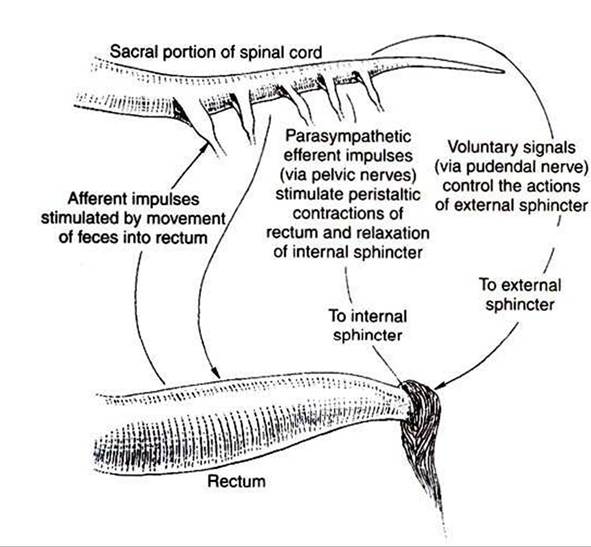
FIGURE 28-12 Arcs of the rectosphincteric reflex. The reflex is initiated by the movement of feces into the rectum and results in peristaltic movements of the rectal wall and relaxation of the internal anal sphincter. Fecal passage is the normal effect of the reflex, but voluntary constriction of the external anal sphincter can prevent the passage of feces and eventually override the reflex, apparently enabling trained animals to suppress the urge to defecate.
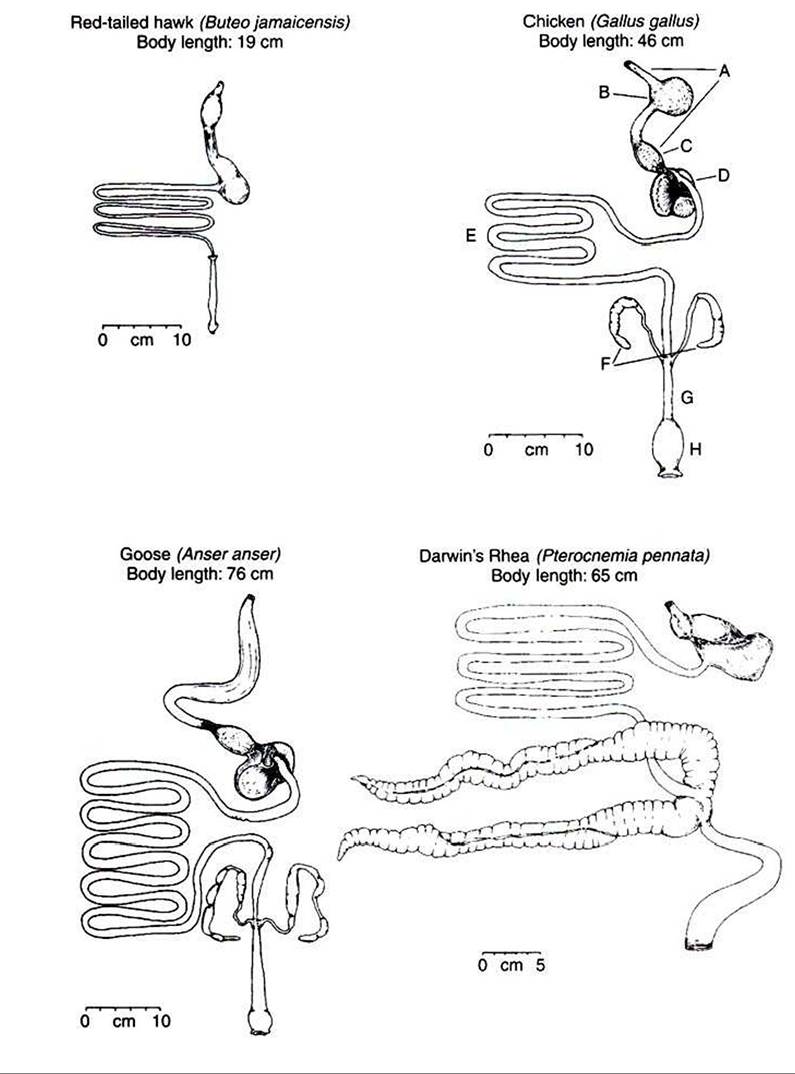
FIGURE 28-13 Comparativeanatomy of the digestive tracts of four avian species. Note the variation in crop and cecal development. The carnivorous red-tailed hawk has a small crop and rudimentary ceca.The chicken has a well-developed crop, and the rhea has tremendous cecal development. A, Esophagus; Bf crop; Cf proventriculus; Df gizzard or ventriculus; Ef small intestine; Ff ceca; Gf rectum; Hf cloaca. (From Stevens CD: Comparative physiology of the vertebrate digestive system, Cambridge, UK, 1988, Cambridge University Press.)