THERMOREGULATION
Due to its compact nature the guinea pig conserves heat well but dissipates it poorly, so high temperatures lead to heat prostration and death. This is especially a problem in heavily pregnant sows.
Ambient temperature ranges from 18 to 26° C are best.The guinea pig is short and squat, having a short neck merging with the main trunk (Fig. 9.1). The hind legs are longer than the front legs and there is no tail. It reaches maximum weight and length at about 15 months of age. The male is larger than the female, being 900-1200 g in comparison to the female's 700-900 g.
The nostrils are longitudinal slits and are divided by the hairless philtrum. The mouth is triangular with the apex formed by the split upper lip. Caudal to the upper and lower incisors are skin folds that roll inwards to the midline to prevent food passing into the pharynx while gnawing. The pinna is erect in juveniles and folded forward in older adults. It is covered by fine hairs on both the medial and lateral aspects.
Unlike rats and hamsters, the guinea pig has only four toes on the front feet (digit 1 is absent) and no ability to grasp food. The hind feet are plantigrade, with only three toes (digits 1 and 5 absent), allowing less speed than the rabbit. The soles are hairless with well-defined footpads. The forefoot has a three lobed palmar pad with a caudal carpal pad; the hind foot has a bilobed plantar pad with a large tarsal pad (Cooper & Schiller 1975a)(Figs. 9.2 and 9.3).
External genitalia
Mammary glands are present in both male and female. There is a single pair in the inguinal region with two teats surrounded by a hairless area.
Male
The male has lateral scrotal swellings on each side of the anus. The cranial orifice is the penile urethra, which is covered by preputial folds. Caudally, is a longitudinal cleft covering the opening of the large perineal sac and anus.
Female
Sows have a ‘Y'-shaped perineum. The urethral orifice lies cranially in between the branches of the Y. The vulva lies at
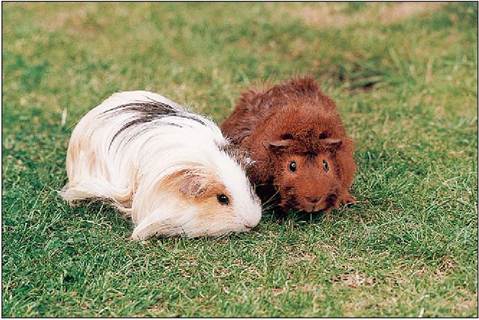
Figure 9.1 • Guinea pig (Cavia porcellus).
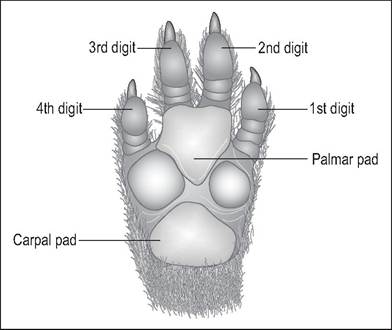
Figure 9.2 • Palmar surface of right forefoot of the guinea pig.
the intersection of the branches and has a ‘U'-shaped orifice. It is covered by a vaginal membrane during anestrus and is bordered laterally by labia. Behind this is the perineal sac, which contains two perineal glands and which is often filled with hair, debris, and oily secretions. The anus is located at the base of the Y. Figure 9.4 shows the male and female genitalia.