Hyperproteinemia
Hyperproteinemia can result from an increase in both albumin and globulins (panhyperproteinemia) or an increase in only globulins (hyperglobulinemia) (Boxes 26.1 and 26.2).
Panhyperproteinemia
An increase in the concentration of all blood proteins results from hemoconcentration.
Dehydration (due to decreased fluid intake, excessive fluid loss, or both) causes panhyperproteinemia■ BOX 26.1
Causes of Hyperproteinemia in Horses Panhyperproteinemia-Dehydration
Common Causes
Acute toxic colitis of unknown cause
Acute salmonellosis
Potomac horse fever
Intestinal clostridiosis
Intestinal strangulating obstruction
Proximal enteritis
Gram-negative sepsis, endotoxemia Botulism
Choking (esophageal obstruction)
Less Common Causes
Chronic renal failure
Chronic hepatic disease
Guttural pouch mycosis with dysphagia
Equine protozoal myelitis
Salt toxicity
Toxins, poisonous plants
Lead toxicity
Yellow star thistle poisoning (dysphagia) Dysphagia of unknown cause
Hyperglobulinemia
Common Causes
Abdominal (mesenteric) abscess (including “bastard” strangles) Pulmonary abscess
Chronic pleuritis
Purpura haemorrhagica
Equine infectious anemia
Less Common Causes
Chronic hepatic disease
Strongylosis Lymphoma (lymphosarcoma) Immune-mediated cytopenia
■ TABLE 26.1
Normal Serum Protein Values for Horses, Cows, Sheep, and Goats
| Value | Horse | Cow | Sheep | Goat | |
| Total | g/dL | 5.2-7.9 | 6.74-7.46 | 6-7.9 | 6.4-7 |
| Albumin | g/dL | 2.6-3.7 | 3.03-3.55 | 2.4-3 | 2.7-3.9 |
| Globulin | g/dL | 2.62-4.04 | 3-3.48 | 3.5-5.7 | 2.7-4.1 |
| Fibrinogen | mg/dL | 200-400 | 200-700 | 200-500 | 200-300 |
From Kaneko JJ, Harvey JW, Bruss ML, eds: Clinical biochemistry of domestic animals, ed 5, San Diego, 1997, Academic Press (Appendix VlH, Blood analyte reference values in large animals).
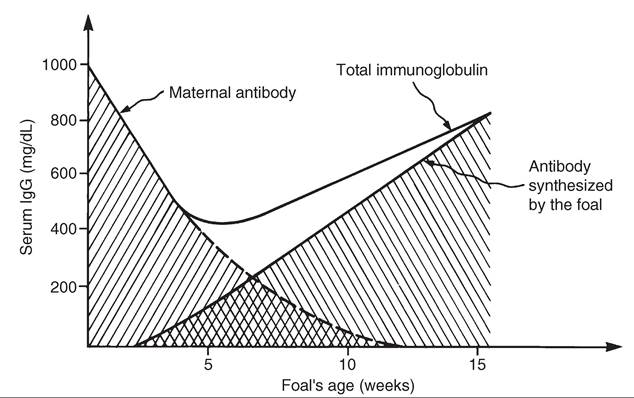
FIG. 26.2 Immunoglobulin in foal serum during the first 15 weeks of life.
IgG, Immunoglobulin G. (From Tizard I: Veterinary immunology, ed 3, Philadelphia, 1987, Saunders.)■ BOX 26.2
Causes of Hyperproteinemia in Ruminants
Panhyperproteinemia-Dehydration
Common Causes
Ruminal acidosis (grain overload)
Abomasal torsion
Acute salmonellosis
Peritonitis
Sepsis, toxemia (mastitis, metritis) Intussusception
Vagal indigestion
Oral or pharyngeal foreign body with dysphagia
Coccidiosis
Diarrhea, undifferentiated
Salt toxicity
Toxins, poisonous plants
Less Common Causes
Renal amyloidosis
Lymphoma
Pregnancy toxemia
Rabies
Hyperglobulinemia
Common Causes
Abdominal abscess (traumatic reticuloperitonitis, uterine tear, other)
Chronic pneumonia
Umbilical abscess
Lymphoma
Caseous lymphadenitis (sheep and goats)
Other abscess
Less Common Causes
Parasitism
Pregnancy
with an associated increase in packed cell volume (PCV). This is due to a relative increase in protein and red blood cell (RBC) concentrations in blood. True hyperalbuminemia (i.e., increased albumin synthesis) does not occur. Hyperalbu- minemia is an insensitive indicator of dehydration. If the true albumin level is decreased, a dehydrated patient may have a normal albumin result that masks both hemoconcentration and hypoalbuminemia. Similarly a dehydrated, anemic animal may have hyperproteinemia with a normal or decreased PCV. In an animal with a plasma protein concentration of 7.0 g/dL in health, a 10% decrease in plasma volume (severe dehydration) will result in a plasma protein concentration of 7.8 g/dL.3 As with albumin measurement, the total plasma protein measurement will underestimate degree of dehydration if the patient is losing protein along with fluid. This is relatively common in renal disease, in protein-losing enteropathy with diarrhea, and in third-space loss when fluid and protein accumulate in the thoracic and/or abdominal cavity. Dehydration alone can result from gastrointestinal (GI) fluid sequestration, including intestinal obstruction, vagal indigestion with internal vomiting, and grain engorgement. Less common causes of dehydration include polyuria with renal failure, exudation from extensive skin wounds, and excessive sweating. Physiologic responses to dehydration include increased urine concentration and decreased urine output, increased fluid absorption from the GI tract, and increased thirst.