Mentation and Behavior
Initial examination should be done from a distance. The examiner observes the animal's mental state and whether its responses to its surroundings are appropriate. This is done ideally in the animal's usual environment, where it would be expected to be calmest.
When this is not possible, the influence of factors such as the stress and excitement of previous travel and the animal's natural fear of unfamiliar surroundings, sounds, and smells must be taken into account. The animal's usual handler may help to discern subtle changes in an individual animal's behavior. All livestock should recognize and fear strangers and should show awareness of the examiner's position. Normal animals change the posture of the head, ears, and eyes as the examiner moves. Depending on previous conditioning, normal behavior may include cautionary moves, avoidance, belligerence, or affection. Animals with decreased mental alertness (obtunded, dull, depressed) have reduced responses to examination, lassitude, lack of recognition, unwillingness to rise or lift the head from the ground, lack of appetite, drooped ears, stupor, or coma (Fig. 8.1). Systemic illnesses also may cause dull mentation; thorough physical examination and appropriate diagnostic tests facilitate detection of these diseases.Changes in behavior are consequences of diseases affecting the forebrain: the cerebrum or the relay areas of the diencephalon. Abnormal behavior caused by forebrain dysfunction can be termed dementia. Some common examples of dementia
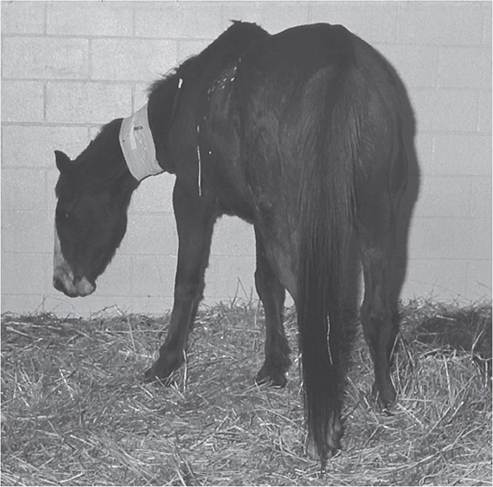
FIG. 8.1 Dull mentation in a horse with cerebral toxicosis caused by sage toxicity (Salvia species).
include head pressing, compulsive walking (often around the inside of an enclosure), frequent yawning, loss or absence of innate behaviors such as udder seeking by neonates and mutual affinity of dams and offspring, and loss of learned behaviors such as the ability to be led by a lead rope and halter.
Hyperexcitability, rage, mania, exaggerated fear, or frantic motor activities are suggestive of a lesion of the limbic system of the forebrain, an assembly of interconnected neurons in the brain that is involved in emotional responses and patterns of behavior. Animals so affected may strike or kick at inappropriate times, demolish their stalls, bellow, show belligerence, or, if recumbent, struggle violently.Maintenance of mental alertness is the role of the ascending reticular activating system (ARAS) of the brainstem, which repetitively signals the forebrain to maintain consciousness. The ARAS is important in maintaining the animal's level of consciousness and arousal. The relationship between the cerebral cortex and the ARAS is sometimes described as follows: The cerebral cortex determines the content (external display) of consciousness, and the ARAS determines the level of consciousness. Diseases affecting the ARAS tend to produce profound depression of consciousness. The forebrain is the “seat of consciousness”: Conscious perception of both external stimuli (e.g., vision, hearing, touch) and internal stimuli (e.g., abdominal pain) depends on its integrity. In general, level of consciousness is not substantially altered by forebrain diseases unless the injury is diffuse and severe.
A seizure (convulsion, ictus) is a manifestation of forebrain dysfunction characterized by involuntary somatic and autonomic motor activities and/or loss of consciousness. Seizures may be generalized or focal (partial). Generalized seizures are characterized by recumbency, loss of consciousness, flailing or galloping motions of the limbs, elimination of feces and urine, and nystagmus. Localized involuntary movements with or without obvious alterations of consciousness characterize focal seizures. Alternatively, focal seizures may result in episodes of abnormal or bizarre behavior or momentary lapses of consciousness without collapse or significant motor activity. A third form of seizure is focal with secondary generalization.
The onset of the seizure is focal within the forebrain, but seizure activity subsequently spreads throughout the brain, resulting in a generalized seizure. Animals with this form of seizure activity exhibit initial focal signs such as head turning, bellowing, and focal tremors followed by loss of consciousness and generalized seizure signs. Rarely, seizures in large animals may be preceded by an aura, a period in which the animal exhibits anxiety or restless behavior shortly before the onset of the seizure itself. A postictal phase, a period subsequent to the seizure during which the animal is obtunded or, occasionally, restless and anxious, is common after seizures in most animals. The postictal phase usually lasts a few minutes to hours but may last as long as several days. The postictal phase may be the only stage of the seizure observed by the animal's handler. Thus seizures should be considered as a possible cause in any animal with a history of episodes of abnormal behavior. The typical history is that the animal is found in a dull or excited state, without the handler observing the onset of this change of behavior. Additional signs of postictal forebrain dysfunction may include blindness, absent menace responses, and insensitivity to cutaneous noxious stimulation. Additional supporting evidence includes physical injuries such as scrapes and cuts that may have been incurred during the seizure.Abnormalities of forebrain dysfunction are the ultimate cause of seizure activity. During a seizure, neurons in the cerebral cortex exhibit spontaneous electrical activity, beginning either focally or simultaneously throughout the cortex, resulting in the clinical manifestations of focal or generalized seizures. Causes of seizures are legion, including alterations in the neuronal environment resulting from metabolic disturbances or toxicities and the effects of structural brain diseases such as congenital or developmental disorders, traumatic injuries, neoplasia, and inflammatory conditions.
Diagnosis of seizures and other states of altered mentation must include a thorough physical examination and screening for metabolic diseases such as electrolyte imbalances and hepatic or renal failure.Abnormalities in the neurologic examination found between seizures (interictal period) support a diagnosis of primary brain disease and are an indication for diagnostic procedures such as cerebrospinal fluid (CSF) tap. Some toxins cause additional systemic signs such as neuromuscular involvement (tremors, weakness) or parenchymal organ failure (icterus, uremia). Such signs, combined with clinical history and inspection of the environment, will help to direct specific tests for toxins.
Narcolepsy is a condition reported in cattle and horses wherein the normal mechanisms of sleep are disturbed.42-45 Although sudden onset of sleep is one manifestation of narcolepsy, the acute onset of cataplexy—complete paralysis of striated muscles— is usually a more prominent clinical feature. Animals may be observed to collapse to the ground suddenly or to buckle at the knees. Cardiac and respiratory muscles are not affected. Narcoleptic attacks may be difficult to distinguish from seizures but are not accompanied by the involuntary motor activity that characterizes most generalized seizures. In some cases, traumatic injuries to the head, face, and limbs can result.