Milk Production by Kids and Unbred Goats
Udder development and even milk production are relatively common in unbred doelings of dairy breeds. Gynecomastia in bucks is discussed in Chapter 13.
Witch’s Milk
Occasionally kids have enough udder development at birth that the glands are tense and conical.
Milk sometimes can be expressed from the teats, but this is not desirable because of the risk of mastitis once the teat seal is broken. The condition occurs in other species, including human infants (Nelson 1964). It is presumed to occur in response to increased levels of hormones (estrogen, prolactin, placental lactogen) in utero. No treatment is necessary, as the swelling subsides over time.Inappropriate Lactation Syndrome
Unbred goats frequently develop a large “precocious” udder. The condition has also been termed “pseudolactation” (Schennink 2011). In some animals, the udder enlargement is mainly because of deposition of adipose tissue. In others, milk is actually produced from one or both glands without a preceding parturition (Figure 14.3). The enlarged udder may alter the gait of the affected goat (Schennink 2011). Precocious milking may be a hereditary trait (Campbell 1961). It has been said that doelings who lactate precociously, also termed “maiden milkers,” generally come from genetic stock with high production potential (Baxendell 1984a; Matthews 2016). It should be noted, however, that some intersex animals lactate (Hamerton et al. 1969).
Neither the etiologic basis nor the ideal treatment for such inappropriate lactation has been determined. Two affected does have been reported to have increased prolactin from an acidophilic pituitary adenoma (Miller et al. 1997), but this is a rare explanation for a common clinical condition. One theory is that some goats are very sensitive to either
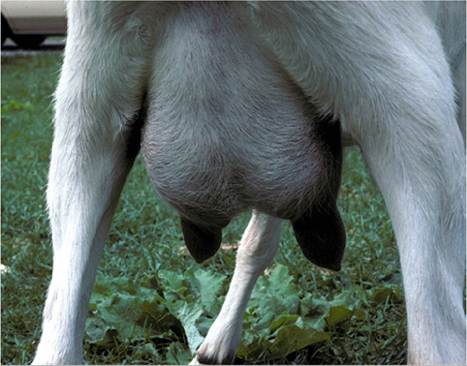
Figure14.3 Precocious udder in a doe that was never bred.
The udder produced one cup of normal milk per day.
Source: Courtesy of Dr. M.C. Smith.
prolonged progesterone exposure from a persistent corpus luteum or elevated prolactin levels in the spring.
A possible treatment if false pregnancy is suspected is a luteolytic dose of prostaglandin (5 mg prostaglandin F2 alpha), although withdrawal of progesterone by natural termination of the false pregnancy may have already occurred before the udder developed. Progesterone and estrogens should stimulate additional mammary gland development, and are therefore contraindicated. Feeds with estrogenic action, such as moldy corn or subterranean clover, should be eliminated from the diet. Temporarily eliminating the grain ration and feeding dry hay should discourage milk production, but water deprivation is not warranted. Milking the goat is not desirable because disrupting the seal in the teat predisposes to mastitis if the goat is not milked regularly. If the udder becomes painfully engorged so that milking is necessary or if the owner has milked the goat before seeking advice, a milk culture should be taken to check for mastitis and a bovine dry-period treatment infused into the udder (if the teat orifice is large enough) after it has been emptied completely. Systemic antibiotics are appropriate if mastitis is present, chosen according to culture and sensitivity. The teats should also be dipped with a disinfectant teat dip and possibly a teat sealant.
If this regimen fails to stop lactation, the goat can be milked daily for several months and dry-off can be attempted again, preferably in the fall, the season when production naturally decreases. An expensive and as of yet inadequately tested alternative is the administration of an antiprolactin drug such as bromocryptine: 5 mg bromocryp- tine mesylate (Parlodel®, Sandoz, Basel, Switzerland) per day for 14 days orally. A similar empirical treatment is cabergoline, but this is apparently ineffective (Matthews 2016). Also, the bromocryptine-induced decrease in milk production is only temporary in normal goats (Forsyth and Lee 1993).
There are anecdotal reports of destroying the secretory tissue by infusing a destructive substance such as ether or 2% chlorhexidine solution (5-10 mL only) into the affected gland. Occasionally the precocious udder develops severe chronic mastitis or becomes so pendulous that udder amputation is advisable (Arlt et al. 2011); see the description of mastectomy under gangrenous mastitis treatment. In summary, milking, mating, or mastectomy seem to be the most reliable options for treating persistent maiden milkers (John Matthews, personal communication 2007).
Self-Sucking
Because the simple act of trying to extract milk from a teat on a regular basis stimulates development of milk-secreting tissue, the possibility that another goat has been nursing the doeling with a developed udder or that she is a selfsucker should be investigated. The first possibility can be handled by separating the animals. Self-sucking, on the other hand, is a difficult habit to break. Many goats like the flavor of milk and drink their own regularly when they have learned the trick. The behavior has been observed in a feral goat (O'Brien 1982) and theorized to have begun as an attempt to relieve discomfort from a turgid udder. The teat may be damaged by the sucking process.
Treatments that have been tried with variable success include applying teat tape, as for preventing suckling in caprine arthritis encephalitis (CAE) control programs; painting the teats with a solution distasteful to the goat; and fitting the goat with an Elizabethan collar or a bra-like udder bag. A side brace constructed of aluminum rod is another possibility: the side extensions of a padded neck ring are taped to the forward-directed ends of a padded arch that goes over the lumbar area. A strap made of tape joins the two sides of the brace underneath the abdomen. The addition of ad lib straw to the diet, to provide alternative oral stimulation, has been reported to decrease (but not abolish) self-sucking (Martinez-de la Puente et al.
2011).Hormonal Induction of Lactation
Lactation physiologists have made extensive use of goats in their study of hormonal treatments (e.g., estrogen, progesterone, prolactin, and corticosteroids) that will induce udder development and lactation in non-pregnant animals (Erb 1977). Space does not permit review of this information here. A successful protocol for inducing lactation in the field was developed in France, but was not pursued because of regulatory constraints on sale of milk from treated goats. It consisted of 17β-estradiol (0.25 mg/kg bodyweight [bw] twice daily) and progesterone (0.625 mg/kg twice daily) in alcohol, given subcutaneously for seven days. Machine milking and hydrocortisone (25 mg/goat intramuscularly twice daily for three to five days) were begun on day 21 after initiation of treatment (Delouis 1975), or else the hydrocortisone was given before milking began, on days 18, 19, and 20 (Lerondelle et al. 1989). Recently, the addition of reserpine as a prolactin-releasing agent has been found to be beneficial (Salama et al. 2007). The technique is useful for goats that aborted or were found to be non-pregnant after having been dried off. However, milk production will be low, subsequent reproduction may be adversely affected (Salama et al. 2007), and extralabel use of drugs for production purposes in the United States is illegal. Hormonal induction of lactation of both immature does and bucks has been used to permit early expression of recombinant proteins in the milk of transgenic goats (Cammuso et al. 2000) without long-term effects on fertility.