Sepsis
David P. Byrne • Chris Sanchez
Introduction
Sepsis is the major cause of morbidity and mortality in the equine neonate.36,37 The response to microbial invasion of the bloodstream involves the systemic inflammatory response syndrome (SIRS), and it is this nonspecific inflammatory response, rather than the infectious organism, that is responsible for the classical signs of sepsis.
Deterioration can occur rapidly, even in the face of aggressive treatment.A variety of terms have been used to describe the host response to infection and associated processes and syndromes. A set of definitions was published by the American College of Chest Physicians and Society of Critical Care Medicine in 199 2.38 Briefly, SIRS refers to a systemic response, regardless of the inciting cause, that results in at least two of the following four clinical features: fever; tachycardia; tachypnea or hyperventilation; or leukocytosis, leukopenia, or a relative increase of circulating immature neutrophils. When SIRS occurs in response to a suspected or confirmed infectious process, the process is termed sepsis. Specific definitions for SIRS in equine neonates of various ages have been published that modify the original definitions to include venous lactate and glucose concentrations.39 More recently, in humans, it has been suggested that sepsis should be suspected when there is a combination of hypotension, tachypnea, and altered mental status.40 Interestingly, hyperlactatemia did not improve the accuracy of the model in this set of definitions. This is not without controversy, with some arguing that SIRS remains more sensitive in detecting systemic sepsis in humans.41,42
Infection with gram-negative bacteria occurs commonly in neonatal foals.37,43-45 The pathophysiology of septic shock in gram-negative sepsis involves bacterial endotoxin and the subsequent release of proinflammatory and antiinflammatory cytokines.46,47 Septic foals can have decreased gene expression of tumor necrosis factor (TNF)-α and TNF-β and increased expression of IL-8 relative to healthy foals48 or increased gene expression of IL-4 and TLR449 among other abnormalities.
Predisposing Factors
Factors that may predispose to infection are numerous and include maternal illness, increases or decreases in gestational length, partial or complete failure of passive transfer, poor environmental conditions, and inadequate or improper umbilical care. Maternal factors have been reported to play a central role in 24% of bacteremic foals.50 These include dystocia,51 premature placental separation, placentitis, and various other forms of maternal illness such as colic and respiratory disease. Many of these factors coexist, but some occur primarily, such as placentitis, while others are secondary, such as premature placental separation. In utero infection of the fetus typically occurs due to an ascending infection of the fetal membranes and often results in premature delivery.52 Because chronic placentitis often results in accelerated or precocious fetal maturation, a resultant premature foal born to such a mare likely has a greater chance of being septic but a higher probability of survival than a foal born at a similar gestational age to a mare without placentitis or other chronic stimulation.
Failure of transfer of passive immunity (FTPI) predisposes to an increased risk of postnatal infection. A number of studies have documented a close relationship between the foal serum IgG concentration, incidence of disease, and survival.53-57 Colostrum administration via nasogastric tube was associated with disease in one report,51 which supports the notion that route and timing of transfer are likely relevant, along with the potential for bacterial challenge. Farm management is important, including general hygiene, stocking density, exposure to disease, nutrition, and prepartum vaccination and deworming programs. Foals with partial failure of passive transfer were not at any greater risk of disease than those with adequate transfer on a well-managed Standardbred farm.58
Common postnatal routes of infection include umbilical remnants, gastrointestinal tract, and the respiratory tract.
The umbilicus was traditionally regarded as the most important site for pathogen entry, but there has been heightened recognition of the role of the gastrointestinal tract as an important portal for bacteria.59 The absorption of macromolecules in the proximal small intestine occurs through specialized cells via pinocytosis, with little discrimination between maternal immunoglobulin and other macromolecules. Absorption peaks shortly after birth and declines to less than 1% by 20 hours.60 Unlike other species, the absorption of immunoglobulins does not appear to be Fc-receptor mediated in the foal. The foal will selectively absorb IgG and IgM over IgA.61 In neonatal pigs and lambs, deprivation of milk or colostrum can extend intestinal permeability to immunoglobulins by up to 5 days.62 In contrast, intestinal permeability to immunoglobulins cannot be delayed through withholding of macromolecules to newborn foals.63 It is not known if closure can be hastened by the feeding of macromolecules immediately after birth in foals. The other main postnatal factors beyond FTPI include gestational age and environmental conditions. Foals with exceptionally short or long gestational lengths may be at a heightened risk for development of sepsis.64 Poor environmental conditions can result in an increased bacterial load to the gastrointestinal tract, especially during the initial periods of udder seeking.59Causative Organisms
A summary of reported bacterial isolates is presented in Table 17.1. Escherichia coli is the predominant organism isolated from septic foals in recent studies, irrespective of location or methodology.44,50,57,65-72 The next most common isolate varies with era and geographic location. In the late 1990s a group from the University of Pennsylvania reported an important role of gram-positive bacteria (Enterococcus, Streptococcus, Staphylococcus spp.), whereas the nonenteric gram-negative organism, Actinobacillus spp., accounted for approximately 30% of all isolates at Ohio State University in the late 1990s.44,50 When evaluating trends over time (1982 to 1989, 1990 to 1999, 2000 to 2007) E.
coli remained the predominant isolateSummary of Selected Reported Frequency of Bacteria Isolated from Neonatal Foals-Data Expressed as Percentage of Total Isolates from Each Study
| Wilson and Madiganl9 | Koterba et al.66 | Raisis et al.67 | Gayle et al.141 | Marsh and Palmer | Stewart et al.50 | Henson and Barton | Corley et al.43 | Russell et al.68 | Sanchez et al. | Castanheira | Hytychova and Bezdeekova | Theelen et al. | Toombs- Ruane et al.73 | |||||
| Location | CA, USA | FL, | NSW, | TX, | PA, USA | OH, | GA, USA | CA, | NSW, | FL, USA | Kildare, | Brno, Czech | CA, | North | ||||
| USA | Australia | USA | USA | USA | Australia | Ireland | Republic | USA | Island, New Zealand | |||||||||
| Number of | 47 | 27 | 24 | 29 | 155 | 101 | 250 | 85 | 110 | 423 | 13 | 50 | 588 | 64 | ||||
| foals | ||||||||||||||||||
| Blood | No | Yes | No | Yes | Yes | Yes | No | Yes | Yes | Yes | Yes | Yes | No | No | ||||
| cultures only? | ||||||||||||||||||
| Admission | No | No | No | NS | No | Yes | No | No | Yes | No | NS | Yes | No | No | ||||
| only? Years of | 1978-87 | 1982-83 | 1989-92 | 1988-95 | 1991-98 | 1993- | 1986- | 1991- | 1996- | 1995- | 1999-2004 | 1982- | 1990- | 2000- | 2008-2016 | 2011-2013 | 1979- | 2004- |
| study | 2000 | 90 | 95 | 2000 | 2004 | 89 | 99 | 07 | 2010 | 2013 | ||||||||
| Number of | 85 | 29 | 24 | 38 | 203 | 130 | 214 | 112 | 126 | 109 | 124 | 113 | 192 | 249 | 21 | 28 | 1091 | 127 |
| isolates E. coli | 30.6 | 58.6 | 50 | 36.8 | 18.7 | 30 | 59 | 29 | 26 | 40.3 | 31.4 | 39.8 | 29.7 | 28.1 | 23.8 | 25 | 28.8 | 21 |
| Enterobacter | 3.5 | 3.4 | 12.5 | 18.4 | 12.3 | 18 | 8 | 9 | 1.8 | 8.1 | 5.3 | 6.2 | 5.2 | 3.6 | 3.8 | |||
| spp. Klebsiella spp. | 12.9 | 6.9 | 10.5 | 3.9 | 16 | 15 | 7 | 4.6 | 0.8 | 7.1 | 8.3 | 5.6 | 7.3 | |||||
| Salmonella | 3.4 | 12.5 | 18.4 | 2.9 | 17 | bgcolor=white>13 | 6.1 | 5.7 | 1.2 | 2.9 | ||||||||
| spp. Actinobacillus | 18.8 | 6.9 | 12.5 | 2.6 | 8.9 | 23.1 | 11 | 8 | 7 | 19.3 | 6.5 | 8.8 | 1.6 | 2.4 | 4.8 | 7.2 | 13.9 | |
| spp. Pasteurella | 3.4 | 1.5 | 1.8 | 6.8 | 7.2 | |||||||||||||
| spp. Pseudomonas | 4.7 | 3.4 | 5.3 | 4.9 | 0.9 | 2.6 | 1.2 | 2.5 | ||||||||||
| spp. Enterococcus | 9.4 | 0 | 2 | 19 | 6.4 | 12 | 2.6 | 5.7 | 8.4 | 4.8 | 3.6 | 7.2 | 10 | |||||
| spp./ Group D Streptococcus | ||||||||||||||||||
| Streptococcus | 8.3 | 8 | 7.9 | 9.4 | 33 | 15 | 8 | 9.2 | 13 | 8 | 8.8 | 11.2 | 23.8 | 7.2 | 14.8 | 25 | ||
| spp. Staphylococcus | 3.5 | 3.4 | 5.3 | 9.8 | 7 | 8 | 15 | 9.7 | 3.5 | 3.6 | 2.4 | 4.8 | 10.7 | 5.3 | 24 | |||
| spp. Clostridium | 2.4 | 3.4 | 1.6 | 3.5 | 2.5 | 2.8 | 9.6 | 7.2 | ||||||||||
| spp. | ||||||||||||||||||
| All gram | 75.3 | 93.1 | 91.7 | 78.9 | 62.6 | 72.3 | 77 | 69 | 58 | 74.3 | 57.3 | 77 | 67.2 | 63.9 | 48 | 60.7 | 70.2 | 44 |
| negative All gram | 17.6 | 3.4 | 8.3 | 21.1 | 32.5 | 23.1 | 23 | 31 | 42 | 21.1 | 40.3 | 19.5 | 24.5 | 30.5 | 42.4 | 28.6 | 29.8 | 65 |
| positive All anaerobe | 2.4 | 3.4 | 3.4 | 4.6 | 4.6 | 2.4 | 3.5 | 6.8 | 2.8 | 9.6 | 10.7 | |||||||
| All fungal/ | 1.7 | 0 | 1.6 | 2.8 | ||||||||||||||
| yeast Overall | 31.9 | 25.9 | 70.8 | 48.3 | NS | 55 | 44 | 67 | 74.5 | 48 | 55.9 | 71.4 | 52" | 48.1 | ||||
| survival (%) | ||||||||||||||||||
Admission only: Yes, samples restricted to those obtained within 24 hours of a foal’s admission to the hospital; Blood cultures only? Yes, samples restricted to culture of blood only; No, samples included blood or infected tissue collected at necropsy; Number of foals, number of foals from which bacteria were cultured; NS, not stated.
aSundvors calculated from total septic foal population.
in a Florida population of sick foals; Actinobacillus spp. were more common in the 1980s relative to the 1990s and 2000s, Salmonella spp. were isolated less frequently in the 2000s relative to other decades, and enteric gram-negative organisms were less frequently isolated in the 2000s relative to the 1980s.45 In a similar study from California, gram-positive species became more important over time, mostly due to a decrease in E. coli and an increase in Enterococcus species.72 Other groups have demonstrated the importance of gram-positive infections.’’’'4
Systemic fungal infections are uncommon in neonatal foals, with Candida albicans, a dimorphic fungus, the most frequently reported.75,76 Candida infections have been associated with lengthy hospitalization and invasive monitoring techniques or immunodeficiency. Prolonged antimicrobial therapy and administration of parental nutrition have been suggested as risk factors for the development of candidiasis. Infection should be suspected when there is a fever that is unresponsive to antimicrobial therapy. Most foals with systemic infection will also develop thrush (white plaques on the lingual surface) either concurrently or before showing clinical signs of systemic infection.
Physical Examination Findings
Physical examination of the mare and placenta is an important adjunct to the foal's physical examination. Any indication of placental or maternal abnormality should raise suspicion for neonatal illness. Initial clinical signs of sepsis in foals can be vague and highly variable. Frequently reported signs include decreased or absent milk intake, diarrhea, and lethargy, which may progress to recumbency. Examination should always include assessment of the mare's udder for fill; depressed foals will often stand with their head underneath the mare but fail to suck, leading to dried milk on their foreheads (Fig. 17.2). Clinical signs of dehydration occur as time progresses due to lack of intake. Tachycardia and tachypnea are common but not always present. Oral, conjunctival, and vulvar mucous membranes can become hyperemic, injected, and/or petechiated. Petechiae may be noted along the internal pinnae of the ears, and hyperemia can be noted along the coronary bands. Capillary refill time may be rapid in hyperemic foals or substantially
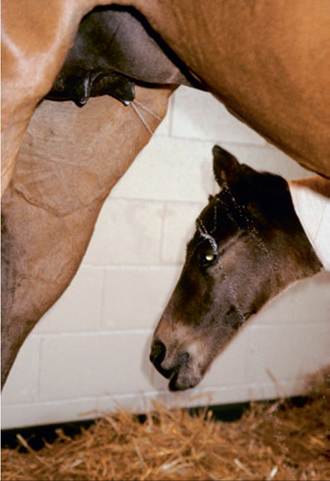
FIG. 17.2 A septic somnolent foal standing under a mare that is spontaneously lactating.
delayed in those that have become hypovolemic. Other signs of hypovolemia include decreased borborygmi, poor peripheral pulses, cool extremities, and decreased or absent urine output. It should be noted that the absence of signs of hypoperfusion does not rule out sepsis.77 Rectal temperature may be normal or mildly increased, or low if there has been progression to shock. Sepsis should not be ruled out on the basis of a normal or low rectal temperature. If untreated, these early signs can progress to septic shock and, often, death.
Septic foals can also have localizing signs associated with specific foci of infection. Diarrhea is common, and can be the first clinical sign noted. Other localizing signs include uveitis, seizures, joint effusion, lameness, physeal swelling, respiratory disease or distress, subcutaneous abscesses, patent urachus, and omphalitis.
Clinicopathologic Findings
Consideration of clinical signs and historical information is often sufficient for a provisional diagnosis of sepsis, but laboratory data will increase the index of suspicion. The most common hematologic finding in acute sepsis is leukopenia, characterized by neutropenia with shifting toward immature forms and toxicity (Doehle bodies, toxic granulation, and vacuolization). Septic foals, younger than 1 week of age, have lower total white blood cell (WBC) counts, neutrophils, and lymphocytes, as well as a higher number of band neutrophils and monocytes than healthy age-matched controls.78 Premature or dysmature foals will commonly have a decreased neutrophil count in the absence of sepsis, but without a degenerative left shift or evidence of toxicity, unless prematurity is complicated by sepsis. Age is an important factor in considering hematologic findings. In older foals (8 to 14 days) with confirmed sepsis, the total WBC count, neutrophil count, and number of band neutrophils were higher than in age-matched controls.78 A high fibrinogen or serum amyloid A concentration at or shortly after birth should raise the suspicion of in utero infection.66
Blood glucose concentrations are commonly abnormal in septic foals. Hypoglycemia (bacterial infection. Identification of a causative organism allows for directed antimicrobial therapy, as well as monitoring for patterns of antimicrobial resistance. Samples for culture should be collected into a sterile syringe without anticoagulant from a large vein (usually jugular, cephalic, or saphenous) after surgical preparation. The sample should be placed into appropriate blood culture media using volumes consistent with manufacturer recommendations. For those foals receiving antimicrobial therapy before sample collection, an appropriate medium with resins may improve microbial recovery.94 Collection from a venous catheter is acceptable, provided it is done directly from the catheter at the time of placement without compromise of aseptic technique. Healthy foals may have temporary bacteremia as detected by blood culture up to 12 hours of age.95 However, false positives are unlikely in ill foals.
There are limitations to blood culture, including delayed results and reduced sensitivity. Many foals with histologic evidence of sepsis at necropsy have negative antemortem blood culture results. This can occur because of prior antimicrobial therapy or low circulating bacterial numbers. In one study, only 40% of E. coli infections were successfully identified by antemortem blood culture relative to recovery at necropsy.69 These factors led to the development of scoring systems to predict sepsis.96,97 The modified “sepsis score” is calculated using historical findings, physical findings, and laboratory data. The initial sensitivity and specificity of the score were reported at 92.8% and 85.9%, respectively,96 but more recent data indicated regional variability with lower sensitivity and/or 5065749899
specificity.50,65,74,98,99 Due to the heavy weighting of historical information and related problems, moderate to severely premature foals often have a positive sepsis score without positive blood culture. Many of the maternal problems resulting in prematurity can also lead to systemic sepsis. Consequently, this crossover is predictable. When the original or modified equine neonatal SIRS criteria were added to the modified sepsis score, the diagnostic accuracy of the scores was low.74 The problem with clinical application of these scoring systems is their relatively low specificity and negative predictive value. While a “positive” score is supportive of sepsis, a “negative” score should not be used as a basis of withholding antibiotic therapy from an at-risk animal.
Therapy
Antimicrobial Therapy
Antibiotics are the mainstay of therapy for septic foals. Initially a broad-spectrum bactericidal approach is recommended with selection influenced by costs, availability, and local knowledge of common isolates. Recommended dosages for commonly used antimicrobials are listed in Table 17.2. Reported antimicrobial susceptibility patterns of microorganisms isolated from equine neonates are presented in Table 17.3. Antimicrobial therapy should begin immediately when sepsis is suspected and should not be delayed pending blood culture results, as culture and sensitivity data typically require 3 to 4 days. Therapy can be altered if required when these data become available. A minimum therapeutic course of 2 weeks is recommended for bacteremic foals without localizing clinical signs. If localizing signs, such as pneumonia or septic arthritis, are present, a minimum course of 4 weeks is recommended.64
A commonly recommended initial therapeutic approach involves combining an aminoglycoside, typically amikacin or gentamicin, with penicillin or ampicillin. Alternatively, ceftiofur can be used alone, or in combination with an aminoglycoside. The use of amikacin or gentamicin should be tempered in light of the foal's cardiovascular and renal status. If a foal is severely hypovolemic and azotemic, a safer initial choice would likely involve a third-generation cephalosporin. If amikacin or gentamicin is used, therapeutic drug monitoring is recommended to ensure appropriate individual dosing. If not available, then an alternative recommendation includes serial creatinine monitoring every 2 to 3 days and/or serial
■ TABLE 17.2
Recommended Antimicrobial Dosages
| Agent | Preparation | Route | Frequency (h) | Dosage (/kg) | References |
| Amikacin | Sulfate | IV, IM | 24 | 21-25 mg | 401,402 |
| Gentamicin | Sulfate | IV, IM | 36 | 12-15 mg | 403 |
| Ampicillin | Sodium | IV, IM | 6 | 25 mg | |
| Ampicillin | Trihydrate | IM | 12 | 25 mg | |
| Penicillin G | Potassium | IV | 6 | 22,000-40,000 IU | |
| Penicillin G | Procaine | IM | 12-24 | 22,000 IU | |
| Cefotaxime | Sodium | IV | 6 | 40 mg | 100,404 |
| Ceftiofur | Sodium | IV, IM | 12 | 5 mg | 405 |
| Ceftiofur | Crystalline free acid | SC | 72 | 6.6 mg | 406 |
| Cefpodoxime | Proxetil | PO | 6-12 | 10 mg | 106 |
| Cefquinome | Sulfate | IV, IM | 12 | 1 mg | 107 |
| Trimethoprim/ | PO | 12 | 30 mg | ||
| sulfamethoxazole | |||||
| Oxytetracycline | Hydrochloride | IV | 12-24 | 5-10 mg |
These represent recommendations only. Label indications and national or international rules regarding off-label usage of antimicrobials remain the responsibility of the provider.
Reported Antimicrobial Susceptibility Patterns of Microorganisms Isolated from Equine Neonates
| Marsh and Palmer | Henson and Barton65 | Russell et al. | Sanchez et al.15 | Theelen et al. | Toombs-Ruane et al. | |||||||||||
| Isolates | E. coli | GP | GN | GP | GN | ALL | GP | NEGN | EGN | ALL | GP | bgcolor=white>GNALL | GP | GN | ALL | |
| Amikacin | 90 | 55 | 90 | 0 | 100 | 42 | 45.8 | 77.8 | 97.9 | 84.3 | 45.9 | 96.8 | 87.0 | |||
| Gentamicin | 80 | 50 | 75 | 34 | 74 | 56 | 62.0 | 79.2 | 92.1 | 83.6 | 42.9 | 77.4 | 71.0 | 73 | 73 | 73 |
| Ampicillin | 57 | 74 | 63 | 54 | 63 | 59 | 72.7 | 69.5 | 49.4 | 57.8 | 78.0 | 56.3 | 61.5 | 69 | 23 | 54 |
| Penicillin | 72 | 21 | 47 | 38 | 45 | 67.1 | 18.2 | 3.1 | 29.5 | 76.3 | 69 | |||||
| Ceftiofur | 80 | 73 | 73 | 37 | 75 | 60 | 50 | 76.0 | 85.5 | 76.6 | 91.3 | 90.6 | 90.7 | 76 | 52 | 68 |
| Ceftazidime | 52.9 | 85.7 | 98.9 | 90.5 | ||||||||||||
| Chloramphenicol | 90 | 75 | 73 | 83 | 78 | 92.2 | 94.4 | 84.6 | 87.5 | 87.5 | 72.7 | 76.4 | ||||
| TetracycHne | 77 | 73 | 61 | 74 | 69 | 70.9 | 90.1 | 76.4 | 77.7 | 64.5 | 63.5 | 63.8 | 65 | 47 | 59 | |
| Trimethoprim | 57 | 37 | 79 | 62 | 71 | 67 | 79.7 | 90.0 | 80.4 | 81.9 | 87.3 | 69.4 | 72.8 | 72 | 43 | 65 |
| sulfamethoxazole Enrofloxacin | 100 | 100 | 37 | 93 | 70 | 74.6 | 94.5 | 97.6 | 91.8 | 57.5 | 95.0 | 85.2 | 91 | 95 | 93 | |
| Imipenem | 86.7 | 82.1 | 100 | 94.9 | 89.3 | 99.1 | 96.5 | |||||||||
| PeniciHin + gentamicin | 72 | 84.1 | 78.9 | 92.1 | 88.0 | |||||||||||
| PeniciHin + amikacin | 79.5 | 77.8 | 96.3 | 89.3 | ||||||||||||
| Ceftiofur + gentamicin Ampicillin + gentamicin | 68 | 89.8 | 82.7 | 91.4 | 89.4 | |||||||||||
| Ampicillin + amikacin Amoxicillin + clavulanate | 87.5 | 81.3 | 97.1 | 92.1 | 82 | 43 | 67 | |||||||||
Antimicrobial susceptibility is expressed as a percentage of all isolates for which susceptibility to a given antimicrobial were reported. EGN, Enteric gram-negative isolates; GN, gram-negative isolates; GP, gram-positive isolates; NEGN, nonenteric gram-negative isolates. See Table 17.1 for key to study details.
CHAPTER 17 Manifestations and Management of Disease in Neonatal Foals
urinalyses, including sediment examination. Cefotaxime is a good choice for foals with gram-negative meningitis100 or those with poorly responsive pneumonia. Oxytetracycline has been recommended in foals with suspected or confirmed septic osteitis or osteomyelitis.101
Due to emerging resistance, trimethoprim/sulfa combinations should not be used in septic foals without documented sensitivity and then only as a long-term option following initial parenteral therapy. In contrast to older foals and adult horses, several aminobenzyl penicillins (amoxicillin and ampicillin) and first-generation cephalosporins (cefadroxyl and cephradine) have good bioavailability in young foals but a limited spectrum of activity.102 105 Cefpodoxime proxetil, a third-generation cephalosporin available for oral administration, was effective against 90% of Klebsiella spp., Pasteurella spp., and β-hemolytic streptococci, and an increase in the frequency of administration would likely increase the effectiveness against E. coli.16 Cefquinome is a fourth-generation cephalosporin licensed for neonatal sepsis in Europe, with good activity against Streptococcus spp., Staphylococcus spp., Actinobacillus equi, and the Enterobacteriaceael100tia9 Fluoroquinolones, such as enrofloxacin, have an excellent spectrum of activity against gram-negative and some gram-positive bacteria but have been associated with arthropathy in foals.109,110 Therefore use of these agents should be reserved for those cases where there is suspected resistance to other antimicrobial agents and informed owner consent.
Source control, where possible, should be instigated in any cases with identifiable local infection. This may include synovial structure lavage, abscess drainage, omphalitis resection, and removal of infected catheters.
Antifungal Therapy
Medical treatment options for systemic candidiasis include fluconazole, itraconazole, miconazole, and amphotericin B.06,111 Fungal sensitivity profiles may help direct therapy if available. Pharmacokinetics of these drugs have not been established in foals. Amphotericin B (conventional form, not liposomal/lipid complex form) has been administered at a range of 0.1 to 0.5 mg/kg IV SID, starting therapy at the lower dose and increasing by 0.1 mg/kg increments per day.06 Because this drug can cause potentially life-threatening nephrotoxicity, serum creatinine, urine production, and urinalysis should be monitored closely. Fluconazole has previously been administered at 4 to 10 mg/kg PO SID. This agent is cheaper and easier to administer and has far fewer side effects. Miconazole has also been used at a dose of 1 mg/kg IV q8h.06 Voriconazole has also been used to treat pulmonary aspergillosis.112
Antiendotoxin Therapy
Many septic foals have detectable plasma endotoxin concentra- tions.08 Concerns exist regarding the potential for antibiotics to exacerbate the release of endotoxin through death of circulating gram-negative bacteria. In vitro work has shown that β-lactam antimicrobials appear more likely than aminoglycosides (alone or in combination with ampicillin) to induce endotoxemia and TNF-α activity during treatment of E. coli sepsis. Agents commonly used for the treatment of endotoxemia include flunixin meglumine, pentoxifylline, and polymyxin B sulfate.113,114 Recommendations are extrapolated with caution from work in vitro and in adult horses. Polymyxin B has been shown to improve certain clinical and clinicopathologic findings in experimental endotoxemia in foals,115 but no survival benefit has been observed in septic humans using hemoperfusion with polymyxin B bound and immobilized to polystyrene fibers.116 Flunixin and polymyxin B are potentially nephrotoxic, and flunixin has the potential for gastric ulceration. Pentoxifylline has also been shown to reduce mortality without adverse effects in septic neonates110 but not adults.118
Cardiovascular Support
Cardiovascular support is critical in foals with hypovolemia, septic shock, or hypotension. When a foal presents in septic shock, initial fluid resuscitation choices commonly include a combination of crystalloid and colloid (such as hydroxyethyl starch) preparations. Meta-analyses in human medicine have shown that artificial colloid therapy is associated with coagulopathies and kidney injury in the critically ill.119,120 Studies in healthy ponies and foals have not identified clinically significant effects, although this should be evaluated in critically ill foals.121-123 Arterial or venous lactate concentration, systemic blood pressure, cardiac output, and central venous pressure can provide additional information regarding volume status and estimation of tissue perfusion.124 Once normovolemia is restored, neonates typically require approximately 80 to 100 mL/kg/day (5 L/day for a 50-kg foal) in order to maintain adequate hydration. Clinicopathologic variables to monitor in septic foals include arterial or venous blood gases, electrolytes (especially sodium and potassium), and glucose. Physical parameters of importance include careful examination for the development of edema (conjunctiva, prepuce, ventrum, distal limbs, etc.), urine output and specific gravity, vital signs, and temperature of the distal limbs. Derangements in any of the monitored parameters should be addressed as they arise. One should be particularly mindful of sodium load in the neonate, as requirements and sodium tolerance can differ widely between foals, and specific care should always be taken to avoid fluid overload.2 In human medicine, point-of-care ultrasound (US) has been used to evaluate “fluid tolerance” (i.e., whether additional IV fluid is likely to lead to fluid overload).125,126 Respiratory variation in caudal vena cava collapsibility, as a component of fluid tolerance assessment, has been evaluated in healthy foals.120
If, with appropriate fluid resuscitation, hypotension and signs of poor perfusion persist, consideration should be given to the administration of vasopressors and inotropes, the use of which is covered earlier in this chapter. Previously recommended early-goal directed therapy protocols have been comprehensively shown to be no better than current usual care in the treatment of sepsis in humans.128-130
Antiacid Therapy
Although uncommon, sick foals can develop gastric ulcers in the glandular region of the stomach. The ulcers can preferentially occur in the cardiac gland region and may reflect reduced blood flow to the organ during hypovolemia. The use of prophylactic antiacid therapy is controversial and highly dependent on clinician preference. Gastric pH in critically ill foals can differ greatly from that seen in healthy foals.131,132 Severely ill, predominantly recumbent patients frequently have alkaline pH profiles, and sick foals capable of acid production respond more variably to IV ranitidine administration than their normal cohorts.132 Thus, glandular ulcer disease in sick neonates is likely not a strictly acid-related problem and factors such as alterations in mucosal blood flow may contribute. In addition, gastric alkalinization can contribute to bacterial translocation.133 The use of antiulcer medications (ranitidine, omeprazole) was associated with an increased risk of diarrhea in a large multicenter retrospective study.134 In that report, antiulcer medications did not appear to protect against ulcer development in a small number of foals in which ulcers were detected. Should one choose to use them, options for acid suppression include ranitidine, omeprazole, and pantoprazole.131,132,135-130 Sucralfate remains a possible alternative for ulcer prophylaxis, especially in foals receiving nonsteroidal antiinflammatory drugs, without altering intragastric pH.
Additional Therapy
In light of the critical illness-related corticosteroid insufficiency identified in some septic foals, low-dose corticosteroid therapy has been suggested for a subset of the septic foal population. But given the wide variability seen in the septic foal population, more data are needed before such therapy is recommended. The combination of hydrocortisone, vitamin C, and thiamine has recently been suggested to have dramatically improved survival in a small group of septic human patients, although the data are limited and not widely accepted.138 Treatment of coagulopathies may include plasma transfusions as a source of procoagulant and anticoagulant factors, or low-molecular-weight heparin, although the effect of the latter on patient outcomes is currently unknown in neonates. Its use was not associated with adverse outcomes in a small number of septic foals, at a higher dose (100IU/kg dalteparin SC) than that used in adults.139
Focal Infection and Potential Sequelae
The lungs are a common location of focal infection in the septic foal, with a reported incidence of pneumonia ranging from 28% to 50%.50,140 Many bacterial pneumonias are acquired in utero through aspiration of contaminated amniotic fluid. Respiratory rate and effort, thoracic auscultation, and rectal temperature can often alert the clinician to the possibility of pneumonia in a given animal. Respiratory function is best assessed in septic foals via arterial blood gas analysis.124 Thoracic radiography and ultrasonography can provide an estimation of disease severity and distribution. In addition to hematog- enously acquired pneumonia, septic foals can be at risk for aspiration of either meconium or milk, depending on their presentation. Directed antimicrobial therapy and maintenance of an acceptable arterial oxygen tension with intranasal oxygen insufflation are the most commonly administered forms of therapy. In those foals with severe hypercapnia in addition to hypoxemia, mechanical ventilation may be necessary.
Diarrhea and/or enteritis are common in septic foals, with reported incidence between 16% and 38%.50,64,140,141 Conversely, approximately 50% of neonates with a primary complaint of diarrhea are bacteremic.142,143 Therefore sepsis should be suspected in any diarrheic neonatal foal. Foals with Actinobacillus sp. bacteremia were six times more likely to have diarrhea than those with other isolates50; in another, gram-negative enteric bacteremia was positively associated with diarrhea.45 With or without enteritis, septic foals can also display signs of ileus and/or colic. Most of these problems resolve with symptomatic treatment and systemic improvement. Ultrasound can be useful in differentiating enterocolitis from other forms of colic. Analgesic therapy in colicky foals is somewhat limited, and flunixin meglumine should be used cautiously due to the potential for gastric ulceration. Butorphanol can be used intramuscularly to control gut pain in foals with colitis without increasing the risk of ulceration and nephrotoxicity. Interestingly, diarrhea has been positively correlated with survival to discharge in one report of bacteremic foals.45
Omphalitis refers to infection of umbilical structures. Umbilical remnant infections are considered to be a common source of continued bacterial shedding. Ultrasonographic evaluation of these structures is critical, as external signs (pain, heat, and swelling) are frequently absent. Treatment options include long-term antibiotic therapy or surgical resection. The reported incidence in septic foals has ranged from 9% to 21%.45,141 Many septic foals will develop a patent urachus without involvement of other structures. This problem will often resolve with continued antibiotic therapy, with or without topical therapy. Uroperitoneum in septic foals could result from ischemia and subsequent necrosis of the bladder and/or urachus. Most of these foals will not have classical serum electrolyte findings due to intravenous fluid therapy and limited milk intake. Routine ultrasonographic assessment of the umbilical structures is recommended in all hospitalized neonates in whom sepsis is either confirmed or suspected.
Meningitis is a rare but extremely serious complication. Major clinical signs include seizures and severe somnolence, although this is somewhat difficult to assess in a severely compromised foal. Other signs can include head tilt, strabismus, nystagmus, and extensor rigidity, depending on the areas of involvement. CSF normally provides a definitive diagnosis, with a pleocytosis (normally neutrophilic) being the typical abnormality. Prognosis is poor to grave, but if therapy is attempted, third-generation cephalosporins (such as cefotaxime) have been recommended. The major differential diagnosis for neurologic signs in a septic neonate is neonatal encephalopathy (NE). Typically foals with NE present within 24 to 48 hours following birth, whereas the age of foals with meningitis is more variable. One report noted that none of 11 bacteremic foals with meningitis survived to discharge from the hospital.45
The most common ocular complication in the septic foal is corneal ulceration, noted in up to 12% of bacteremic foals.45 Ulceration can occur due to entropion in a dehydrated foal or, more commonly, trauma. Because foals do not always show clinical signs of corneal ulceration, a daily ophthalmic examination, including fluorescein staining, should be performed in all hospitalized foals. Uveitis can also occur as an ocular extension of systemic disease and is associated with positive bacterial blood cultures and survival.144
Disorders of coagulation can occur in septic foals, manifested clinically by either hemorrhage or thrombosis. Probably the most common abnormality is jugular venous thrombosis at the site of an indwelling venous catheter. Other areas of thrombosis include the brachial artery, digital artery, metatarsal and metacarpal arteries, diffuse vascular thromboses throughout the distal limb, the aortic termination, the lungs, and the colon., 148
PrognosisZOutcomes septic foals having higher concentrations than sick, nonseptic foals.151 Interestingly, lactate concentrations were slower to fall in septic foals, despite volume resuscitation, suggesting other sources of lactate production, or altered clearance. This is consistent with current understanding of lactate production in sepsis in humans.152,153 While lactate concentrations in populations of nonsurvivors have been shown to be increased at all time points in comparison with survivors, considerable overlap between the groups makes prognostication difficult based on lactate concentrations alone.154
A foal survival score has been developed in a multicenter study using a seven-point scale and a combination of historical, physical examination, and clinicopathologic variables.155 While this scoring system had a sensitivity and specificity for mortality of 96% and 71%, respectively, further external validation is required. Despite the multitude of scoring systems developed to predict survival, clinician gestalt has been shown to be more accurate in predicting survival than a multivariable model in a large population of ill foals.156
Few studies have addressed the long-term survival and performance of septic foals. In one report of bacteremic Thoroughbred foals, there was no significant difference in percentage of starters, percentage of winners, or number of race starts, relative to a control group of maternal siblings. But bacteremic foals had a lower number of wins, total earnings, and Standard Starts Index rating, relative to control maternal siblings.45 This is similar to that reported for overall neonatal intensive care unit (NICU) survivors, where the percentage of starters was lower than the control population, but performance over a 2-year period was not different in those animals able to make at least two starts.150 Also, NICU treatment was found not to significantly affect sales performance.157
Preventative Strategies
Clearly, given the wide range of potentially devastating problems associated with sepsis, prevention will always outweigh treatment, but no one program will ever totally eliminate the risk of sepsis. Not surprisingly, methods of prevention coincide with the documented risk factors and routes of infection previously discussed. The following suggestions comprise a basic guide one can offer to clients. While many of the presented options make sense, none have been proven to reduce the incidence of sepsis. Thus the decision to implement some or all of these practices will depend on the individual farm scenario.
Maintain a Clean Environment
While this is one of the most basic concepts in all of medicine, its importance cannot be overemphasized. With specific reference to the foaling situation, foaling stalls should be thoroughly cleaned and disinfected between mares. For each inhabitant, the stall should be cleaned at least daily, if not twice daily, and plentiful clean, dry, fresh bedding provided for the mare and foal.
Reduce the Potential Bacterial Load Introduced During Udder Seeking
Ideally, the mare's hindquarters, perineum, and udder should be thoroughly cleaned with soap and water before the introduction of the foal.59 The key feature to this step, which is often overlooked, is that the mare must also be dried. This should be done just outside the stall, rather than in the stall to prevent contamination of the environment. This step requires a great deal of commitment on the part of the farm, as it is labor intensive.
Ensure Gastrointestinal Intake of Colostrum
The volume, quality, and timing of colostrum administration are all likely important, rather than just the quality. The ideal scenario involves feeding 6 to 8 oz (180 to 240 mL) of goodquality colostrum as soon as the foal develops a good, strong suckle reflex. One of the main concerns with this recommendation is the risk of milk aspiration when untrained individuals are trying to bottle feed newborn, potentially weak foals.
Confirm Adequate Transfer of Passive Immunity Traditionally, transfer of passive immunity to the foal has been considered to be the most important factor in disease prevention. While other factors clearly play a role, adequate immunoglobulin transfer should still be assessed and managed, if necessary. A complete discussion on treatment of FTPI is included elsewhere in this text. It should be noted that plasma transfusion in septic foals is not as effective at increasing serum IgG concentrations as in healthy or sick, nonseptic foals.158
Ensure Appropriate Umbilical Care
This recommendation is followed by most horse owners, from the backyard client to the large breeding operation. No published studies in foals have critically evaluated the different preparations used for routine umbilical care. In human neonates, surprisingly few randomized, double-blinded clinical trials have broached this issue. In a review of published studies, 4% chlorhexidine was a popular choice and consistently reduced the risk of umbilical and periumbilical infections.159 This concentration of chlorhexidine is also commonly used for foals and thus appears to be a better alternative to previously used povidone-iodine solutions. Use of iodine solutions results in brown discoloration of the external umbilicus and surrounding hair, and therefore have an advantage of allowing managers and clinicians to confirm that a disinfectant is being applied.
Monitor Foals Closely and Treat Suspect
Foals Quickly
When identified early, sepsis can often be treated effectively on the farm with few complications. Thus when prevention fails, early intervention is critical. Any foal with a fever, diarrhea, lethargy, or inappetence should be thoroughly evaluated and treated appropriately.