Water
The normal body water content of a goat exceeds 60% of its live weight. With certain desert-adapted breeds water may reach 76% of bw (Shkolnik et al. 1980). These goats can graze far from a water hole because they can store a three- to four-day supply of water in the rumen.
Extracellular water includes blood, lymph, and water in the digestive tract. Intracellular water is rather constant, while extracellular water decreases with conditions that cause dehydration.Water requirements are met by drinking, but also from water in ingested feed and metabolic water released as energy stores are oxidized. Water is lost from the body in feces, urine, and milk. Evaporation of water from the lungs and skin is very important for temperature control in hot climates. Water intake increases markedly with elevated ambient temperature, while DMI decreases under these conditions. Very cold water or eating snow as a water source increases energy requirements. The temperature of the rumen fluid may not return to normal until more than two hours after a cold drink. Water consumption increases with salt intake.
Goats in confinement generally drink three to five times daily. Lactating goats typically ingest 3.5-4 kg of water for each kg DM consumed at environmental temperatures below 15 °C (59 °F) (Jarrige et al. 1978). Water ingested per kg DM consumed increases by 30%, 50%, and 100% at temperatures of 20 °C, 25 °C, and 30 °C (68 °F, 77 °F, and 86 °F), respectively (Jarrige 1988). A lower value (2-2.8 kg/kg DM) is observed for non-lactating goats in early gestation. Non-lactating animals on lush pasture can survive without additional water. In fact, in some tropical regions goats may not learn to drink water unless owners make a conscious effort to introduce the animal to water at weaning time. These goats will be at a disadvantage if later moved to a drier region.
Kids raised in confinement systems should have water available to drink from a pan or bucket from 1 week of age, to assist with rumen development. Milk drunk bypasses the rumen because of closure of the esophageal groove, so plain water must be provided to mix with grain and hay in the rumen for best digestion. Supplying water from a nipple bottle can lead to hemolysis because too much is consumed by the kid at one time (Middleton et al. 1997).
Water requirements are difficult to specify because they depend on breed, environmental factors, and diet. See NRC (2007) for a review. Maintenance levels of 107 g/kg metabolic weight have been suggested for European goats in temperate climates (Giger-Reverdin and Gihad 1991). These same animals have an additional requirement of 1.43 kg of water/kg of milk produced (Giger et al. 1981). Limited water supplies limit milk production. In general, goats should be provided with clean water ad lib (Figure 19.4). Goats are reluctant to drink from foul-tasting water sources. This helps to protect them from water-borne infections and undesirable mineral intake, but may limit milk production and DMI. Unpalatable or frozen water supplies also increase the risk of urolithiasis in male goats because water excretion through the urine is limited and minerals in the urine may not stay in solution.
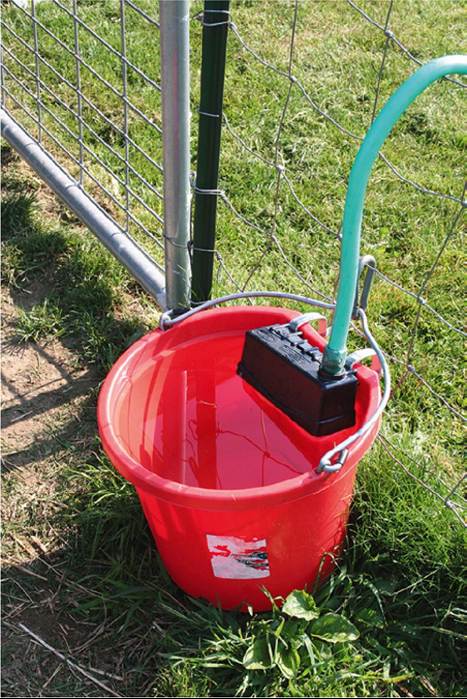
Figure 19.4 A fill float mounted in the bucket ensures that water is available ad lib. Source: Courtesy of Dr. M.C. Smith.