Amino Acids Are Extensively Modified During Absorption
The profile of amino acids in the portal vein is considerably different from that of the diet, indicating that amino acid destruction and transformation occur during the absorptive process.
Essentially all the glutamate and much of the aspartate in the diet are removed by the intestinal epithelial cells during absorption, so the portal blood is almost devoid of glutamate and contains little aspartate. Much of the nitrogen from glutamate and aspartate is transferred to pyruvate to form the amino acid alanine, which is present in high concentrations in portal blood. The metabolism of the transport amino acids in the intestinal epithelium is a good example of both the way in which amino groups can be gained and lost and how the metabolism of amino acids interfaces with the metabolism of carbohydrate. Glutamate and aspartate are similar to two Krebs cycle intermediates, α-ketoglutarate and Oxaloacetate, differing only by the presence of an amino group or a keto-oxygen. Garbohydrates and amino acids having this relationship are said to be analogues; thus, Ot ketoglutarate is the keto-analogue of glutamate, and pyruvate is the keto- analogue of alanine (Figure 32-6). All amino acids can form keto-analogues, and all keto-analogues can be readily converted back to their parent amino acids.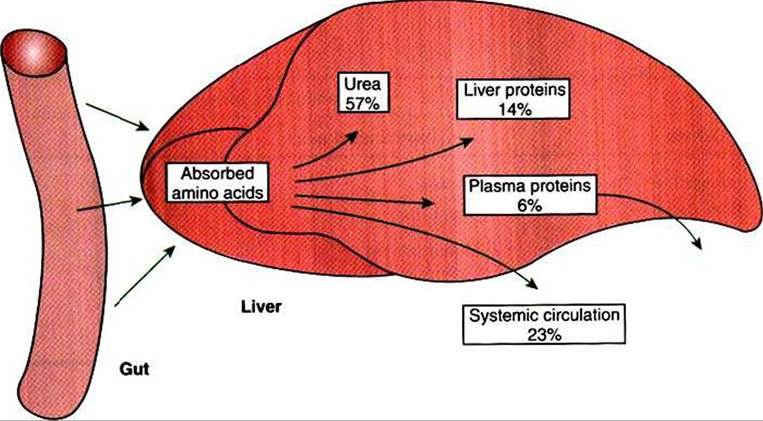
FIGURE 32-7 Fate of dietary amino acids reaching the canine liver.
More on the topic Amino Acids Are Extensively Modified During Absorption:
-
Veterinarian -