Amino Acids Can Be Classified into Groups on the Basis of Metabolic Characteristics
The discussion of amino acid absorption and metabolism becomes complicated because not all amino acids are subject
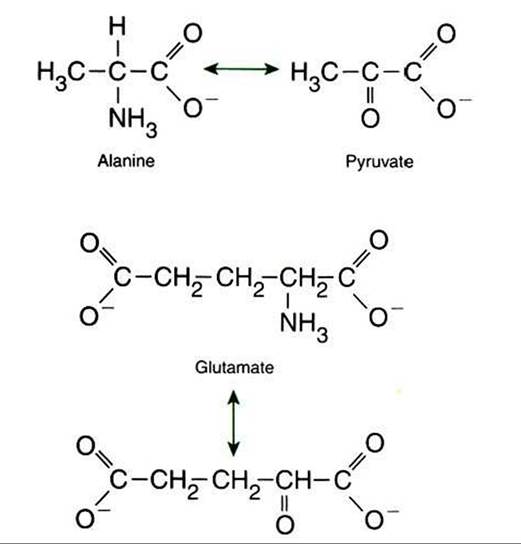
U-Ketoglutarate
FIGURE 32-6 ■ Example of amino acids and their keto-analogues.
All amino acids can reversibly form keto-analogues.to the same reactions. For this discussion the amino acids arc divided into two groups, each containing two subgroups (Table 32-1). The major groups are the “nutritionally dispensable” amino acids and the “nutritionally indispensable” amino acids. Within the dispensable amino acid group, glutamate, aspartate, and alanine are separated out as transport amino acids; within the indispensable amino acid group, leucine, isoleucine, and valine form a special subgroup known as the branch-chain amino acids (BCAAs). The transport amino acids are utilized in several reactions in which amino groups are transferred from molecule to molecule or organ to organ.