Body Temperature Depends on the Balance Between Heat Input and Heat Output
Heat inputs to the body are from metabolism and from external sources (Figure 53-1). Once food energy is ingested, heat is produced at all stages of the metabolic process. Eventually, all food energy is converted into heat, which is dissipated into the environment and radiated into space.
Heat production by the body is related to metabolic rate. A basal metabolic rate is necessary to maintain the function of cells. During exercise, metabolic heat production can increase more than 10-fold. If this heat is not dissipated to the environment, body temperature can increase to dangerous levels. Furthermore, this increase in body temperature increases metabolic rate, which further increases heat production.
Animals gain heat from the environment when ambient temperature exceeds body temperature and when they are exposed to radiant heat sources. The latter occurs when an animal is exposed to sunlight or is placed close to solid objects that are warmer than its body temperature.
Heat is lost to the environment by radiation from the body surface to a cooler object; by convection as the surrounding air or water is warmed by the body; by evaporation of respiratory secretions, sweat, or saliva; and by conduction to cooler
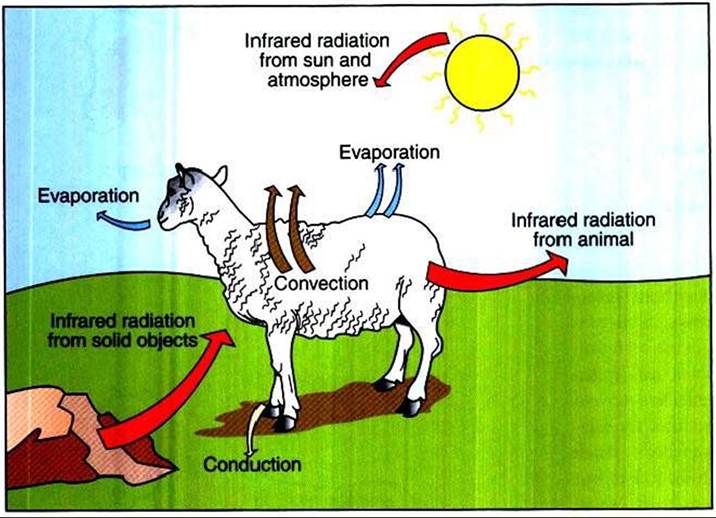
FIGURE 53-1 Representation of the heat input and heat output between a mammal and the environment.
surfaces with which the aninιal is in contact. A small amount of heat is also lost with urine and feces.
Many of the metabolic heat sources, such as the liver, heart, and limb muscles, are remote from the skin, which is the site of heat loss. Therefore, it is necessary to transfer heat among these sites. Body tissues are poor conductors, so heat is transferred mainly by convection in the circulation.